
About Julius A. Furer
Lived 1880 – 1963 (aged 82). Julius A. Furer was an American military officer.
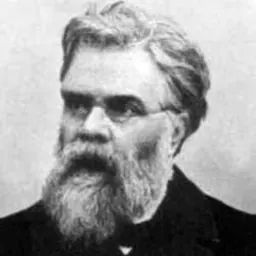
Julius Augustus Furer (October 9, 1880 – June 5, 1963) was a highly decorated naval architect and an engineer in the United States Navy with the rank of rear admiral. During World War II, Furer served as coordinator of research and development and the senior member of the National Research and Development Board.
Early career Furer was born on October 9, 1880, in Mosel, Wisconsin, the son of German immigrants, The Reverend Edward F. Furer and Caroline Wedenseyer. He graduated from high school in Sheboygan, Wisconsin, and subsequently received an appointment to the United States Naval Academy at Annapolis, Maryland. While at the academy, Furer was nicknamed "Dutchie" and participated in the naval blockade of Cuba and bombardment of coastal targets during the Spanish–American War in the summer of 1898.
Upon his graduation, Furer joined the crew of torpedo boat USS Shubrick as passed midshipman and remained there until September that year, when he was transferred to the battleship USS Indiana. He then spent one year at sea, then required by law before commissioning, participating mostly in training cruises with the Reserve fleet and patrols with the North Atlantic Squadron.
In December 1922, he was ordered to South America for duty as a member of the U.S. Naval Mission to Brazil and remained there until April 1927, when he returned to the United States. Furer then served as inspector of naval material in Pittsburgh for one year and departed for Southeast Pacific in May 1928. He was stationed at Naval Station Cavite, Philippines and participated in the development of the aircraft facilities there.
Furer returned to the United States in August 1930 and assumed duty as manager of the industrial department of the Philadelphia Navy Yard. While in this capacity, Furer supervised the modernization of battleships USS Pennsylvania and USS New Mexico, and his tenure is marked with the lowest costs and speed of construction.
Furer also held additional duty as senior member of the National Research and Development Board; member of the advisory council of the Office of Scientific Research and Development and the National Inventors Council, and as the executive member of the Research Board for National Security.
Retirement
Furer was recalled from retirement in 1951 and served briefly with the Navy History Division, where he wrote the widely acclaimed study, "Administration of the Navy Department in World War II", which was published in 1960.
Furer died on June 5, 1963, in Washington, D.C., aged 82, and was buried with full military honors at Arlington National Cemetery, Virginia. His wife Helen Emery Furer (1887–1974) is buried beside him. The was named in his honor in 1966 and launched and christened and sponsored by his wife Helen.
Decorations
Furer's ribbon bar:
Don’t just read it —
keep it.
Full-length biographies made to live with: read them, listen on the way to work, watch them tonight.
- E-book
- Audio
- Video
Instant download · yours to keep · every purchase keeps this site free
Important facts
People in Julius A. Furer's life
Named in this biography and alive at the same time

Related people
Same field, nearest in time



Contemporaries
People whose lives overlapped Julius A. Furer's



Frequently asked questions
Who was Julius A. Furer?
American U.S. Navy rear admiral (1880-1963)
When was Julius A. Furer born?
Julius A. Furer was born on 9 October 1880 in Mosel.
When did Julius A. Furer die?
Julius A. Furer died on 5 June 1963 in Washington, D.C..
What was Julius A. Furer's occupation?
Julius A. Furer was a military officer.
What nationality was Julius A. Furer?
Julius A. Furer was American.
Sources & further reading
Cite this page
APA: Biography.guide. (2026). Julius A. Furer. https://biography.guide/julius-a-furer/
MLA: "Julius A. Furer." Biography.guide, https://biography.guide/julius-a-furer/.
Chicago: "Julius A. Furer." Biography.guide. https://biography.guide/julius-a-furer/.
Data last updated: 2026-09-20 · Spot an error? Report a correction.
Page generated 2026-09-27 05:34 UTC