
Julio C. Tello
Peruvian archaeologist, discovered the Paracas culture
About Julio C. Tello
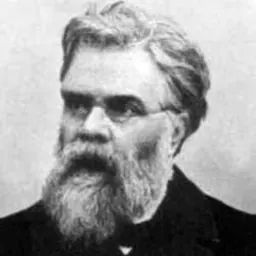
Lived 1880 – 1947 (aged 67). Julio C. Tello was a Peruvian anthropologist, archaeologist, politician and physician.
Julio César Tello Rojas (April 11, 1880 – June 3, 1947) was a Peruvian archaeologist. Tello is considered the "father of Peruvian archeology" and was the first indigenous archaeologist in South America.
He made the major discoveries of the prehistoric Paracas culture, including nearly 400 textiles associated with mummified burials. He founded a national museum of archeology and served as its first director. In addition, he investigated Chavín de Huantar as the focus for his work in the Andean highlands, which he believed was significant for the development of ancient cultures in the region.
Biography Tello was born a "mountain Indian" in an Andean village in Huarochirí Province, Peru; his family spoke Quechua, the most widely spoken indigenous language in the nation.
Apart from his seminal work on the discovery of the Paracas culture, as well as the Chavin culture, Tello's great contribution to archeology was his idea that pre-Columbian Andean culture emerged and developed in-situ. Max Uhle had argued that it was introduced from Mesoamerica. Since the late 20th century, Peruvian archeologist Ruth Shady and others have established that Caral-Supe, also known as Norte Chico, is the first civilization in the Americas, arising nearly 5,000 years ago.
Marriage and family In 1912 in England for a Congress of Americanists, Tello met Olive Mabel Cheesman, an English woman who was a student at London University. They married that year and returned to Peru, where they had several children together. Their eldest daughter died in December 1938.
Career
In 1919 Tello was working with a team at the Chavín de Huantar archeological site, where he discovered a stele. (It has since been named for him, the Tello Obelisk.) Construction of the first temple at this major religious center was dated to 850 BCE. The work of Tello and others established that the site had been a center of a complex culture that lasted for several hundred years, to sometime between 500 and 300 BCE. Until late-20th century discoveries established the dates of the 5000-year-old Norte Chico site, the Chavín culture was believed to be the oldest complex civilization in Peru.
Tello is best known for his discovery in 1927 of 429 mummy bundles in the Cerro Colorado area of Peru on the Paracas Peninsula. He first visited the site on July 26, 1925. He was following a trail begun in 1915, when he had purchased ancient textiles in Pisco. Tello and his team collected 394 textiles and gained funding from the Rockefeller Foundation for their preservation. They put more than 180 on display by 1938 at the Instituto de Investigaciones Antropologicas, where he and his team were on staff.
Unlike some of his colleagues, Tello long believed that the Andean highlands had been important centers of ancient culture. His study of this area was the focus of his work. His theory was proven by his work at sites such as Chavin de Huantar and Ayacucho, a center of Wari culture. In 1936 he, together with prominent scholars Alfred Kroeber, Samuel Lothrop, Wendell C. Bennett and others established the Institute for Andean Research (IAR), to organize and recognize contributions in the field.
In 1938 President Benavides approved a reorganization of the national museums. Impressed with the Paracas textile collection, he authorized the new Museo de Antropolgia to house it. On January 3, 1939, Tello was named its first director. This is now the Museo Nacional de Arqueología, Antropología e Historia del Perú.
The Julio C Tello Museum on the Paracas Peninsula is named in his honour. After the national marine reserve was established in 1975, the museum was built to house artifacts and interpret the archeology and culture of the Paracas, as well as the rich natural life of the marine reserve.
Don’t just read it —
keep it.
Full-length biographies made to live with: read them, listen on the way to work, watch them tonight.
- E-book
- Audio
- Video
Instant download · yours to keep · every purchase keeps this site free
Important facts
People in Julio C. Tello's life
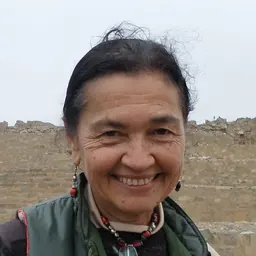
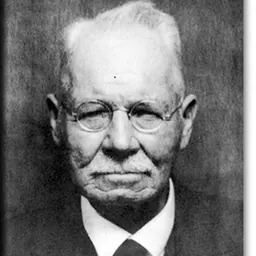
Named in this biography and alive at the same time
Related people
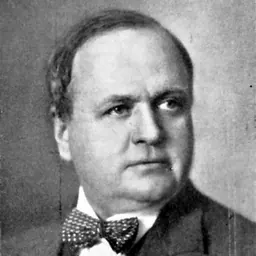
Same field, nearest in time



Contemporaries
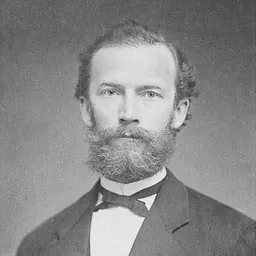
People whose lives overlapped Julio C. Tello's




Frequently asked questions
Who was Julio C. Tello?
Peruvian archaeologist, discovered the Paracas culture (1880-1947)
When was Julio C. Tello born?
Julio C. Tello was born on 11 April 1880 in Huarochirí Province.
When did Julio C. Tello die?
Julio C. Tello died on 3 June 1947 in Lima.
What was Julio C. Tello's occupation?
Julio C. Tello was an anthropologist, archaeologist, politician and physician.
What nationality was Julio C. Tello?
Julio C. Tello was Peruvian.
Sources & further reading
Cite this page
APA: Biography.guide. (2026). Julio C. Tello. https://biography.guide/julio-c-tello/
MLA: "Julio C. Tello." Biography.guide, https://biography.guide/julio-c-tello/.
Chicago: "Julio C. Tello." Biography.guide. https://biography.guide/julio-c-tello/.
Data last updated: 2026-09-20 · Spot an error? Report a correction.
Page generated 2026-09-27 05:21 UTC