
About Julien Benda
Lived 1867 – 1956 (aged 88). Julien Benda was a French philosopher, writer and critic.
Julien Benda (; 26 December 1867 – 7 June 1956) was a French philosopher and novelist, known as an essayist and cultural critic. He is best known for his short book La Trahison des clercs, from 1927 (The Treason of the Intellectuals or The Betrayal by the Intellectuals).
Life Born into a Jewish family in Paris, Benda had a secular upbringing. He was educated at the Lycée Louis-le-Grand. After a period at the École Centrale Paris, he turned to history, and graduated at the Sorbonne in 1894.
His father's death in 1889 left Benda independently wealthy.
In July 1937 he attended the Second International Writers' Congress, the purpose of which was to discuss the attitude of intellectuals to the war in Spain, held in Valencia, Barcelona and Madrid and attended by many writers including André Malraux, Ernest Hemingway, Stephen Spender and Pablo Neruda.
Benda survived the German occupation of France and the Vichy regime 1940–1944, in Carcassonne. The journal of Jean Guéhenno described his life there, and his character: "Unbearable, yet likeable." He died in Fontenay-aux-Roses, on 7 June 1956. He was nominated for the Nobel Prize in Literature four times. His single nomination for the Goncourt Prize was in 1912 for L'Ordination. He lost out to André Savignon's novel Les filles de la pluie. Voting was tied, and the casting vote went to Léon Hennique, in a tumultuous election that caused Hennique to give up the presidency of the Académie Goncourt.
La Trahison des Clercs
Benda is now best remembered for his short 1927 book La Trahison des Clercs, a work of considerable influence. It was translated into English in 1928 by Richard Aldington; the U.S. edition was titled The Treason of the Intellectuals, while the British edition was titled The Great Betrayal. Aldington's translation was republished in 2006 as The Treason of the Intellectuals, with a new introduction by Roger Kimball. This polemical essay argued that European intellectuals in the 19th and 20th centuries had often lost the ability to reason dispassionately about political and military matters, instead becoming apologists for crass nationalism, warmongering, and racism. Benda reserved his harshest criticisms for his fellow Frenchmen Charles Maurras and Maurice Barrès. Benda defended the measured and dispassionate outlook of classical civilization and the internationalism of traditional Christianity.
Closing this work, Benda darkly predicts that the augmentation of the "realistic" impulse to domination of the material world, justified by intellectuals into an "integral realism," risked producing an all-encompassing species-wide civilization that would completely cease "to situate the good outside the real world." Human aspirations, specifically after power, would become the sole end of society. In closing, he concludes bitterly, "And History will smile to think that this is the species for which Socrates and Jesus Christ died."
Benda's word "clercs" was borrowed by Anne Appelbaum in her 2020 book Twilight of Democracy: The Seductive Lure of Authoritarianism.
Other works Other works by Benda include Belphégor (1918), Uriel's Report (1926), and Exercises of a Man Buried Alive (1947), an attack on the contemporary French celebrities of his time. Most of the titles in the bibliography below were published during the last three decades of Benda's long life; he is emphatically a 20th-century author.
In his 1933 publication Discours à la nation européenne, Benda responded to Johann Gottlieb Fichte's Addresses to the German Nation.
Don’t just read it —
keep it.
Full-length biographies made to live with: read them, listen on the way to work, watch them tonight.
- E-book
- Audio
- Video
Instant download · yours to keep · every purchase keeps this site free
Important facts
People in Julien Benda's life
Named in this biography and alive at the same time

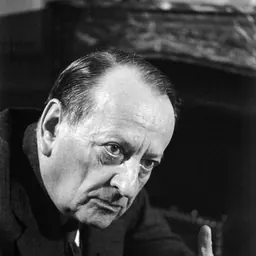
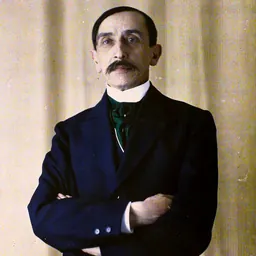


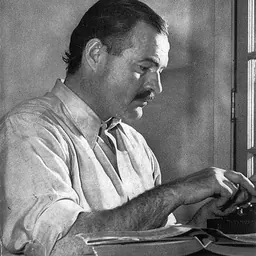

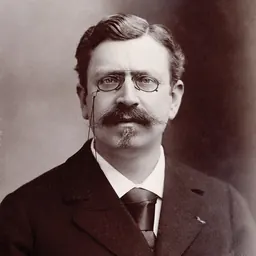
Related people
Same field, nearest in time


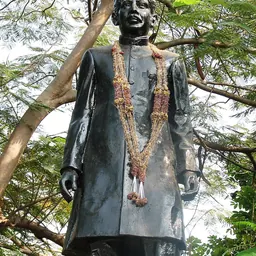


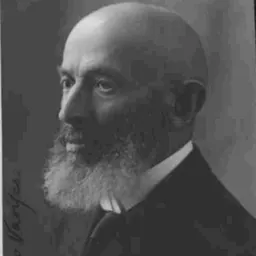
Contemporaries
People whose lives overlapped Julien Benda's
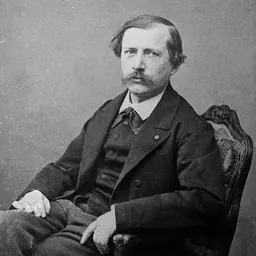


Frequently asked questions
Who was Julien Benda?
French essayist and philosopher (1867-1956)
When was Julien Benda born?
Julien Benda was born on 26 December 1867 in Paris.
When did Julien Benda die?
Julien Benda died on 7 June 1956 in Fontenay-aux-Roses.
What was Julien Benda's occupation?
Julien Benda was a philosopher, writer and critic.
What nationality was Julien Benda?
Julien Benda was French.
Sources & further reading
Cite this page
APA: Biography.guide. (2026). Julien Benda. https://biography.guide/julien-benda/
MLA: "Julien Benda." Biography.guide, https://biography.guide/julien-benda/.
Chicago: "Julien Benda." Biography.guide. https://biography.guide/julien-benda/.
Data last updated: 2026-09-26 · Spot an error? Report a correction.
Page generated 2026-09-27 05:14 UTC