
About Julian Ursyn Niemcewicz
Lived 1757 – 1841 (aged 84). Julian Ursyn Niemcewicz was a Polish diplomat, translator, poet, writer, opinion journalist and historian.
Julian Ursyn Niemcewicz ( , ; 6 February 1758 – 21 May 1841) was a Polish poet, playwright and statesman. He was a leading advocate for the Polish–Lithuanian Commonwealth's Constitution of 3 May 1791.
Early life and education Julian Ursyn Niemcewicz was born 6 February 1758 in Skoki, near Brest in the Polish–Lithuanian Commonwealth (present-day Belarus). The son of a moderately well-to-do Polish noble family, Niemcewicz graduated from the Warsaw Corps of Cadets.
Career
After graduating from the Corps of Cadets, he subsequently served as aide to Adam Kazimierz Czartoryski and visited France, England and Italy. Niemcewicz served as a deputy to the Great Sejm of 1788–1792 and was an active member of the Patriotic Party that pushed through adoption of the historic Constitution of 3 May 1791. He was subsequently a founder of the Friends of the Constitution, formed to support the implementation of that progressive document. After the victory of the Targowica Confederation in 1792 and the consequent overthrow of the May 3 Constitution, Niemcewicz, along with other Patriotic Party members, emigrated to Germany. In 1796, on the death of Tsaritsa Catherine the Great, they were released by Tsar Paul I and made their way together to the United States. They sailed on the ship Adriana from Bristol, in England, in the company of the Portuguese abbot and botanist, José Correia da Serra, who served as the chaplain on ship for Niemcewicz and Kościuszko. They arrived in Philadelphia on August 18, 1797. During his stay, he visited Niagara Falls. In 1798, he was elected a member of the American Philosophical Society.
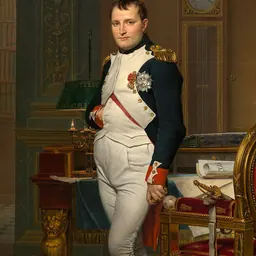
Niemcewicz was upset when Kościuszko decamped for Europe without giving him any notice. After Napoleon's 1807 invasion of Poland, Niemcewicz returned to Warsaw and was made secretary of the senate.
On 11 May 1830, he unveiled a new landmark before the Staszic Palace, the seat of the Society of Friends of Science in Warsaw — a monument to Nicolaus Copernicus sculpted by Bertel Thorvaldsen. During the failed November Uprising of 1830–31, Niemcewicz was a member of the insurrectionary Polish government. In the final months of the Uprising the poet went on a diplomatic mission to London (as the last Polish envoy to Britain) and he remained in exile, first in Britain, then in France, until his death in 1841.
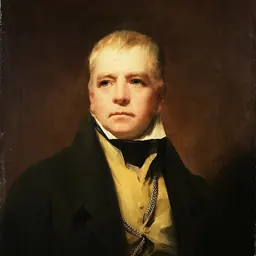
Works As a writer, Niemcewicz tried many styles of composition. His political comedy, The Return of the Deputy (1790), enjoyed great acclaim. His novel, John of Tenczyn (1825), written in the style of Sir Walter Scott, gives a vigorous picture of old Poland. He also wrote a History of the Reign of Sigismund III (3 volumes, 1819) and a collection of memoirs for ancient Polish history (6 volumes, 1822–23). His collected works were published in 12 volumes at Leipzig in 1838–40.
Personal life
While in the United States, Niemcewicz met and married the wealthy widow, Mrs. Livingston Kean (née Susan Livingston) in 1800 who had hired him as a tutor for her son Peter Kean. Susan, a member of the Livingston family, was the daughter of Peter Van Brugh Livingston and the widow of John Kean, a delegate from South Carolina to the Continental Congress.
He died on 21 May 1841 in Paris, France, aged 83, and was buried at Champeaux Cemetery in Montmorency, Val-d'Oise.
Published works Władysław pod Warną (Władysław at Varna, 1788) Kazimierz Wielki (Kazimierz the Great, 1792) Powrót posła (The Return of the Deputy, 1791) Na hersztów targowieckich (The Targowica Chiefs) Podróże historyczne po ziemiach polskich (Historic Travels over the Polish Lands) Śpiewy historyczne (Historic Songs) Dzieje panowania Zygmunta III (A History of the Reign of Zygmunt III) Under their Vine and Fig Tree: Travels through America in 1797-1799, 1805 with some further account of life in New Jersey (Edited by Budka)
Don’t just read it —
keep it.
Full-length biographies made to live with: read them, listen on the way to work, watch them tonight.
- E-book
- Audio
- Video
Instant download · yours to keep · every purchase keeps this site free
Important facts
Family & relationships
People in Julian Ursyn Niemcewicz's life
Named in this biography and alive at the same time




Related people
Same field, nearest in time

Contemporaries
People whose lives overlapped Julian Ursyn Niemcewicz's



Frequently asked questions
Who was Julian Ursyn Niemcewicz?
Polish poet, playwright and statesman (1758–1841)
When was Julian Ursyn Niemcewicz born?
Julian Ursyn Niemcewicz was born on 16 February 1757 in Skoki.
When did Julian Ursyn Niemcewicz die?
Julian Ursyn Niemcewicz died on 21 May 1841 in Paris.
What was Julian Ursyn Niemcewicz's occupation?
Julian Ursyn Niemcewicz was a diplomat, translator, poet, writer, opinion journalist and historian.
What nationality was Julian Ursyn Niemcewicz?
Julian Ursyn Niemcewicz was Polish.
Sources & further reading
· Wikipedia: Julian Ursyn Niemcewicz
· DBpedia: Julian Ursyn Niemcewicz
Cite this page
APA: Biography.guide. (2026). Julian Ursyn Niemcewicz. https://biography.guide/julian-ursyn-niemcewicz/
MLA: "Julian Ursyn Niemcewicz." Biography.guide, https://biography.guide/julian-ursyn-niemcewicz/.
Chicago: "Julian Ursyn Niemcewicz." Biography.guide. https://biography.guide/julian-ursyn-niemcewicz/.
Data last updated: 2026-09-20 · Spot an error? Report a correction.
Page generated 2026-09-27 05:18 UTC