
About Julian Stanczak
Lived 1928 – 2017 (aged 88). Julian Stanczak was a Polish and American painter and printmaker.
Julian Stanczak ( ; November 5, 1928 – March 25, 2017) was a Polish-born American painter and printmaker whose investigations of color and visual perception made him an important figure in post war geometric abstraction. He is considered a central figure of the Op art movement that came of age in the 1960s and 1970s. Described as an artist whose work "evinced a tremendous geometric inventiveness" and one who “produced some of the most emotionally gripping paintings associated with [Op art]", Stanczak is primarily known for his large-scale polychromatic abstract compositions made using acrylic paint on canvas in which he explored the perceptual dimensions of color.
Born in 1928 in Borownica, Poland, Stanczak survived a Siberian labor camp during World War II where he permanently lost the use of his right arm. While in a Polish refugee camp in Uganda, Africa, he retrained himself to paint left-handed. He emigrated to London in 1948 and from there to the United States in 1950, where he eventually became a citizen. In 1956, Stanczak received an M.F.A. from Yale University, where he studied with Josef Albers and Conrad Marca-Relli, and was roommates with fellow abstract painter Richard Anuszkiewicz. The term "Op art", originated from Stanczak's work when the Minimalist artist and sculptor Donald Judd used it in his critical review of the 1964 exhibition titled Julian Stanczak: Optical Paintings at the Martha Jackson Gallery in New York. Stanczak achieved broader commercial recognition after being featured in the landmark 1965 exhibition The Responsive Eye created by curator William C. Seitz at the Museum of Modern Art in New York.
For more than six decades, Stanczak remained active as a painter and continued to exhibit his work in museum and gallery exhibitions in the U.S. and Europe. In addition to being a practicing artist, Stanczak served as a faculty member at the Art Academy of Cincinnati from 1957 to 1964 and, later, as Professor of Painting at the Cleveland Institute of Art from 1964 to 1995. In 2013, he was awarded an honorary doctorate from Case Western Reserve University in Ohio. Stanczak lived and worked in Seven Hills, Ohio with his wife, the sculptor Barbara Stanczak, until his death in 2017. His work is included in the permanent collections of more than 100 museums.
Early life and work
Early life and education (1928-1950)
Julian Stanczak (Polish: Stańczak) was born in Borownica, Poland in 1928. Aged sixteen, Stanczak decided to join the Polish Armed Forces in the West to receive food rations and medical help, becoming separated from his parents, sister, and brother. Realizing that he would permanently lose use of his right arm, Stanczak deserted. In 1948, Stanczak and his family moved to England where he enrolled at the Borough Polytechnic to study art. According to the American scholar Joe Houston, the investigation of color became the primary interest of Stanczak and Anuszkiewicz while at Yale. In particular, Stanczak was inspired by the 1954 book by Rudolf Arnheim, a German Gestalt theorist with strong connections to the Bauhaus, titled Perception: A Psychology of the Creative Eye, which the artist translated into Polish. Writing in 1992, the Artforum critic Elizabeth Licata said that Stanczak's precise linear systems operate within the visual rigor and limits set out by Albers who, according to Stanczak, "taught by confrontation anxiety". In 1955, Stanczak's paintings of "an abstracted linear pattern" were included in an annual exhibition of new art at the Cleveland Museum of Art, where he was awarded an honorary mention. He became a United States citizen in 1957 and taught at the Art Academy of Cincinnati for 7 years. Critic Burton Wasserman would later describe the exhibition as a "demonstration of lean plastic purity". In 1965, Stanczak's work was included in the Museum of Modern Art's landmark exhibition The Responsive Eye curated by William C. Seitz. Although the show was poorly received by the critics, it proved popular with the general public and helped establish Op art as a distinct art movement, while many participating artists received substantial market recognition. Stanczak, however, preferred to call his style "perceptual art" rather than "optical". In 1973, Stanczak designed a mural for a 12-story residential building in Cleveland called Carter Manor, which would subsequently become badly damaged due to the contractor's decision to use enamel paint. The mural was eventually restored in 2018 by artists participating in that year's FRONT Triennial exhibition in Cleveland. As the popularity of Op art began to diminish in the late 1970s, superseded by such movements as Minimalism and later Postminimalism, Stanczak's work became progressively separated from mainstream American art. He continued to exhibit frequently until the end of his life, primarily in the Midwest.
In 2007, Stanczak was interviewed by Brian Sherwin for Myartspace Blog. During the interview, Stanczak recalled his experiences with war and the loss of his right arm and how both influenced his art. Stanczak explained: "The transition from using my left hand as my right, main hand, was very difficult. My youthful experiences with the atrocities of the Second World War are with me, but I wanted to forget them and live a 'normal' life and adapt into society more fully. In the search for art, you have to separate what is emotional and what is logical. (...) I looked for anonymity of actions through non-referential, abstract art". In 2008, Stanczak designed a 364-foot mural made of painted metal rods for the exterior of a corporate building in downtown Cincinnati. Albright-Knox Art Gallery, Buffalo, New York Art Gallery of Ontario, Toronto, Canada Brooklyn Museum, Brooklyn, New York Cleveland Institute of Art, Cleveland, Ohio Cleveland Museum of Art, Cleveland, Ohio Crystal Bridges Museum of American Art, Bentonville, Arkansas Dallas Museum of Art, Dallas, Texas Hirshhorn Museum and Sculpture Garden, Smithsonian Institution, Washington, DC Los Angeles County Museum of Art, Los Angeles, California Metropolitan Museum of Art, New York, NY Museo de Arte Contemporaneo de Buenos Aires, Buenos Aires, Argentina Museo Rufino Tamayo, Museo de Arte Contemporaneo, Mexico City, Mexico Museum of Fine Arts, Houston, Texas Museum of Modern Art, New York, New York National Gallery of Art, Smithsonian Institution, Washington, DC New Orleans Museum of Art, New Orleans, Louisiana Philadelphia Museum of Art, Philadelphia, Pennsylvania San Francisco Museum of Modern Art, San Francisco, California
Don’t just read it —
keep it.
Full-length biographies made to live with: read them, listen on the way to work, watch them tonight.
- E-book
- Audio
- Video
Instant download · yours to keep · every purchase keeps this site free
Important facts
People in Julian Stanczak's life
Named in this biography and alive at the same time



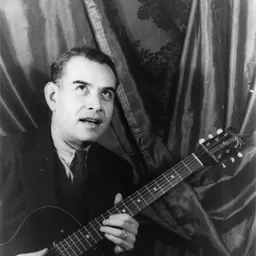


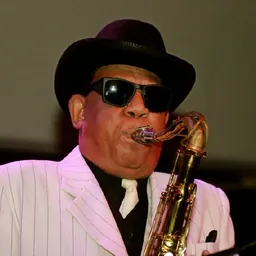
Related people
Same field, nearest in time
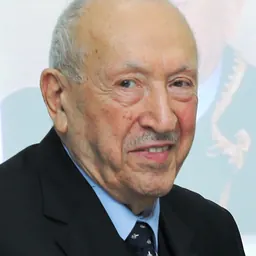


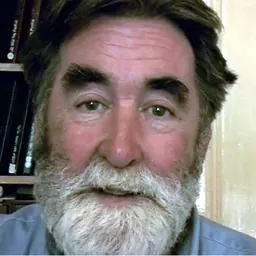
Contemporaries
People whose lives overlapped Julian Stanczak's



Frequently asked questions
Who was Julian Stanczak?
American artist (1928-2017)
When was Julian Stanczak born?
Julian Stanczak was born on 5 November 1928 in Poland.
When did Julian Stanczak die?
Julian Stanczak died on 25 March 2017 in Seven Hills.
What was Julian Stanczak's occupation?
Julian Stanczak was a painter and printmaker.
What nationality was Julian Stanczak?
Julian Stanczak was Polish and American.
Sources & further reading
Cite this page
APA: Biography.guide. (2026). Julian Stanczak. https://biography.guide/julian-stanczak/
MLA: "Julian Stanczak." Biography.guide, https://biography.guide/julian-stanczak/.
Chicago: "Julian Stanczak." Biography.guide. https://biography.guide/julian-stanczak/.
Data last updated: 2026-09-22 · Spot an error? Report a correction.
Page generated 2026-09-27 05:06 UTC