
About Julian Ritter
Lived 1909 – 2000 (aged 90). Julian Ritter was an American painter.
Julian Ritter (September 19, 1909 – March 4, 2000) was an American painter of Polish-German descent who painted primarily nudes, clowns and portraits.
Ritter's paintings were typically rich in color. His nudes celebrated the glamor and beauty of the female form. All of his figurative paintings expressed the humanness in his subjects. He also painted landscapes at different points during his career and complex compositions dealing with mystical and spiritual subjects during his later years.
Early life Ritter was born Julian Stawski on September 19, 1909, in Hamburg, Germany, the only child of an aspiring Polish actress.
Ritter settled in Los Angeles as a young adult. He held many menial jobs during this time - dishwasher, errand boy, order clerk. He also painted lamp shades and did freelance art.
Ritter moved to Chicago and began to take a serious interest in art.
Ritter graduated Art Center School in 1932 and found work at Los Angeles's film studios painting portraits for movie sets and doing other set design for Warner Brothers, MGM, Paramount and Universal. Ritter met the tall actress Francesca Chesley (1913–2004) in 1933. They were married on December 16, 1934. She frequently modeled for his nude paintings. They divorced in 1943.
Ritter headed to San Francisco looking for work at the Golden Gate International Exhibition of 1939. He was hired by architect Mark Daniels to paint murals for the Mines, Minerals and Machinery Building. These 90-foot murals were a great success. New York Times art critic, H.D., wrote of the Newhouse Galleries exhibition:
The one-man show at the Newhouse Galleries was a particular success and led to portrait commissions. While attending a party thrown by a patron who commissioned a portrait of his daughter, Ritter got drunk and stripped off his clothes, calling the other attendees "phony baloneys". Hilde's appreciation for the arts led to a very warm friendship between the two and they saw each other often. which was organized in Camp Pickett, Virginia, attached to the 45th Infantry Division which was part of General George Patton's 7th Army. Ritter was initially a member of the 3rd Battalion which trained at Fort Lewis, Washington.
While at Camp Pickett, Ritter was selected to paint a portrait of Lt. General Ben "Yoo-Hoo" Lear who was the commanding officer of the 2nd Army based in Tennessee. Ritter asked Hilde to come join him at Memphis, and he asked her to marry him. He attained the rank of Technician Fourth Grade (T4) and served at both Regimental headquarters and the headquarters of the 1st/2829th Battalion.
In October 1945 Ritter returned to Los Angeles to paint and to raise a family.
Post-war Southern California
1945 to 1966 When Ritter first returned from the war, he found himself unable to paint anything but morbid, gruesome paintings of death, darkness and despair for about a year. After this he began his most prolific period. He would regularly work long hours and he became known for his fine nude studies and clowns.
Ritter and Hilde had two children while living in Hollywood: Christine was born in 1947 and Michael in 1948.
In a 1948 "Brush Strokes" column in the Los Angeles Times commented:
Ritter moved the family to Don Pio Drive in Woodland Hills, California, in the early 1950s. The home included a studio building on a hilltop which, like all his studios, featured a pot-belly stove. In addition to his painting, Ritter was a talented landscaper and he terraced the front and rear hills with steps, paths and pools all made from slabs of broken concrete.
At the urging of his brother-in-law, Stewart Potter, Ritter began selling his paintings in Las Vegas in February, 1950. The two made the trip from Los Angeles to Las Vegas in Ritter's 1949 Dodge Wayfarer, a yellow convertible with no rear seat and an extended trunk which would be packed with paintings. The two went from casino to casino without any success until they met Bill Moore, the owner of the Hotel Last Frontier. Ritter sold Moore 13 framed nudes for $1000 which would become the basis of the Silver Slipper Collection of paintings. Ritter and Potter would make additional trips to Las Vegas and sold additional paintings to the Hotel Last Frontier and its adjoining Silver Slipper Casino. They also sold paintings to other hotels, casinos and their employees. Ritter said later, "My time in San Blas was important to me. I developed a new conception of color and a self-assurance which made me a better painter." in Pasadena and at frequent showings at the James Vigeveno Gallery in Westwood. He was also represented in San Francisco by the Maxwell Galleries and the Kotzbeck Gallery, and by galleries in Palm Springs and Scottsdale. Ritter was at the height of his commercial success but he disliked that the galleries were making money that he felt should be going to him. He had always had a somewhat stormy relationship with his dealers and preferred to deal directly with collectors. About this time, Ritter successfully set out to build a group of patrons who could provide financial security and independence, however, many of these collectors were demanding the familiar nudes and clowns that Ritter had tired of.
In 1963, Ritter had a show at the Poulsen Galleries in Pasadena, California. It was generally well-received with Scott McClean, the gallery director, stating "This is probably the first exhibit to show the whole range and variety of the work of a man who has been known for two specialties – nudes and clowns. I think this broader view of Julian Ritter's work is long overdue."
In 1964, Hilde had been sick for a year but refused to see a doctor. When she collapsed, Ritter insisted and doctors discovered she had cancer.
Ritter began drinking heavily. He later said, "I became a lousy cowardly drunk after my wife died. I had no respect for myself - morally, physically or spiritually. My mind and my body and my inner-self were too tired to conceive anything. I was burnt out." Ritter named the boat Galilee, and with the assistance of a two-man crew, on February 2, 1968, he sailed it to various ports including Acapulco, Mexico, where he was joined by Kokx. They sailed to Puntarenas, Costa Rica, where he painted for six months. He then sailed to the Galapagos Islands, Tahiti, Moorea and Bora Bora, sketching tropical scenes for later development as paintings. In December, 1968, a show was mounted at the Bernard Gallery in Los Angeles of works painted in Puntarenas that Ritter had sent home. Ship's doctor Philip A. Becker described the emaciated crew members as "living skeletons only four days away from death."
Ritter and Kokx recuperated in Hawaii for a month, then returned to California. Although he was still recovering and underweight, Ritter gave a three-hour talk at a Los Angeles gallery about being lost at sea. In attendance were family members, patrons and his first wife.
Ritter appeared on the TV game show To Tell the Truth along with two "impostor" contestants and the celebrity panelists in an episode that aired December 22, 1970. All three of the panelists picked Ritter since he was the only one of the three contestants who looked like he had been lost at sea without food.
Ritter donated six of his clown paintings for an auction to raise money for a group working for the release of American prisoners of war held in North Vietnam. The auction was held mid-December 1970. Among the guests of honor was Francis Gary Powers whose U-2 spy plane was shot down over the Soviet Union. One painting, a 24x36 oil, was reportedly sold for $3600. Ritter made the contribution out of sympathy for the prisoners and their families and personal gratitude to the Navy for his rescue. Ritter said "I know what deprivation is after that ordeal. I can relate to the terrible suffering of those POWs."
Ritter and Kokx settled into a house in rural Summerland outside Santa Barbara for 15 years. from Venice, California, in the mid-1950s. Axford shared Ritter's conservative politics and love of boats, and was a Ritter patron who accumulated many pieces of his work.
Greg Autry was another friend and patron. Autry met Ritter in 1983 after he purchased a fake Ritter in a Laguna Beach gallery. Autry both commissioned paintings and purchased other examples of Ritter's work. Autry purchased the Silver Slipper collection of Ritter's paintings from the Summa Corporation in a closed-bid auction in the late 1980s.
Art Although Ritter was best known for his oil paintings of nudes, clowns and portraits, he also worked in other media including pen-and-ink with watercolor, charcoal and Conté crayons and painted other subjects including portraits, landscapes, and complex compositions. He also liked doing caricature, often drawing cartoons rather than sending letters to friends. Ritter's style changed over the course of his life.
Art historian and award-winning author Phyllis Settacase Barton wrote of Ritter:
Ritter had a steady presence in the Los Angeles art scene with exhibitions and showings from 1947 through 1975 when he had his last major gallery showing at the Howard E. Morseburg Galleries in Los Angeles. He was also frequently listed in the Calendar section of the Los Angeles Times. After this, Ritter had a sufficient number of patrons to support his lifestyle without the need for gallery showings.
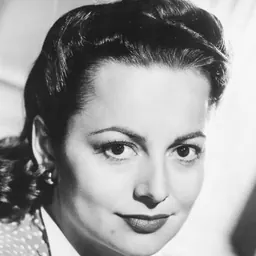
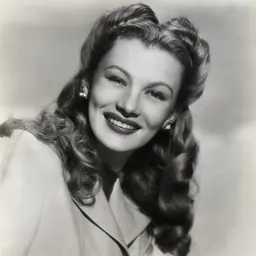
Portraits Ritter painted a number of prominent Californians. He also painted many actors, especially while employed at Warner Brothers where he would paint an actor in his current role. For instance, he painted Paul Muni in his role as Zola in The Life of Emile Zola. He also painted Ruby Keeler, Clara Bow, Claudette Colbert, Olivia de Havilland and Veronica Lake.
Don’t just read it —
keep it.
Full-length biographies made to live with: read them, listen on the way to work, watch them tonight.
- E-book
- Audio
- Video
Instant download · yours to keep · every purchase keeps this site free
Important facts
People in Julian Ritter's life
Named in this biography and alive at the same time




Related people
Same field, nearest in time

Contemporaries
People whose lives overlapped Julian Ritter's


Frequently asked questions
Who was Julian Ritter?
American artist (1909-2000)
When was Julian Ritter born?
Julian Ritter was born on 19 September 1909 in Hamburg.
When did Julian Ritter die?
Julian Ritter died on 4 March 2000 in Kula.
What was Julian Ritter's occupation?
Julian Ritter was a painter.
What nationality was Julian Ritter?
Julian Ritter was American.
Sources & further reading
Cite this page
APA: Biography.guide. (2026). Julian Ritter. https://biography.guide/julian-ritter/
MLA: "Julian Ritter." Biography.guide, https://biography.guide/julian-ritter/.
Chicago: "Julian Ritter." Biography.guide. https://biography.guide/julian-ritter/.
Data last updated: 2026-09-20 · Spot an error? Report a correction.
Page generated 2026-09-27 05:32 UTC