
About Clara Bow
Lived 1905 – 1965 (aged 60). Clara Bow was an American actor and film actor.
Clara Gordon Bow (; July 29, 1905 – September 27, 1965) was an American actress who rose to stardom during the silent film era of the 1920s and successfully made the transition to "talkies" in 1929. Her appearance as a plucky shopgirl in the 1927 film It brought her global fame and the nickname "The It Girl". Bow came to personify the Roaring Twenties and is described as its leading sex symbol.
Bow appeared in 58 films, all but 11 of which were silent. Thirty-three are extant in their entirety, 14 are partially lost, and 11 are completely lost. Some hits include Mantrap (1926), It (1927), and Wings (1927). She was named the first box-office draw in 1928 and 1929 and the second box-office draw in 1927 and 1930. Her presence in a motion picture was said to have ensured investors, by odds of almost two-to-one, a "safe return". At the apex of her stardom, she received more than 45,000 fan letters in a single month, in January 1929.
After marrying actor Rex Bell in 1931, Bow retired from acting in 1933. Her final film, Hoop-La, was released in 1933. She then became a rancher in Nevada. Bow had two children. In September 1965, Bow died of a heart attack at the age of 60.
Early life Bow was born in the Prospect Heights section of Brooklyn in New York City, at 697 Bergen Street, in a "bleak, sparsely furnished room above dilapidated Baptist Church". Her birth year, according to the US Censuses of 1910 and 1920, was 1905. In US census records, enumerated April 15, 1910, and January 7, 1920, Bow's age is stated 4 and 14 years, respectively. The 1930 census stated an age of 23.
Bow was her parents' third child. Her two older sisters, born in 1903 and 1904, had died in infancy. Her mother, Sarah Frances Bow (née Gordon, 1880–1923), was told by a doctor not to become pregnant again for fear the next baby might die as well. Despite the warning, Sarah became pregnant with Clara in late 1904. In addition to the risky pregnancy, a heat wave besieged New York in July 1905, and temperatures peaked around . Years later, Clara wrote: "I don't suppose two people ever looked death in the face more clearly than my mother and I the morning I was born. We were both given up, but somehow we struggled back to life."
Bow's parents were descended from English and Scots-Irish immigrants who had come to America the generation before. Bow said that her father, Robert Walter Bow (1874–1959), "had a quick, keen mind... all the natural qualifications to make something of himself, but didn't... everything seemed to go wrong for him, poor darling." From her earliest years, Bow had learned how to care for her mother during the seizures, as well as how to deal with her psychotic and hostile episodes. She said her mother could be "mean to me—and she often was," but "she didn't mean to be and that it was because she couldn't help it." On January 5, 1923, Sarah died at the age of 43 from her epilepsy. When relatives gathered for the funeral, Bow was so upset that she "went crazy" and tried to jump into the grave to be with her, shouting that they were "hypocrites" and that they hadn't loved or cared for her mother while she was alive. The Bows and Bakers shared a house—still standing—at 33 Prospect Place in 1920.
Career
1921–1922: Early years In the early 1920s, roughly 50 million Americans—half the population at that time—attended the movies every week. As Bow grew into womanhood, her stature as a "boy" in her old gang became "impossible". She did not have any girlfriends, school was a "heartache," and her home was "miserable". On the silver screen, she found consolation; "For the first time in my life I knew there was beauty in the world. For the first time I saw distant lands, serene, lovely homes, romance, nobility, glamor." And further; "I always had a queer feeling about actors and actresses on the screen ... I knew I would have done it differently. I couldn't analyze it, but I could always feel it." In the contest's final screen test, Bow was up against an already scene-experienced woman who did "a beautiful piece of acting". A set member later stated that when Bow did the scene, she actually became her character and "lived it". In the January issues 1922 of Motion Picture Classic, the contest jury, Howard Chandler Christy, Neysa McMein, and Harrison Fisher, concluded:
Bow won an evening gown and a silver trophy, and the publisher committed to help her "gain a role in films", but nothing happened. Bow's father told her to "haunt" Brewster's office, located in Brooklyn, until they came up with something. "To get rid of me, or maybe they really meant to (give me) all the time and were just busy", Bow was introduced to director Christy Cabanne, who cast her in Beyond the Rainbow, produced late 1921 in New York City and released February 19, 1922. Bow did five scenes and impressed Cabanne with her ability to produce tears on cue, but was cut from the final print. "Clara Bow who has reached the front rank of motion picture principal player ... [has] scored a tremendous hit in Down To The Sea In Ships." "With her beauty, her brains, her personality and her genuine acting ability, it should not be many moons before she enjoys stardom in the fullest sense of the word. You must see Down to the Sea in Ships." "In movie parlance, she 'stole' the picture ..."
By mid-December 1923, primarily due to her merits in Down to the Sea in Ships, Bow was chosen the most successful of the 1924 WAMPAS Baby Stars. Three months before Down to the Sea in Ships was released, Bow danced on a table uncredited in Enemies of Women (1923). During the year, she made a short film, The Pill Pounder (1923). In spring, Bow got a part in The Daring Years (1923), where she befriended actress Mary Carr, who taught her how to use make-up. While shooting Grit at Pyramid Studios, in Astoria, New York, Bow was approached by Jack Bachman of independent Hollywood studio Preferred Pictures. He wanted to contract her for a three-month trial, fare paid, and $50 a week. "It can't do any harm," he said.
1923–1925: Preferred Pictures
On July 22, 1923, Bow left New York, her father, and her boyfriend behind for Hollywood. She was tested and a press release from early August says Bow had become a member of Preferred Pictures' "permanent stock".
Bow signed with Preferred Pictures, also working with other studios. Alton and Bow rented an apartment at The Hillview near Hollywood Boulevard. It was released on January 4, 1924.
"The flapper, impersonated by a young actress, Clara Bow... had five speaking titles, and every one of them was so entirely in accord with the character and the mood of the scene that it drew a laugh from what, in film circles, is termed a 'hard-boiled' audience." The Los Angeles Times commented that "Clara Bow, the prize vulgarian of the lot... was amusing and spirited but she never belonged in the picture". Variety said that "the horrid little flapper is adorably played".
Colleen Moore made her flapper debut in a successful adaptation of the daring novel Flaming Youth, released November 12, 1923, six weeks before Black Oxen. Both films were produced by First National Pictures, and while Black Oxen was still being edited and Flaming Youth not yet released, Bow was requested to co-star with Moore as her kid sister in Painted People (The Swamp Angel). Moore essayed the baseball-playing tomboy and Bow, according to Moore, said "I don't like my part, I wanna play yours."
Moore, a well-established star earning $1200 a week—Bow got $200—took offense and blocked the director from shooting close-ups of Bow. Moore was married to the film's producer and Bow's protests were futile. "I'll get that bitch", she told her boyfriend Jacobson, who had arrived from New York. Bow had sinus problems and decided to have them attended to that very evening. With Bow's face now in bandages, the studio had no choice but to recast her part.
In May, Moore renewed her efforts in The Perfect Flapper, produced by her husband. Despite good reviews she suddenly withdrew. "No more flappers ... they have served their purpose ... people are tired of soda-pop love affairs", she told the Los Angeles Times, which had commented a month earlier, "Clara Bow is the one outstanding type. She has almost immediately been elected for all the recent flapper parts". In November 1933, looking back to this period of her career, Bow described the atmosphere in Hollywood as like a scene from a movie about the French Revolution, where "women are hollering and waving pitchforks twice as violently as any of the guys ... the only ladies in sight are the ones getting their heads cut off."
By New Year 1924 Bow had defied the possessive and brought her father to Hollywood. Bow remembered their reunion: "I didn't care a rap, for (her), nor B. P. Schulberg, nor my motion picture career, nor Clara Bow, I just threw myself into his arms and kissed and kissed him, and we both cried like a couple of fool kids. Oh, it was wonderful."
Bow appeared in eight releases in 1924; two were released the same day. In Poisoned Paradise, released on February 29, 1924, Bow got her first lead; "the clever little newcomer whose work wins fresh recommendations with every new picture in which she appears". Atypical of that time, her character, "skilled in the art of self-defense, preparedness and all the other devices with which the modern flapper is endowed," fearlessly beats off the villain. In Daughters of Pleasure, also released on February 29, 1924, Bow and Marie Prevost "flapped unhampered as flappers De luxe ... I wish somebody could star Clara Bow. I'm sure her 'infinite variety' would keep her from wearying us no matter how many scenes she was in."
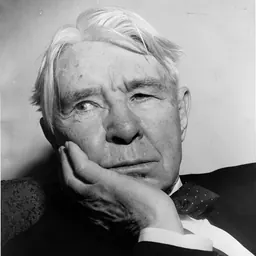
Lent out to Universal, Bow top-starred, for the first time, in the prohibition, bootleg drama/comedy Wine, released on August 20, 1924. The picture exposes the widespread liquor traffic in the upper classes, and Bow portrays an innocent girl who develops into a wild "red-hot mama", "a naughty, inebriated flapper". Carl Sandburg reviewed it on September 29 saying; "If not taken as information, it is cracking good entertainment". Alma Whitaker of the Los Angeles Times observed on September 7, 1924:
Bow remembered: "All this time I was 'running wild', I guess, in the sense of trying to have a good time ... maybe this was a good thing, because I suppose a lot of that excitement, that joy of life, got onto the screen."
I worked in two and even three pictures at once. I played all sorts of parts in all sorts of pictures ... It was very hard at the time and I used to be worn out and cry myself to sleep from sheer fatigue after 18 hours a day on different sets, but now [Early 1928] I am glad of it. while paying Bow a salary of $200 to $750 a week. The studio, like any other independent studio or theater at that time, was under attack from "The Big Three", MPAA, which had formed a trust to block out Independents and enforce the monopolistic studio system. On October 21, 1925, Schulberg filed Preferred Pictures for bankruptcy, with debts at $820,774 and assets $1,420.
Three days later it was announced that Schulberg would join with Adolph Zukor to become associate producer of Paramount Pictures, "catapulted into this position because he had Clara Bow under personal contract".
Adolph Zukor, Paramount Picture CEO, wrote in his memoirs: "All the skill of directors and all the booming of press-agent drums will not make a star. Only the audiences can do it. We study audience reactions with great care." Adela Rogers St. Johns had a different take. In 1950, she wrote, "If ever a star was made by public demand, it was Clara Bow." Louise Brooks in 1980 stated: "[Bow] became a star without nobody's help".
The Plastic Age was Bow's final effort for Preferred Pictures and her biggest hit up to that time. Bow starred as the good-bad college girl, Cynthia Day, against Donald Keith. It was shot on location at Pomona College in the summer of 1925, and released on December 15. Due to block booking, it was not shown in New York until July 21, 1926. Photoplay was displeased: "The college atmosphere is implausible and Clara Bow is not our idea of a college girl." Theater owners were happy, the manager of The Liberty Theater saying that "The picture is the biggest sensation we ever had in our theater ... It is 100 per cent at the box-office." Some critics felt Bow had conquered new territory, "[Bow] presents a whimsical touch to her work that adds greater laurels to her fast ascending star of screen popularity." Time singled out Bow, complimenting her on saving the picture as, "Only the amusing and facile acting of Clara Bow rescues the picture from the limbo of the impossible."
Bow began to date her co-star Gilbert Roland, who became her first fiancé. In June 1925, Bow was credited for being the first to wear hand-painted legs in public, and was reported to have many followers at the Californian beaches. Throughout the 1920s, Bow played with gender conventions and sexuality in her public image. Along with her tomboy and flapper roles, she starred in boxing films and posed for promotional photographs as a boxer. By appropriating traditionally androgynous or masculine traits, Bow presented herself as a confident, modern woman.
1925–1928: Paramount Pictures Bow appeared in eight releases in 1926: five for Paramount, including the film version of the musical Kid Boots with Eddie Cantor, and three loan-outs that had been filmed in 1925. In late 1925, Bow returned to New York to co-star in the Ibsenesque drama Dancing Mothers, as the good/bad "flapperish" upper-class daughter Kittens. Alice Joyce starred as her dancing mother, with Conway Tearle as "bad-boy" Naughton. The picture was released on March 1, 1926. Local reviews were very positive; "Clara Bow, known as the screen's perfect flapper, does her stuff as the child, and does it well", and "her remarkable performance in Dancing Mothers ... ". Louise Brooks remembered her in Brownlow's book; "She was absolutely sensational in the United States ... in Dancing Mothers ... she just swept the country ... I know I saw her ... and I thought ... wonderful." Bow negotiated her Paramount contract to not have a morals clause. In Victor Fleming's comedy-triangle Mantrap Bow, as Alverna the manicurist, cures lonely hearts Joe Easter (Ernest Torrence) of the great northern, as well as pill-popping New York divorce attorney runaway Ralph Prescott (Percy Marmont). Bow commented: "[Alverna] ... was bad in the book, but—darn it!—of course, they couldn't make her that way in the picture. So I played her as a flirt."
The film was released on July 24, 1926, to rave reviews. Variety said that "Clara Bow just walks away with the picture from the moment she walks into camera range", while Photoplay told readers that "When she is on the screen nothing else matters. When she is off, the same is true." Carl Sandburg wrote that it was "The smartest and swiftest work as yet seen from Miss Clara Bow." and Sam Carver of the Newman Theater was quoted in The Reel Journal as saying that "Clara Bow is taking the place of Gloria Swanson...(and)...filling a long need for a popular taste movie actress."
On August 16, 1926, Bow's agreement with Paramount was renewed into a five-year deal: "Her salary will start at $1700 a week and advance yearly to $4000 a week for the last year."
The Film Daily wrote that "Clara Bow gets a real chance and carries it off with honors...(and)...she is really the whole show", and Variety said "You can't get away from this Clara Bow girl. She certainly has that certain 'It'...and she just runs away with the film." Carl Sandburg wrote that "'It' is smart, funny and real. It makes a full-sized star of Clara Bow." Dorothy Parker is often said to have referred to Bow when she wrote, "It, hell; she had Those." Parker in actuality was not referring to Bow or to Bow's character in the film It, but to a different character, Ava Cleveland, in the novel of the same name.
In 1927, Bow starred in Wings, a war picture rewritten to accommodate her, as she was Paramount's biggest star, but was not happy about her part: "[Wings is]...a man's picture and I'm just the whipped cream on top of the pie." The film went on to win the first Academy Award for Best Picture. In 1928, Bow appeared in four Paramount releases: Red Hair, Ladies of the Mob, The Fleet's In, and Three Week-Ends, all of which are lost apart from a 1-minute fragment of Red Hair and a 1-2 minute fragment from Three Week-Ends.
Adela Rogers St. Johns, a noted screenwriter who had done a number of pictures with Bow, wrote about her:
Bow left Hollywood for Rex Bell's ranch in Nevada, her "desert paradise", in June and married him in then small-town Las Vegas in December. In an interview on December 17, Bow detailed her way back to health: sleep, exercise, and food, and the day after it she returned to Hollywood "for the sole purpose of making enough money to be able to stay out of it." Soon every studio in Hollywood (except Paramount) and even overseas wanted her services. Mary Pickford stated that Bow "was a very great actress" and wanted her to play her sister in Secrets (1933),
Howard Hughes offered her a three-picture deal, and MGM wanted her to star in Red-Headed Woman (1932). Bow agreed to the script, but eventually rejected the offer since Irving Thalberg required her to sign a long-term contract. On April 28, 1932, Bow signed a two-picture deal with Fox Film Corporation, for Call Her Savage (1932) and Hoop-La (1933). Both were successful. Variety favored Hoop-La. The October 1934, Family Circle Film Guide rated the film as "pretty good entertainment" and stated: "This is the most acceptable bit of talkie acting Miss Bow has done." However, they noted, "Miss Bow is presented in her dancing duds as often as possible, and her dancing duds wouldn't weigh two pounds soaking wet." Bow commented on her revealing costume in Hoop-La: "Rex accused me of enjoying showing myself off. Then I got a little sore. He knew darn well I was doing it because we could use a little money these days. Who can't?" Her last appearance, albeit via a taped recording, came in 1947 on the radio show Truth or Consequences, when Bow was the mystery voice in the show's "Mrs. Hush" contest.
Health issues All the time the flapper is laughing and dancing, there's a feeling of tragedy underneath, she's unhappy and disillusioned, and that's what people sense. — Clara Bow In 1944, while Bell was running for the U.S. House of Representatives, Bow attempted suicide. A note was found in which Bow stated she preferred death to a public life.
In 1949, she checked into The Institute of Living to be treated for her chronic insomnia and diffuse abdominal pains. Shock treatment was tried and numerous psychological tests performed. Bow's IQ was measured "bright normal", while others claimed she was unable to reason, had poor judgment and displayed inappropriate or even bizarre behavior. Her pains were considered delusional and she was diagnosed with schizophrenia; however, she experienced neither auditory nor visual hallucinations. Analysts tied the onset of the illness, as well as her insomnia, to the "butcher knife episode" back in 1922, but Bow rejected psychological explanations and left the institute. She did not return to her family. After leaving the institution, Bow lived alone in a bungalow, which she rarely left, until her death. Her pallbearers were Harry Richman, Richard Arlen, Jack Oakie, Maxie Rosenbloom, Jack Dempsey, and Buddy Rogers.
Legacy Film historian Leonard Maltin said in 1999: "You think of Greta Garbo, Lillian Gish, all these great names, great actresses. Clara Bow was more popular in terms of box-office dollars, in terms of consistently bringing audiences into the theaters. She was right on top." In 1999 the American Film Institute excluded Bow from its finalized "100 Years...100 Stars" list, although she was on the list of nominees.
Film historian Kevin Brownlow did not mention Bow in his 1968 book on silent films, The Parade's Gone By. Louise Brooks, who received an entire chapter in the book, wrote to Brownlow, "You brush off Clara Bow for some old nothing like Brooks. Clara made three pictures that will never be surpassed: Dancing Mothers, Mantrap, and It." In a conversation with filmmaker Thomas Hamilton, Brownlow explained that he had planned to include a chapter on Bow but was unable to secure an interview with the reclusive star before her death, and since all chapters were based on first-hand accounts, it would have been inconsistent to include a chapter based on second-hand anecdotes. Brownlow made up for this omission by including an entire segment about Bow in his television documentary Hollywood: A Celebration of the American Silent Film (1980), for which he interviewed Brooks.
Awards and honors For her contributions to the film industry, Bow was awarded a motion pictures star on the Hollywood Walk of Fame in 1960. Her star is located at 1500 Vine Street. In 1994, she was honored with an image on a United States postage stamp designed by caricaturist Al Hirschfeld.
Filmography
In popular culture Max Fleischer's cartoon character Betty Boop was modelled after Bow's appearance and after the voice of entertainer Helen Kane (the "boop-boop-a-doop-girl"). Bow's mass of tangled red hair was one of her most famous features. When fans of the new star found out she put henna in her hair, sales of the dye tripled. An autographed picture of Bow is offered as a consolation prize of a beauty contest in the 1931 George Gershwin musical Of Thee I Sing. During her lifetime, Bow was the subject of wild rumors regarding her sex life; many of them were untrue. A tabloid called The Coast Reporter published lurid allegations about her in 1931, accusing her of exhibitionism, incest, lesbianism, bestiality, drug addiction, alcoholism, and having contracted a venereal disease. The publisher of the tabloid then tried to blackmail Bow, offering to cease printing the stories for $25,000, which led to his arrest by federal agents and, later, an eight-year prison sentence. The lead character of Peppy Miller from the 2011 film The Artist was inspired principally by Clara Bow, and in playing the part, actress Bérénice Bejo invoked many of Bow's screen mannerisms. Bow inspired the name of the player character Laura Bow in the video games The Colonel's Bequest and The Dagger of Amon Ra. On July 5, 2016, Variety announced that Silver Bullet Entertainment and MJW Media were producing a film based on David Stenn's biography, Clara Bow: Runnin' Wild. Bow is mentioned in the Prince song "Condition of the Heart" from his 1985 album Around the World in a Day and drawn on the cover of the album. "Clara Bow" is also the title of a song on alternative rock-band 50 Foot Wave's debut album 50 Foot Wave. The song "Picture Show" in the Broadway musical Bonnie and Clyde mentions "Clara Bow", the "It Girl", to reference a movie star. The 16th track and closing song on Taylor Swift's 2024 studio album, The Tortured Poets Department, is titled "Clara Bow", and references the struggles of stardom encountered by Bow.
Fictional portrayals Bow was played by Jennifer Tilly in the motion picture Return to Babylon (2013). Margot Robbie plays a fictionalized character based on Bow in the 2022 film Babylon.
Notes and references Explanatory footnotes
Don’t just read it —
keep it.
Full-length biographies made to live with: read them, listen on the way to work, watch them tonight.
- E-book
- Audio
- Video
Instant download · yours to keep · every purchase keeps this site free
Important facts
Family & relationships
People in Clara Bow's life
Named in this biography and alive at the same time





Related people
Same field, nearest in time


Contemporaries
People whose lives overlapped Clara Bow's


Frequently asked questions
Who was Clara Bow?
American actress (1905–1965)
When was Clara Bow born?
Clara Bow was born on 29 July 1905 in Brooklyn.
When did Clara Bow die?
Clara Bow died on 27 September 1965 in Los Angeles.
What was Clara Bow's occupation?
Clara Bow was an actor and film actor.
What nationality was Clara Bow?
Clara Bow was American.
Sources & further reading
Cite this page
APA: Biography.guide. (2026). Clara Bow. https://biography.guide/clara-bow/
MLA: "Clara Bow." Biography.guide, https://biography.guide/clara-bow/.
Chicago: "Clara Bow." Biography.guide. https://biography.guide/clara-bow/.
Data last updated: 2026-09-22 · Spot an error? Report a correction.
Page generated 2026-09-27 05:32 UTC