
About Julián Grimau
Lived 1911 – 1963 (aged 52). Julián Grimau was a Spanish politician and communist.
Julián Grimau García (18 February 1911 – 20 April 1963) was a Spanish politician, member of the Communist Party of Spain, executed during Francisco Franco's Francoist State.
Political activities
Grimau was born in Madrid on 18 February 1911. Initially active in the Federal Republican Party and the Republican Left, he joined the Communist Party of Spain (PCE) upon the outbreak of the Spanish Civil War. Grimau spent the war years in Barcelona, where his father had been a police inspector. He was in charge of a notorious Republican prison in Barcelona from 1937 to 1938, where numerous Nationalist prisoners and anti-Stalinist communists were tortured and killed.
Since Grimau was tried by a military tribunal, and there were few military jurists available, his prosecutor was a man of limited experience - in fact, Manuel Fernández Martín had never studied law, which he concealed by claiming (as did many other Francoist lawyers then) that he had studied during the Civil War and his diplomas burned in the bombings (which was proven false only three decades later, upon which Fernández Martín was sentenced to prison). Grimau's defender, Alejandro Rebollo Álvarez-Amandi, was the only person with legal experience in the courtroom.
The trial opened in Madrid on Thursday 18 April 1963, in a courtroom packed with journalists. Rebollo argued that the trial should be thrown out of court nullified according to the laws of the time. The charges were never backed by evidence: witnesses for the prosecution declared that they knew of his actions "by hearsay", the rumors never being confirmed. After less than five hours of trial, Grimau was sentenced to death, without deliberation.
The law applied (Ley de Responsabilidades Políticas, "Political Responsibilities Law") had been created especially for prosecuting Republic supporters (in 1938), and had not been consistently applied ever since the years immediately following the war. Moreover, the government had just approved the creation of a Public Order Tribunal (on 1 April), which was to replace the old legal institutions created during the war. Franco himself ordered for the law to be postponed until after Grimau's shooting.
International pressure Spain's claim to the outside world that the war's legacy had been left behind contrasted with the events of Grimau's trial. An international protest organized by the global Left ensued: the press campaigned in his favor, and numerous rallies took place in European and Latin American capitals. Stevedores in several ports refused to unload cargo from Spanish ships, and over 800,000 telegrams were sent to Madrid, asking for the dismissal of the kangaroo court. Nonetheless, Franco stood by his theory of "a freemason-leftist conspiracy against the political establishment". The trial coincided with the presentation of The Executioner in the Venice Film Festival, a Spanish black comedy about the death penalty.
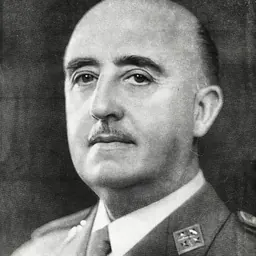
After the court's decision, the only legal solution was the commuting of Julián Grimau's sentence into a prison term by Franco himself. Various chiefs of state appealed to the Spanish Caudillo, including Pope John XXIII and Soviet Union leader Nikita Khrushchev (a notable event in itself, since it was the first time a Soviet politician addressed the Spanish State). The pressure was echoed in Spain itself, with several personalities asking for clemency. The government met on 19 April, in a session that lasted ten hours: although Fernando María Castiella, the minister of foreign affairs, declared himself in favor of the pardon (bearing in mind the consequences on Spain's image), his opposition was timid. Franco imposed voting on the matter, and the final verdict was unanimity for Grimau's execution.
Death
The firing squad he faced was to be composed of Guardia Civil members, but they refused to carry out the order, saying they did not bear responsibility for such things. The Madrid captain-general (apparently on direct orders from Franco) resorted to a second option, and called on volunteer enlisted soldiers, who carried out the execution.
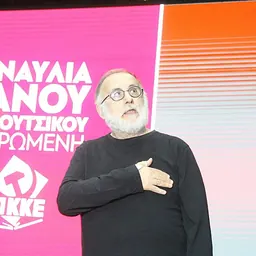
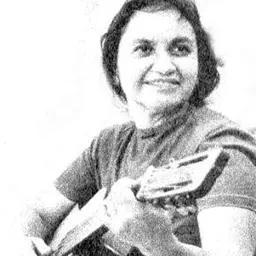
Grimau's death is the subject of a song by Violeta Parra (Qué Dirá El Santo Padre) as well as of one by Thanos Mikroutsikos (lyrics by Wolf Biermann), the French singer Léo Ferré (song Franco la muerte) and the Esperanto singer Gianfranco Molle (song Kamarado Ĵuljan' Grimaŭ).
Grimau's daughter Dolores married the writer and professor Gonzalo Santonja, a former communist who was later named in the Junta of Castile and León by Vox.
Don’t just read it —
keep it.
Full-length biographies made to live with: read them, listen on the way to work, watch them tonight.
- E-book
- Audio
- Video
Instant download · yours to keep · every purchase keeps this site free
Important facts
People in Julián Grimau's life
Named in this biography and alive at the same time




Related people
Same field, nearest in time






Contemporaries
People whose lives overlapped Julián Grimau's


Frequently asked questions
Who was Julián Grimau?
Spanish politician (1911-1963)
When was Julián Grimau born?
Julián Grimau was born on 18 February 1911 in Madrid.
When did Julián Grimau die?
Julián Grimau died on 20 April 1963 in Madrid.
What was Julián Grimau's occupation?
Julián Grimau was a politician and communist.
What nationality was Julián Grimau?
Julián Grimau was Spanish.
Sources & further reading
Cite this page
APA: Biography.guide. (2026). Julián Grimau. https://biography.guide/julian-grimau/
MLA: "Julián Grimau." Biography.guide, https://biography.guide/julian-grimau/.
Chicago: "Julián Grimau." Biography.guide. https://biography.guide/julian-grimau/.
Data last updated: 2026-09-24 · Spot an error? Report a correction.
Page generated 2026-09-27 05:01 UTC