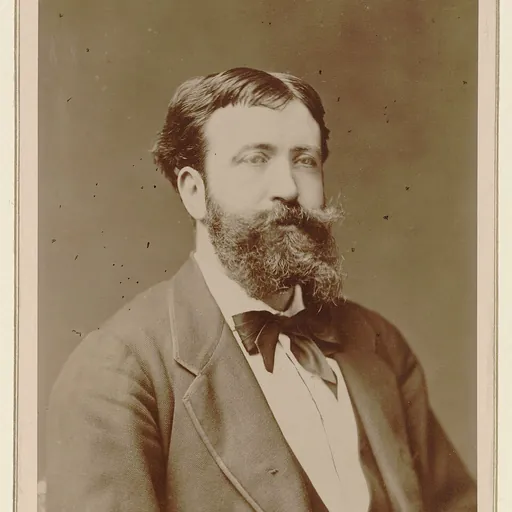
About Jules Garcin
Lived 1830 – 1896 (aged 66). Jules Garcin was a French conductor, composer, music educator and violinist.
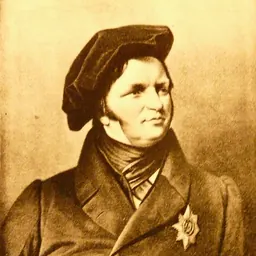
Jules Garcin in 1891 by Pierre PetitJules Auguste Garcin [Salomon] (11 July 1830 – 10 October 1896) was a French violinist, conductor and composer of the 19th century.
Life Garcin was born in Bourges. His maternal grandfather, Joseph Garcin, was director of a travelling company playing comic operas in the central and southern provinces of France.
Having entered the Paris Conservatoire in adolescence, studying under Clavel and Alard, Garcin took the Premier Prix for violin in 1853, and entered the Opéra orchestra in 1856. He became solo violinist, then third conductor in 1871, and finally chief conductor in 1885.
His long and successful teaching career at the Conservatoire de Paris began in 1875. Among his notable students were the child prodigy Henri Marteau (1874–1934) and Jules Boucherit (1877–1962).
Garcin's association with the Orchestre de la Société des Concerts du Conservatoire began in 1860, again as orchestral and then as solo violinist. In 1885, he was elected principal conductor of the Conservatoire concerts. In this post he actively promoted German choral and symphonic masterpieces, from Bach's Mass in B minor (in 1891) to works of Brahms and Wagner (Brahms's music was then the object of much adverse criticism in Paris during the Franco-Prussian War). He was a founder-member of the Société Nationale de Musique in 1871. He wrote some music (including a violin concerto and viola concertino), a certain amount of which was published by Lemoine.
Garcin also conducted the premiere of Franck's Symphony in D minor on 17 February 1889 at the Paris Conservatoire. This Symphony was dedicated to Henri Duparc, who was a member of "la bande à Franck" at the Conservatoire, along with Vincent D’Indy, Emmanuel Chabrier, and Paul Dukas. Three years later in 1892, Garcin retired and relinquished the post due to illness, but continued teaching. He died in Paris in 1896.
He performed on violins by Antonio Stradivari, the "Il Cremonese" of 1715 (now known as the Ex-Joachim), another Stradivari (Cremona, 1731) (now known as the ex-Garcin), as well as "Le Messie", a copy of 1868 by Jean-Baptiste Vuillaume.
Accomplishments Prizes achieved include: 2nd Prix, solfège, 1843; 1er Prix 1844; 2nd Prix, violin, 1851; 1er Prix 1853.
Quotes
Selected compositions Chanson de Mignon, Op. 11 Concerto for violin and orchestra, Op. 14 Concertino for viola (or cello) and orchestra, Op. 19 (1870) Villanelle for violin and piano, Op. 26 Impromptu valse for violin and piano, Op. 29 Canzonetta Fantasie concertante (Coppelia) Scherzo for violin and piano Suite symphonique
Don’t just read it —
keep it.
Full-length biographies made to live with: read them, listen on the way to work, watch them tonight.
- E-book
- Audio
- Video
Instant download · yours to keep · every purchase keeps this site free
Important facts
People in Jules Garcin's life
Named in this biography and alive at the same time


Related people
Same field, nearest in time



Contemporaries
People whose lives overlapped Jules Garcin's


Frequently asked questions
Who was Jules Garcin?
French violinist, conductor and composer (1830–1896)
When was Jules Garcin born?
Jules Garcin was born on 11 July 1830 in Bourges.
When did Jules Garcin die?
Jules Garcin died on 10 October 1896 in Paris.
What was Jules Garcin's occupation?
Jules Garcin was a conductor, composer, music educator and violinist.
What nationality was Jules Garcin?
Jules Garcin was French.
Sources & further reading
Cite this page
APA: Biography.guide. (2026). Jules Garcin. https://biography.guide/jules-garcin/
MLA: "Jules Garcin." Biography.guide, https://biography.guide/jules-garcin/.
Chicago: "Jules Garcin." Biography.guide. https://biography.guide/jules-garcin/.
Data last updated: 2026-09-21 · Spot an error? Report a correction.
Portrait: Wikimedia Commons · author & licence
Page generated 2026-09-27 05:01 UTC