
About Judson Claudius Clements
Lived 1846 – 1917 (aged 71). Judson Claudius Clements was an American politician and lawyer.
Judson Claudius Clements (February 12, 1846 – June 18, 1917) was a U.S. Representative from Georgia. Clements married Bettie Wardlaw, but she died after only a year, and he remained a widower for many years.
Lawyer and political career Clements graduated from Cumberland School of Law at Cumberland University, Lebanon, Tennessee, in 1868. He was admitted to the bar in 1869 and commenced practice in La Fayette, Georgia, remaining in practice there until 1887. Clements was elected as school commissioner of Walker County in 1871 and 1872. He served as member of the Georgia House of Representatives from 1872 to 1876, then in the Georgia State Senate Clements' brothers would keep his political "fences in good repair", assuring his renomination in subsequent years. Clements was elected as a Democrat to the Forty-seventh and to the four succeeding Congresses (March 4, 1881 – March 3, 1891). In 1887, Clements moved from La Fayette to Rome, Georgia, where he served for a year as president of the Chattanooga, Rome, and Columbus Railroad.
Clements welcomed reconciliation between North and South. At an 1889 reunion of veterans, Clements stated that Northern and Southern veterans had worked together to rebuild the South after the Civil War.
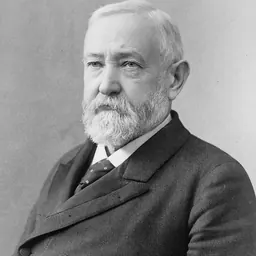
In 1891, President Benjamin Harrison appointed the former congressman as a special United States Attorney to negotiate the purchase of lands for the Chickamauga and Chattanooga National Military Park. Clements had represented the Chickamauga area, and he had worked hard for the passage of the bill authorizing the park. In an April 1891 interview, Clements indicated that he had been able to secure 1,300-1,400 acres but progress had been slow due to absentee owners and the unwillingness of landowners to live under War Department rules in the incipient park. He stated that he expected most negotiations to be concluded by late 1891.
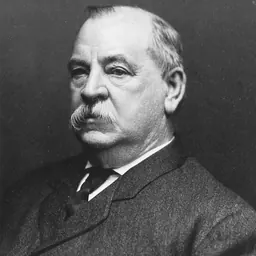
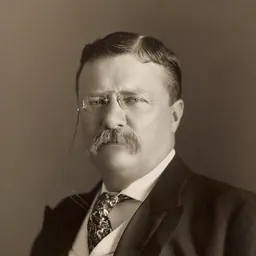
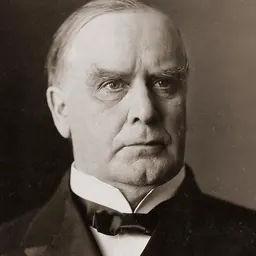
Interstate Commerce Commission On March 6, 1892, Clements was appointed by President Harrison to the Interstate Commerce Commission, filling the unexpired term of Commissioner Walter L. Bragg of Alabama, who had died. After being confirmed by the Senate, Clements was sworn in on March 17, 1892. On December 12, 1910, with the resignation of longtime Commission chair Martin A. Knapp, he became acting chairman of the Committee, and in 1911 became chairman of the Commission for a one-year term. In addition to being appointed by President Harrison, he was reappointed by Presidents Grover Cleveland, William McKinley, Theodore Roosevelt, and Woodrow Wilson, and served as a commissioner until his death in Washington, D.C., June 18, 1917.
In 1916, Clements proposed that no worker be allowed to quit a railway company or urge others to do the same until the Commission had the opportunity to investigate the matter in a fair and equitable manner. Locomotive Engineers Journal decried the proposal, especially as no provision was made for preventing the railroads from discharging workers at will.
As a commissioner, he was considered to be a radical. Clements was among the commissioners who led the fight for the Commission to get real power over the railroads, a battle which nearly led to the Commission being legislated out of existence but which resulted in the passing of the Hepburn Act in 1906. His predecessors had continued to serve as chair until they left the Commission; however, Clements chose to serve only the one-year term. He was interred in Cave Hill Cemetery, Louisville, Kentucky. His twenty-five years on the Interstate Commerce Commission remained a record until surpassed by Balthasar H. Meyer, who served 28 years from 1911 to 1939.
It was said of Clements that no opinion written by him was overturned in substance by the Supreme Court of the United States.
He died on June 18, 1918, in Washington, D.C.
Don’t just read it —
keep it.
Full-length biographies made to live with: read them, listen on the way to work, watch them tonight.
- E-book
- Audio
- Video
Instant download · yours to keep · every purchase keeps this site free
Important facts
Family & relationships
People in Judson Claudius Clements's life
Named in this biography and alive at the same time

Related people
Same field, nearest in time






Contemporaries
People whose lives overlapped Judson Claudius Clements's



Frequently asked questions
Who was Judson Claudius Clements?
American politician (1846-1917)
When was Judson Claudius Clements born?
Judson Claudius Clements was born on 12 February 1846 in Villanow.
When did Judson Claudius Clements die?
Judson Claudius Clements died on 18 June 1917 in Washington, D.C..
What was Judson Claudius Clements's occupation?
Judson Claudius Clements was a politician and lawyer.
What nationality was Judson Claudius Clements?
Judson Claudius Clements was American.
Sources & further reading
· Wikipedia: Judson Claudius Clements
Cite this page
APA: Biography.guide. (2026). Judson Claudius Clements. https://biography.guide/judson-claudius-clements/
MLA: "Judson Claudius Clements." Biography.guide, https://biography.guide/judson-claudius-clements/.
Chicago: "Judson Claudius Clements." Biography.guide. https://biography.guide/judson-claudius-clements/.
Data last updated: 2026-09-20 · Spot an error? Report a correction.
Page generated 2026-09-27 05:24 UTC