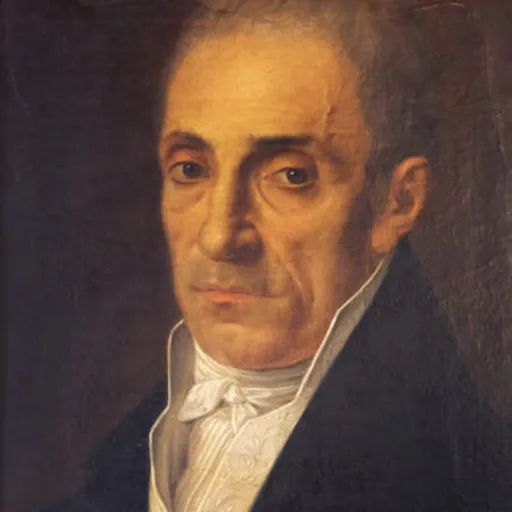
About Juan Sánchez Ramírez
Lived 1762 – 1811 (aged 48–49). Juan Sánchez Ramírez was a Spanish politician and military personnel.
Juan Sánchez Ramírez (1762 – February 11, 1811) was a Dominican general who was the primary leader of the War of Reconquista. He is known for leading the troops in the Battle of Palo Hincado. The decisive Dominican victory resulted in the end of French rule in eastern Hispaniola in 1809. He was the first Dominican to serve as governor of Santo Domingo.
In 1795, the island of Santo Domingo ceased to be linked to Spain by the Peace Treaty of Basel (Switzerland), which put an end to the War of the Convention (1793–1795), by which it passed under French rule. In 1808, after Napoleon invaded Spain, the La Reconquista movement was created on the island, led, among others, by Sánchez Ramírez, with the aim of returning to Spanish rule.
Sánchez Ramírez, an agricultural landowner of Criollo origin, had already fought against the French in the War of the Convention, and in 1803 he had emigrated to Puerto Rico, from where he returned in 1807 to foment the insurrection. To do this, he requested the help of the governor of Puerto Rico, Toribio Montes, and of Dominican settlers who had fled to that island, with whose forces he revolted against the French troops of general and governor Jean-Louis Ferrand, whom he defeated on November 7, 1808 in the historical Battle of Palo Hincado. According to historian Francisco A. Rincón, he was the son of Miguel Sánchez and Francisca Ramírez. Juan Sánchez Ramírez had two brothers: Remigio and Rafael. The last of them was Magistrate of Cotuí in the Haitian period of the Dominican Republic.
Following the capture of Gipuzkoa, the then Spanish Secretary of State, Manuel Godoy, began to raise concern. He felt that this would cause Vascongadas to switch allegiance from Spain and ally with France. Seeking to end the war, the Spanish government began to consider negotiations. France demanded the version of Gipuzkoa, Louisiana, and the eastern colony of Hispaniola, Santo Domingo. Spain, however, sought the preservation of the Catholic faith, (which had been replaced with the Cult of Reason), in addition to the territories where the late king's son, Louis XVII, could loosen its sovereignty, as well as the restriction of the limits to the situation prior to the war. Unfortunately, France rejected Spain's request, referring to their demands as a direct insult to French sovereignty. By May 1795, new negotiations were held in Basel. France once again proposed in securing Gipuzkoa, Santo Domingo, and Louisiana. Domingo d'Yriarte, however, was instructed not to cede any territories, opting to seek the release of Louis XVII. A month later, Godoy agrees to sign a preliminary treaty, recognizing revolutionary France. The treaty's term included limiting Spain's domain, restoring Catholicism in France, freeing the children of Louis XVI and forming an alliance against Great Britain. (This would stipulate in the 1796 Second Treaty of San Ildefonso). On July 22, the definitive treaty was signed, and in return for the occupied Spanish territories, Spain would cede Santo Domingo to France. While commercial relations renewed, Spain also agreed to refrain from any persecutions of the French, as well as the release of María Teresa de Borbón. On December 13, 1808, he returned to the city with his troops.
Under his government, Santo Domingo again traded with the allied countries to Spain, and the Universidad Santo Tomás de Aquino (UASD) was reopened. He suspended the confiscations that the French government had executed against the colony. He also allowed the British to trade in the ports of Santo Domingo. However, Ramirez re-established slavery, which had been abolished by the Haitians,
Personal life Eventually, Ramírez became a landowner. He married Josefa del Monte y Pichardo, with whom he had two children: Juana and José. In Santo Domingo, Ramírez resided on Padre Billini's street. After his death, his supposedly impoverished family moved to San Carlos, Santo Domingo, his widow lamenting 'he had many jobs but never a salary'.
Legacy
The beginning of the 19th century was the beginning of a stage that marked important pages in Dominican history. Over a period of just over 100 years they were the men under whose leadership the country was formed and established. This entire stage began with a man who, believing in an ideal and knowing how to understand the historical moment in which he lived, knew how to mobilize his men in pursuit of a cause that many considered already lost. He was a man of command, and at the same time, a cultured man. Fair and brave, he was known as a man who loved his country and its culture.
His death was deeply felt throughout the territory of Spanish Santo Domingo, posthumously receiving the title of "Father of the Country." His remains currently rest in the Dominican National Pantheon, in the Main Altar, along with the remains of his right-hand son at the battle of Palo Hincado. However, despite his heroism in defeating the French, his name still carries controversy due to the re-establishment of slavery and his suppression of independence plots. It wasn't years later when his former lieutenant, José Núñez de Cáceres, toppled the Spanish government and declared independence on December 1, 1821. A street in Santo Domingo is named after him. The province of Sánchez Ramírez is named in his honor. A statue of Sánchez Ramírez is placed in Plaza Juan Sánchez Ramírez in the city of Cotuí.
Don’t just read it —
keep it.
Full-length biographies made to live with: read them, listen on the way to work, watch them tonight.
- E-book
- Audio
- Video
Instant download · yours to keep · every purchase keeps this site free
Important facts
People in Juan Sánchez Ramírez's life
Named in this biography and alive at the same time
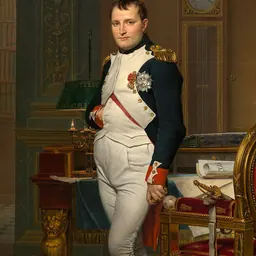



Related people
Same field, nearest in time


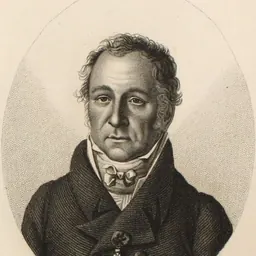
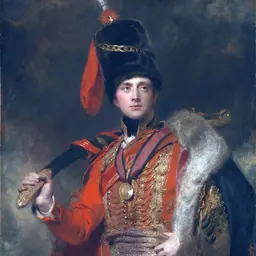

Contemporaries
People whose lives overlapped Juan Sánchez Ramírez's




Frequently asked questions
Who was Juan Sánchez Ramírez?
Dominican Republic politician
When was Juan Sánchez Ramírez born?
Juan Sánchez Ramírez was born in 1762 in Captaincy General of Santo Domingo.
When did Juan Sánchez Ramírez die?
Juan Sánchez Ramírez died on 11 February 1811 in Santo Domingo.
What was Juan Sánchez Ramírez's occupation?
Juan Sánchez Ramírez was a politician and military personnel.
What nationality was Juan Sánchez Ramírez?
Juan Sánchez Ramírez was Spanish.
Sources & further reading
· Wikipedia: Juan Sánchez Ramírez
· DBpedia: Juan Sánchez Ramírez
Cite this page
APA: Biography.guide. (2026). Juan Sánchez Ramírez. https://biography.guide/juan-sanchez-ramirez/
MLA: "Juan Sánchez Ramírez." Biography.guide, https://biography.guide/juan-sanchez-ramirez/.
Chicago: "Juan Sánchez Ramírez." Biography.guide. https://biography.guide/juan-sanchez-ramirez/.
Data last updated: 2026-09-20 · Spot an error? Report a correction.
Page generated 2026-09-27 05:09 UTC