
Juan Donoso Cortés
Spanish author, political theorist and diplomat
About Juan Donoso Cortés
Lived 1809 – 1853 (aged 43). Juan Donoso Cortés was a Spanish writer, philosopher, politician, diplomat, university teacher and journalist.
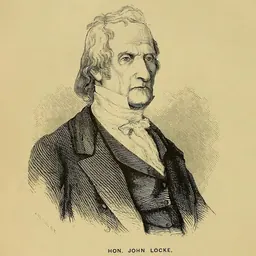
Juan Francisco María de la Salud Donoso Cortés y Fernández Canedo, marqués de Valdegamas (6 May 1809 – 3 May 1853) was a Spanish writer, diplomat, politician, and Catholic political theologian. During his youth, Juan Donoso was tutored by the liberal Antonio Beltran in Latin, French, and other subjects required for entrance to a university. At 11, possibly due to issues at home, Juan Donoso left to study at the University of Salamanca. He only remained there a year before leaving to study at the Colegio de San Pedro de Caceres. In 1823, at age 14, he entered the University of Seville to study law, and would remain there until 1828. It was here that Donoso Cortés first encountered philosophy; he fell under the influence of liberal and traditionalist thinkers such as John Locke and Louis de Bonald.
Donoso returned home to work at his father's law practice for a couple of years. At this time, he continued his eclectic reading habits. In October 1829, Cortés was offered a professorship in aesthetics and politics at the Colegio de San Pedro de Caceres. He criticized medieval feudalism but defended the Papacy and the Crusades, which he believed engendered vitality into European civilization. After the death of King Ferdinand VII, Donoso, along with most of Spain's liberals, backed the late king's fourth wife, Maria Christina, and her claim to the throne of Spain. They were opposed by Ferdinand's clerical and conservative brother Carlos, and his conservative supporters, who were known as Carlists. In 1832, Donoso wrote a memorandum to King Ferdinand defending female succession as being in line with the king's Pragmatic Sanction of 1830. For his efforts, the new queen regent would appoint Donoso to a position in the Secretariat of State.
The death of King Ferdinand in 1833 precipitated the First Carlist War. Donoso protested the massacre of friars by anti-clerical liberals in Madrid in July 1834 in a memo to Maria Christina.
Donoso's views began to shift after the 1836 rising at La Granja, where soldiers in the royal palace forced Maria Cristina to reinstitute the liberal Constitution of 1812. At this time Donoso was appointed as a cabinet secretary and elected to the Cortes as a member of the liberal Moderate Party, which represented bourgeois interests and supported a constitutional monarchy. At this time, he gave a series of lectures for the party, A Defense of Representative Government, where he lauded representative government and rationalism, but at the same time defended dictatorship as sometimes being a necessary evil.
The period between 1837 and 1840 saw the nadir of Donoso's journalistic career, writing for various publications such as El Correo Nacional, El Porvenir, and El Piloto. His drift into conservatism continued during this time; Donoso attacked Victor Hugo's depiction of Mary Stuart and argued in favour of the use of rich articles in religious rites. His most extensive article during this time, "Classicism and Romanticism", written in El Correo Nacional in August or September 1838, urged a synthesis between classicist and romantic art forms. Donoso's articles brought him a great deal of notoriety and condemnation, with 65 members of the Cortes accusing Donoso of being subversive.
Donoso recognized the power of the press and sought to influence public discussion through his publications, yet he was also one of the sharpest critics of the press and the freedom of the press. He believed that journalism was an almost sacred vocation, but that this vocation was often abused and was used to spread mindless chatter and gossip. He was critical of the use of the press to spread revolutionary, socialist, and anti-Christian ideas. Donoso went as far as to believe that freedom of the press itself was the result of the abandonment of Christian moral principles: editors were a new priesthood devoted to furthering the revolution and the authority of Christian doctrine was replaced with endless discussion. He was also critical of the use of the press by governments to achieve centralization and bureaucratization.
Shift to conservatism
By the end of the First Carlist War in 1839, Donoso had become disillusioned with liberalism, rationalism, and the bourgeoisie. He became something of a recluse and rarely left the royal palace. With the fall of the regency of Maria Christina, Donoso went into exile with the former Queen-regent; from March 1841 to the autumn of 1843, Donoso spent almost all of his time in Paris. During this time he began a history of the regency of Maria Christina; however, it would never be finished. During this time, Donoso came more strongly under the influence of the French traditionalists Joseph de Maistre and Louis de Bonald.
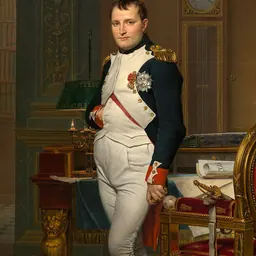
Later life In 1851, Donoso was appointed as the Spanish ambassador to France, presenting his credentials to the court of President, and later Emperor, Louis Napoleon, who would reign under the title of Napoleon III. Donoso was initially a confidant of Napoleon, and may have helped finance his coup. However, as time went on, it became clear that Donoso and Napoleon did not share a common intellectual purpose. Still, Donoso worked to obtain international recognition for the new regime and he represented Queen Isabella II at the Emperor's marriage to the Spanish countess Eugénie de Montijo.
Donoso's life took on a newfound piety during this time: he went on pilgrimage, wore a hair shirt, volunteered with the Society of St. Vincent de Paul, visited slums and prisons, and donated much of his wealth to the poor. He also spent much of time writing in opposition to the Liberal French Catholics and their leader Bishop Dupanloup. or Essays on Catholicism, Liberalism, and Socialism, Considered in their Fundamental Principles, the work for which he is most well-known. It was written at the insistence of Louis Veuillot, who was an intimate friend of Juan Donoso. The work placed Cortés in the first rank of Catholic apologists and made him a defender of Ultramontanism. It is an exposition of the impotence of all human systems of philosophy to solve the problem of human destiny and of the absolute dependence of humanity upon the Catholic Church for its social and political salvation. He excoriates liberalism as the bridge that ultimately leads to atheistic socialism.
Donoso Cortés's works were collected in five volumes at Madrid (1854–1855) under the editorship of Gavino Tejado. devotes large portions of his final chapter ("On the Counterrevolutionary Philosophy of the State") to Donoso Cortés, praising him for recognizing the importance of decision and of the concept of sovereignty. Schmitt also credited Donoso's Discourse on Dictatorship with initiating the demise of the progressive notion of history.
Don’t just read it —
keep it.
Full-length biographies made to live with: read them, listen on the way to work, watch them tonight.
- E-book
- Audio
- Video
Instant download · yours to keep · every purchase keeps this site free
Important facts
People in Juan Donoso Cortés's life
Named in this biography and alive at the same time



Related people
Same field, nearest in time

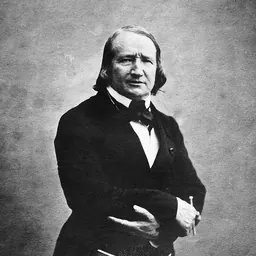

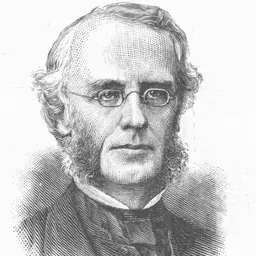
Contemporaries
People whose lives overlapped Juan Donoso Cortés's




Frequently asked questions
Who was Juan Donoso Cortés?
Spanish author, political theorist and diplomat (1809-1853)
When was Juan Donoso Cortés born?
Juan Donoso Cortés was born on 6 May 1809 in Valle de la Serena.
When did Juan Donoso Cortés die?
Juan Donoso Cortés died on 3 May 1853 in Paris.
What was Juan Donoso Cortés's occupation?
Juan Donoso Cortés was a writer, philosopher, politician, diplomat, university teacher and journalist.
What nationality was Juan Donoso Cortés?
Juan Donoso Cortés was Spanish.
Sources & further reading
· Wikipedia: Juan Donoso Cortés
Cite this page
APA: Biography.guide. (2026). Juan Donoso Cortés. https://biography.guide/juan-donoso-cortes/
MLA: "Juan Donoso Cortés." Biography.guide, https://biography.guide/juan-donoso-cortes/.
Chicago: "Juan Donoso Cortés." Biography.guide. https://biography.guide/juan-donoso-cortes/.
Data last updated: 2026-09-20 · Spot an error? Report a correction.
Page generated 2026-09-27 05:23 UTC