
About Juan Correa
Lived 1646 – 1716 (aged 69–70). Juan Correa was a Mexican painter.
Juan Correa (1646–1716) was a distinguished Mexican painter of the late seventeenth and early eighteenth centuries. His years of greatest activity were from 1671 to 1716.
Career Correa was the Afro-Mexican son of a mulatto (or dark-skinned) physician from Cádiz, Spain, and a freed black woman, Pascuala de Santoyo. Correa "became one of the most prominent artists in New Spain during his lifetime, along with Cristóbal de Villalpando."
Correa was a highly productive religious painter, with two major paintings in the sacristy of the Cathedral of Mexico City, one on the subject of the Assumption and Coronation of the Virgin (each from 1689), and the Entry into Jerusalem (1691). Elsewhere in the cathedral he created the Vision of the Apocalypse, and other versions of the Assumption and Coronation of the Virgin. His two canvases for the sacristy are regarded as masterpieces of Mexican baroque. Correa also painted major works for the Jesuit church in Tepozotlan, Mexico (now the Museum of the Viceroyalty), the Chapel of the Rosary in the convent of Azcapotzalco (in Mexico City) and—based on models by ——for the cathedral of Durango.
Correa was the teacher of José de Ibarra and Juan Rodríguez Juarez. His early style was described by Ilona Katzew (LACMA curator) as having a "vibrant palette, elegant composition, and overall emphasis on decorative details [, and] subtle color gradations that provide a sense of iridescence and contribute to the overall mystical effect.
Manuel Toussaint considers Correa and Villalpando the main exponents of the Baroque style of painting in Mexico. According to Toussaint, Correa was "important in achieving a new quality, in the creative impulse he expresses, and which one cannot doubt embodies the eagerness of New Spain for an art of its own, breaking away from its Spanish lineage. Here New Spain attains its own personality, unique and unmistakable." James Oles writes that "Correa and Villalpando created a distinctive—if at times formulaic—style that hearkened back to the strong Mannerist traditions of the mid-sixteenth century."
Collections Allegory of the Holy Sacrament Additionally, Agonía de San Francisco Javier, (c. late 17th century - early 18th) is part of the collection at the Gilcrease Museum in Tulsa, Oklahoma.
Gallery
Don’t just read it —
keep it.
Full-length biographies made to live with: read them, listen on the way to work, watch them tonight.
- E-book
- Audio
- Video
Instant download · yours to keep · every purchase keeps this site free
Important facts
People in Juan Correa's life
Named in this biography and alive at the same time


Related people
Same field, nearest in time

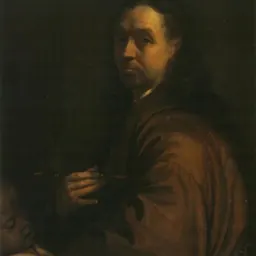
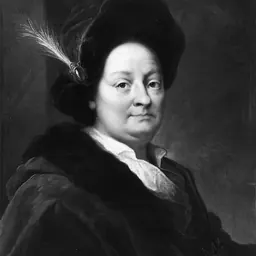
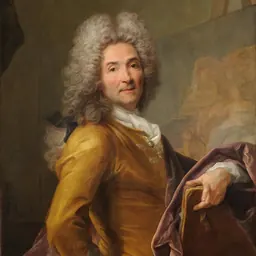
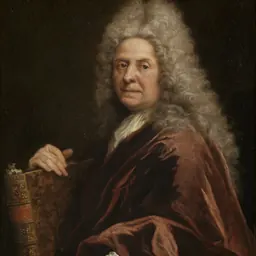
Contemporaries
People whose lives overlapped Juan Correa's



Frequently asked questions
Who was Juan Correa?
Mexican artist (1646-1716)
When was Juan Correa born?
Juan Correa was born in 1646 in Mexico.
When did Juan Correa die?
Juan Correa died in 1716.
What was Juan Correa's occupation?
Juan Correa was a painter.
What nationality was Juan Correa?
Juan Correa was Mexican.
Sources & further reading
Cite this page
APA: Biography.guide. (2026). Juan Correa. https://biography.guide/juan-correa/
MLA: "Juan Correa." Biography.guide, https://biography.guide/juan-correa/.
Chicago: "Juan Correa." Biography.guide. https://biography.guide/juan-correa/.
Data last updated: 2026-09-20 · Spot an error? Report a correction.
Page generated 2026-09-27 05:15 UTC