
About József Eötvös
Lived 1813 – 1871 (aged 57). József Eötvös was an Austrian and Hungarian writer and politician.
Baron József Eötvös de Vásárosnamény (; 3 September 1813 – 2 February 1871) was a Hungarian writer and statesman, the son of Ignác baron Eötvös de Vásárosnamény and Anna von Lilien, who stemmed from an Erbsälzer family of Werl in Germany. Eötvös name is sometimes anglicised as Joseph von Eotvos.
Biography The Baron József Eötvös de Vásárosnamény was born in the Hungarian aristocratic family Eötvös de Vásárosnamény. His father was the Baron Ignác Eötvös de Vásárosnamény (1786–1851), vice-chancellor of the Kingdom of Hungary, and his mother was the Baroness Anne von der Lilien (1786–1858).
On 13 September 1842 he married Ágnes Rosty de Barkóc (1825–1913). Baron Eötvös' brother in law was Pál Rosty de Barkócz (1830–1874), a Hungarian nobleman, photographer, explorer, who visited Texas, New Mexico, Mexico, Cuba and Venezuela between 1857 and 1859. Another brother-in-law was the politician Ágoston Trefort.
Eötvös disseminated his progressive ideas in the columns of the Pesti Hírlap, as well as in his novels The Village Notary (1844–1846) – one of the classics of Hungarian literature – Hungary in 1514, and the comedy Long live Equality!. The February Hungarian Revolution of 1848 was the complete triumph of Eötvös's ideas, and he held the portfolio of public worship and instruction in the first Hungarian ministry. Eötvös, Ferenc Deák and István Széchenyi represented the pacific, moderating influence in the council of ministers, but when the premier, Lajos Batthyány, resigned, Eötvös retired for a time to Munich during the War of Independence. Yet he continued to serve the cause in his influential writings, for example Influence of the Ruling Ideas of the 19th century on the State (Pest, 1851–1854, German editions at Vienna and Leipzig the same year).
On his return home, in 1851, he abstained from all political movements. In 1859 he published The Guarantees of the Power and Unity of Austria (the German edition was published in Leipzig the same year), in which he tried to arrive at a compromise between personal union and ministerial responsibility on the one hand and centralization on the other. After the Italian war, however, such a position was regarded as inadequate by the majority of the nation. In the diets of 1861, 1865, and 1867 Eötvös was one of the most loyal followers of Deák, with whose policy he now completely associated himself. On the formation of the Andrássy cabinet in February 1867 he once more accepted the portfolio of public worship and education, being the only one of the ministers of 1848 who thus returned to office. He had now, at last, the opportunity of realizing the ideals of a lifetime. That very year the diet passed his bill for the emancipation of the Jews; though his further efforts in the direction of religious liberty were less successful, owing to the opposition of the Catholics. Perhaps his greatest achievement was the National Schools Act, the most complete system of education provided for Hungary since the days of Maria Theresa. In 1866, he was elected president of the Hungarian academy. He died at Pest on 2 February 1871. On 3 May 1879 a statue was erected to him at Pest in the square which bears his name.
Family Loránd Eötvös Actor and playwright Leo Ditrichstein was his grandson.
Don’t just read it —
keep it.
Full-length biographies made to live with: read them, listen on the way to work, watch them tonight.
- E-book
- Audio
- Video
Instant download · yours to keep · every purchase keeps this site free
Important facts
People in József Eötvös's life
Named in this biography and alive at the same time




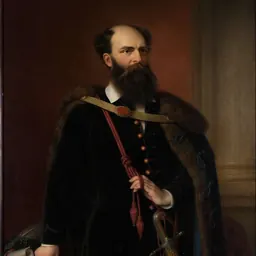
Related people
Same field, nearest in time
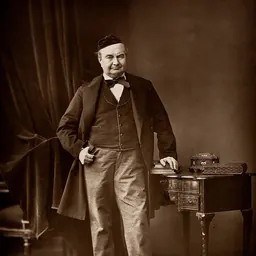
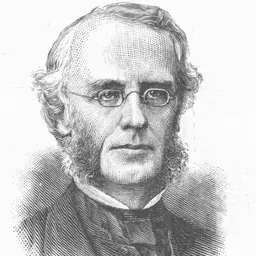
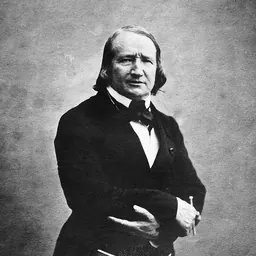

Contemporaries
People whose lives overlapped József Eötvös's





Frequently asked questions
Who was József Eötvös?
Hungarian politician (1813-1871)
When was József Eötvös born?
József Eötvös was born on 3 September 1813 in Buda.
When did József Eötvös die?
József Eötvös died on 2 February 1871 in Pest.
What was József Eötvös's occupation?
József Eötvös was a writer and politician.
What nationality was József Eötvös?
József Eötvös was Austrian and Hungarian.
Sources & further reading
Cite this page
APA: Biography.guide. (2026). József Eötvös. https://biography.guide/jozsef-eotvos-writer/
MLA: "József Eötvös." Biography.guide, https://biography.guide/jozsef-eotvos-writer/.
Chicago: "József Eötvös." Biography.guide. https://biography.guide/jozsef-eotvos-writer/.
Data last updated: 2026-09-20 · Spot an error? Report a correction.
Page generated 2026-09-27 05:28 UTC