
Joshua Toulmin Smith
British political theorist
About Joshua Toulmin Smith
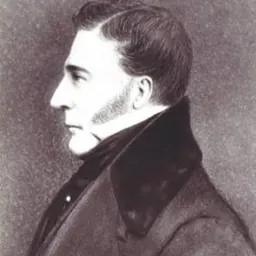
Lived 1816 – 1869 (aged 52). Joshua Toulmin Smith was a British barrister, local history and political theorist.
Joshua Toulmin Smith (29 May 1816 – 28 April 1869) was a British political theorist, lawyer and local historian of Birmingham.
Born in Birmingham as Joshua Smith, the son of William Hawkes Smith (1786–1840), an economic and educational reformer, radical and Unitarian. He moved to London in 1835 and pursued a career in law, studying at Lincoln's Inn. Smith was not called to the bar until 1849, as he interrupted his legal studies to settle between 1837 and 1842 with his new wife Martha in America where he lectured on philosophy and phrenology. Joshua Smith was an incessant writer. In 1839 he gained a diploma of the Royal Society of Antiquaries of Copenhagen for his work The Northmen in New England, or, America in the Tenth Century while his interest in geology and subsequent papers led to him being offered the position of President of the newly formed Geologists' Association, but other than delivering the inaugural speech, he did very little. However, the main focus of his writings for many years was as a proponent of local self-government through traditional institutions, such as the parish, the vestry and the ward, a subject also taken up by his daughter Lucy Toulmin Smith. After the cholera epidemic of 1847, Smith's knowledge of law combined with his involvement in his own Highgate neighbourhood led to his demanding better sanitation and reforms advocating devolution and local responsibility. In 1851 his work Local Self-Government and Centralisation was published and followed in 1854 by The Parish and its Obligations and Powers.
In 1852 Smith refused an offer to stand for the Parliamentary seat of Sheffield at the UK general election of that year. In 1854, he joined forces with the Revd M. W. Malet and W. J. Evelyn (MP for Surrey) to form the Anti-Centralisation Union, which survived until 1857. History has proved, he argued, that "local Self-Government did exist in England and was a force to keep in check the most ambitious monarchs". This view was based in part on interpretation of medieval documents such as the Domesday Book (a survey of property in England compiled under the orders of William the Conqueror in 1086). In The Parish, Smith describes the Domesday Book as "a record of the action of the institutions of Local Self-Government of a free people".
Smith's mistrust of Parliament led to the establishment of the Parliamentary Remembrancer (1857–1865), a weekly journal which recorded the actions of Parliamentary sessions for the benefit of local authorities and the general public. However, the Remembrancer was also used to instruct. For example, Smith gave much space and enthusiasm to a project in 1861 to reproduce Domesday Book as individual counties using a new photographic process called photozincography under the supervision of Sir Henry James at the Ordnance Survey. In the Remembrancer Smith promoted Domesday Book as being the story of free Englishmen in a free England and expressed a desire that every man who cared about the well-being of his country should possess a copy and be familiar with its content. He actively encouraged subscribers and accused gentlemen who did not subscribe to the photo-zincographic Domesday of being unpatriotic and benighted.
The laborious task of conducting the Remembrancer combined with Smith's other responsibilities including his legal practice has been blamed for his deteriorating health. Smith drowned in 1869 at Lancing, West Sussex.
Related collections 1285–1870: deeds, correspondence and papers, chiefly concerning the Old Crown Inn, Deritend are housed at Birmingham: Archives and Heritage Service. 1836–51: correspondence with George Combe housed at the National Library of Scotland, Manuscript Collections. 1862–67: correspondence with George Holyoake housed at the National Co-operative Archive. 1852–61: letters from F. W. Newman housed at the British Library, Manuscript Collections. 1847–1866: letters (31) correspondence with Sir Richard Owen and William Clift housed at the Natural History museum.
Don’t just read it —
keep it.
Full-length biographies made to live with: read them, listen on the way to work, watch them tonight.
- E-book
- Audio
- Video
Instant download · yours to keep · every purchase keeps this site free
Important facts
People in Joshua Toulmin Smith's life
Named in this biography and alive at the same time

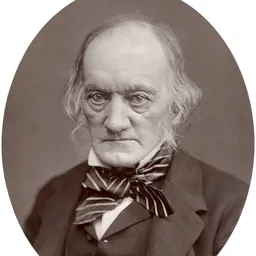

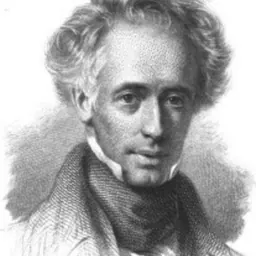
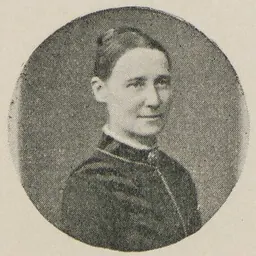
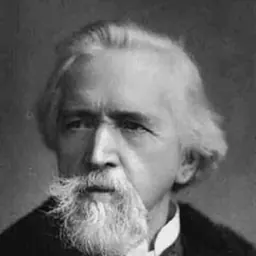

Related people
Same field, nearest in time



Contemporaries
People whose lives overlapped Joshua Toulmin Smith's



Frequently asked questions
Who was Joshua Toulmin Smith?
British political theorist
When was Joshua Toulmin Smith born?
Joshua Toulmin Smith was born on 29 May 1816 in Birmingham.
When did Joshua Toulmin Smith die?
Joshua Toulmin Smith died on 28 April 1869 in Lancing.
What was Joshua Toulmin Smith's occupation?
Joshua Toulmin Smith was a barrister, local history and political theorist.
What nationality was Joshua Toulmin Smith?
Joshua Toulmin Smith was British.
Sources & further reading
· Wikipedia: Joshua Toulmin Smith
· DBpedia: Joshua Toulmin Smith
Cite this page
APA: Biography.guide. (2026). Joshua Toulmin Smith. https://biography.guide/joshua-toulmin-smith/
MLA: "Joshua Toulmin Smith." Biography.guide, https://biography.guide/joshua-toulmin-smith/.
Chicago: "Joshua Toulmin Smith." Biography.guide. https://biography.guide/joshua-toulmin-smith/.
Data last updated: 2026-09-22 · Spot an error? Report a correction.
Page generated 2026-09-27 05:06 UTC