
About Joseph White
Lived 1932 – 2017 (aged 85). Joseph White was an American psychologist, known for Association of Black Psychologists.
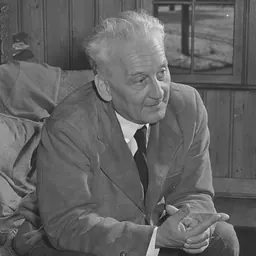
Joseph L. White Jr. (December 19, 1932 – November 21, 2017) was an American scholar who served as professor of psychology and psychiatry at the University of California, Irvine. He is widely regarded as the "godfather" of the field of Black psychology.
Early life and education Joseph White was born on December 19, 1932, in Lincoln, Nebraska to Dorothy Lee and Joseph L. White Sr. At a very young age, his family moved to Minneapolis where they remained until White's mother sent him to San Francisco to live with his aunt after completing high school. White only intended to work as a waiter; however, his aunt, Reverend Margaret Brown, suggested that he go to college.
As an African American child growing up before the Civil Rights Movement, White experienced a society shaped by racial segregation, discrimination, and unequal educational opportunities. After his family relocated to Minneapolis and later to San Francisco, he encountered different social environments that exposed him to both the barriers and possibilities facing Black Americans in the mid-twentieth century. These experiences helped shape his later commitment to developing a psychology that accurately reflected the strengths and lived experiences of African Americans.
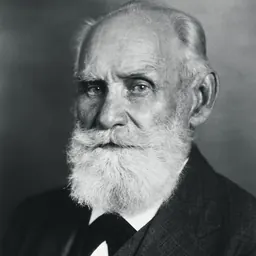
Joseph White received his BA from San Francisco State University, and his PhD in clinical psychology at Michigan State University in 1961. Paying an admission cost of $14.25. White was a good athlete in high school which earned him a job working at a playground in a city neighborhood. This is where he found his love for psychology. Ivan Pavlov was an influential psychologist for White, likely being his earliest influence in regards to psychology.
When White completed his Ph.D. in clinical psychology at Michigan State University in 1961. He became the first Black student at Michigan State University to earn a doctorate in clinical psychology. At the time, African Americans were severely underrepresented in doctoral psychology programs. White later noted that he was among only a handful of Black psychologists in the United States, highlighting the significant barriers faced by Black scholars pursuing careers in psychology during the early 1960s. He was one of only five Black psychologists in the United States when he earned his doctorate. This fact illustrates just how isolated Black psychologists were in the early 1960s and helps explain why White believed psychology needed to change. His success represented an important milestone in increasing diversity within the profession.
Career After he finished at San Francisco State, White served 24 months in the military. He did not immediately get accepted into graduate school. Luckily, San Francisco State was creating a Master's program and agreed to admit him to the program and help him gain admission to a doctorate program. Two years later, he was accepted at Michigan State.
White's work establishing the Educational Opportunity Program (EOP) at California State University, Long Beach represented far more than a student support initiative. The program was designed to increase access to higher education for students from historically underrepresented racial, ethnic, and economically disadvantaged backgrounds by providing academic advising, financial assistance, mentoring, and institutional support. The success of the original program led to its adoption throughout the California State University system, where EOP continues to serve thousands of students annually. White viewed educational access as an essential component of social justice and believed that universities had a responsibility to address structural barriers rather than expecting students to adapt to institutions designed around White middle-class norms.
White recalled the reactions of people in psychology to him as hesitant, since he was the only African American in many programs. People did not think that Black students had the advanced capacity to do graduate level work. He attempted to get some of his required classes waived because of his work at San Francisco State but Michigan State would not honor this request. He was well rounded and took many classes in his major at San Francisco and as a result ended up at the top of his class at Michigan State.
While his main field of study was clinical psychology, White focused a lot of his attention on aiding and supporting disadvantaged students of color in their path to acquire knowledge by developing curriculum that caters to the needs of students of color. In his quest to reform the education system, White rejects the use of white middle class norms in determining the standards of education. While at California State University, Long Beach, White helped in establishing the Educational Opportunities Program (EOP) which became a program implemented across the California State University campuses.
In 1968, White helped found the Association of Black Psychologists along with a few other Black Psychologists during the 1968 conference of the American Psychological Association. "We cannot depend on them to define us. We have to take charge and define ourselves. We need to build our own psychology." This quote was a result of the meeting of those few Black Psychologists who saw a need for change in how psychology is applied to Blacks. During this same time, while serving as a professor and dean of undergraduate studies, White yielded to the needs of the students in helping to establish the first Black Studies Program during the 1968 strike at San Francisco State University. In addition to his research, Joseph White was a professor who had been a practicing psychologist as well as a consultant. White had worked as a psychologist to five hospitals and three clinics in Southern California and over the years had served as a consultant for school districts, universities, private organizations, drug prevention programs, and government agencies.
"Toward a Black Psychology" Joseph White's 1970 article "Toward a Black Psychology", published in Ebony Magazine, was a seminal document in the formation of African-American Psychology as a professional field and the rise of ethnic and cultural psychology. The article argued that whatever the future of race relations and the destiny of Black people, the creation of a Black Psychology was necessary because the psychology created by White people could never adequately apply to African-Americans. This is because White psychologists would fail to account for the lived Black experience. One example White uses in the text is the idea of White psychologists assuming a black child is under-educated based on how the child uses grammar and syntax rather than understanding the child is speaking from an African-American English dialect. White went further to point out that the application of mainstream White psychology to Black people resulted in weakness-oriented deficit finding, rather than an accurate appraisal of the situation of people of African descent.
Death White died on 21 November 2017 from a heart attack on a plane while flying to visit his family in St. Louis, Missouri for Thanksgiving.
Personal life His first wife and mother to his three children, Lori, Lisa, and Lynn, was Myrtle Escort White. His second wife of over thirty years was Lois White. His commitment to mentoring extended beyond traditional academic advising, as he actively encouraged students from historically underrepresented backgrounds to pursue graduate education and leadership positions within psychology. Many of his mentees later became prominent scholars, clinicians, and educators, extending his influence across multiple generations of psychologists. Works
Don’t just read it —
keep it.
Full-length biographies made to live with: read them, listen on the way to work, watch them tonight.
- E-book
- Audio
- Video
Instant download · yours to keep · every purchase keeps this site free
Important facts
People in Joseph White's life
Named in this biography and alive at the same time





Related people
Same field, nearest in time



Contemporaries
People whose lives overlapped Joseph White's
Frequently asked questions
Who was Joseph White?
American psychologist (1932–2017)
When was Joseph White born?
Joseph White was born on 19 October 1932 in Lincoln.
When did Joseph White die?
Joseph White died on 21 November 2017.
What was Joseph White's occupation?
Joseph White was a psychologist.
What was Joseph White known for?
Joseph White was known for Association of Black Psychologists.
What nationality was Joseph White?
Joseph White was American.
Sources & further reading
· DBpedia: Joseph White (psychologist)
Cite this page
APA: Biography.guide. (2026). Joseph White. https://biography.guide/joseph-white/
MLA: "Joseph White." Biography.guide, https://biography.guide/joseph-white/.
Chicago: "Joseph White." Biography.guide. https://biography.guide/joseph-white/.
Data last updated: 2026-09-20 · Spot an error? Report a correction.
Page generated 2026-09-27 04:59 UTC