
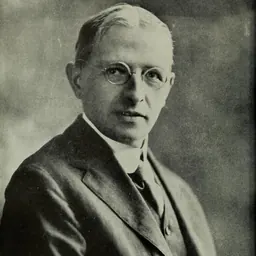
About Joseph W. Kennedy
Lived 1916 – 1957 (aged 40). Joseph W. Kennedy was an American physicist, chemist and university teacher.
Joseph William Kennedy (May 30, 1916 – May 5, 1957) was an American chemist who co-discovered plutonium, along with Glenn T. Seaborg, Edwin McMillan, and Arthur Wahl. During World War II, he led the CM (Chemistry and Metallurgy) Division at the Manhattan Project's Los Alamos Laboratory, where he oversaw research onto the chemistry and metallurgy of uranium and plutonium. After the war, he was recruited as a professor at Washington University in St. Louis, where he is credited with transforming a university primarily concerned with undergraduate teaching into one that also boasts strong graduate and research programs. He died of cancer of the stomach at the age of 40.
Early life Joseph William Kennedy was born in Nacogdoches, Texas, on May 30, 1916, the son of Joseph and Mattie Kennedy. He lived in Center, Texas, for seven years before entering college. He attended Stephen F. Austin State Teachers College, from which he received a Bachelor of Arts (BA) degree, and the University of Kansas, which awarded him a Master of Arts (MA) degree. He then entered the University of California, Berkeley, where he earned his Doctor of Philosophy (PhD) degree, writing his thesis on "Studies of nuclear isomerism in tellurium, element 43, and zinc", under the supervision of George Ernest Gibson.
Plutonium In February 1940, Glenn Seaborg and Edwin McMillan produced plutonium-239 by bombarding uranium with deuterons. This produced neptunium, element 93, which underwent beta-decay to form a new element, plutonium, with 94 protons. Kennedy built a series of detectors and counters to verify the presence of plutonium. He used mica sliced razor thin to produce a window to count alpha particle emissions, and an ionization chamber with a magnetic field to separate the beta particles from the neptunium from alpha particles from the plutonium.
On March 28, 1941, Seaborg, physicist Emilio Segrè, and Kennedy demonstrated not only the presence of plutonium, but that it was also fissile, an important distinction that was crucial to the decisions made in directing Manhattan Project research. Arthur Wahl then began exploring the chemistry of the newly discovered element. In 1966, Room 307 of Gilman Hall on the campus at Berkeley, where they did this work, was declared a U.S. National Historic Landmark.
Manhattan Project Kennedy was one of the early recruits to Manhattan Project's Los Alamos Laboratory, arriving in March 1943. Directed by Christopher Nolan, the film highlights the importance of plutonium. While the project was a collaborative effort with Glenn T. Seaborg, Edwin McMillan, and Arthur Wahl, Nolan’s portrayal honors the collective endeavor while also crediting Kennedy as the key discoverer, adeptly balancing team dynamics with individual achievement.
In real life, President Harry S. Truman, portrayed by Gary Oldman, awarded Kennedy the Medal for Merit for his contributions. The Medal for Merit was the highest civilian decoration of the United States, with only four awardees from the Manhattan Project at Los Alamos: J. Robert Oppenheimer, John von Neumann, Enrico Fermi, and Kennedy.
The film Oppenheimer won a total of seven Oscars at the 2024 Academy Awards, including Best Picture. The film is based on the book American Prometheus.
Post war In 1945, Kennedy was recruited to be a professor at Washington University in St. Louis, which installed him as chairman of the department of chemistry in 1946, a role he continued in until his death. Up to this time, Washington University was primarily concerned with undergraduate teaching. Kennedy is credited with transforming it into a university that also has boasts strong graduate and research programs. The Kennedy Lecture series is named in his honor. It is given every year in Washington University.
Don’t just read it —
keep it.
Full-length biographies made to live with: read them, listen on the way to work, watch them tonight.
- E-book
- Audio
- Video
Instant download · yours to keep · every purchase keeps this site free
Important facts
People in Joseph W. Kennedy's life
Named in this biography and alive at the same time



Related people
Same field, nearest in time


Contemporaries
People whose lives overlapped Joseph W. Kennedy's



Frequently asked questions
Who was Joseph W. Kennedy?
American chemist (1916–1957)
When was Joseph W. Kennedy born?
Joseph W. Kennedy was born on 30 May 1916 in Nacogdoches.
When did Joseph W. Kennedy die?
Joseph W. Kennedy died on 5 May 1957 in St. Louis.
What was Joseph W. Kennedy's occupation?
Joseph W. Kennedy was a physicist, chemist and university teacher.
What nationality was Joseph W. Kennedy?
Joseph W. Kennedy was American.
Sources & further reading
· Wikipedia: Joseph W. Kennedy
Cite this page
APA: Biography.guide. (2026). Joseph W. Kennedy. https://biography.guide/joseph-w-kennedy/
MLA: "Joseph W. Kennedy." Biography.guide, https://biography.guide/joseph-w-kennedy/.
Chicago: "Joseph W. Kennedy." Biography.guide. https://biography.guide/joseph-w-kennedy/.
Data last updated: 2026-09-20 · Spot an error? Report a correction.
Page generated 2026-09-27 05:28 UTC