
About Joseph V. Brady
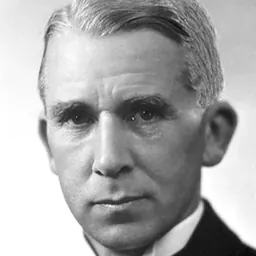
Lived 1922 – 2011 (aged 89). Joseph V. Brady was an American neuroscientist and psychologist.
Joseph Vincent Brady (March 28, 1922 – July 29, 2011) was an American psychologist, neuroscientist, and pioneer of behavioral pharmacology. In addition to his status as a founder of behavioral pharmacology, he made significant contributions in the areas of drug abuse and treatment, space exploration, and human research ethics.
Early life and education Brady was born in New York City in 1922 and attended school in the Catholic parochial school system in Brooklyn, New York. He began his undergraduate studies in 1940 at Fordham University, receiving a Bachelor of Science degree in 1943.
Graduate studies
Continuing his military service as a captain, Brady engaged in doctoral studies in the Department of Psychology at the University of Chicago under advisor Howard Hunt. Hunt was a former student of influential behaviorist B.F. Skinner at the University of Minnesota. Skinner and his functional analysis of behavior became an important influence on Brady, who used animal models throughout his career. Brady's dissertation research on conditioned emotional responses in rats demonstrated that conditioned anxiety responses could be eliminated through electroconvulsive shock and set the stage for later work on pharmacological agents such as reserpine that were emerging at the time as possible tools for psychiatric intervention. Brady received his doctorate in psychology in 1951.
Brady also took part in the National Aeronautics and Space Administration (NASA) animal pretest flights for Project Mercury. Brady and other behavioral analysts from Walter Reed, including Bernard Migler (who later invented Seroquel), and the University of Maryland trained a number of chimpanzees to complete simple timed tasks in response to stimuli such as flashing lights and sounds. Successful completion of the task resulted in reward with a banana pellet, while failure resulted in electric shock. Ham, one of the trained chimpanzees, successfully completed a sub-orbital flight in 1961, with his in-flight task performance similar to his previous performance on Earth, providing evidence that simple tasks could be performed during space-flight. That year, Enos, another trained chimpanzee, successfully completed a flight into Earth's orbit and was successfully recovered, though the behavioral analysis test malfunctioned during the flight.
Death On July 29, 2011, Brady died of cardiorespiratory arrest.
Notable publications Brady, J.V. (1951).The effect of electroconvulsive shock on a conditioned emotional response: the permanence of the effect Journal of Comparative and Physiological Psychology. 44: 507–511. DOI: 10.1037/h0062743 Brady, J.V.. (1956). Assessment of drug effects on emotional behavior Science. 123: 1033–1034. Brady, J.V. (1957). A review of comparative behavioral pharmacology. Annals of the New York Academy of Sciences. 66: 719–32. PMID 13425254 Brady, J.V., Griffiths, R.R. (1976). Behavioral procedures for evaluating the relative abuse potential of CNS drugs in primates. Federation Proceedings. 35: 2245–53. PMID 821784 Brady, J.V., Emurian, H.H. (1978). Behavior analysis of motivational and emotional interactions in a programmed environment. Nebraska Symposium On Motivation. Nebraska Symposium On Motivation. 26: 81–122. PMID 552609 Brady, J.V.. (1981). Common mechanisms in substance abuse. Nida Research Monograph. 37: 11–20. PMID 6798453 Brady, J.V., Bernstein, D.J., Foltin, R.W., Nellis, M.J. (1988). Performance enhancement in a semi-autonomous confined microsociety. The Pavlovian Journal of Biological Science. 23: 111–7. PMID 3174260 DOI: 10.1007/BF02701285 Brady, J.V., Hienz, R.D., Ator, N.A. (1990). Stimulus functions of drugs and the assessment of abuse liability Drug Development Research. 20: 231–249. DOI: 10.1002/ddr.430200209 Brady, J.V.. (1990). Toward applied behavior analysis of life aloft. Behavioral Science. 35: 11–23. PMID 11538209 Brady, J.V.. (1991). Animal models for assessing drugs of abuse. Neuroscience and Biobehavioral Reviews. 15: 35–43. PMID 2052196DOI: 10.1016/S0149-7634(05)80089-2 Brady, J.V.. (1993). Behavior analysis applications and interdisciplinary research strategies. The American Psychologist. 48: 435–40. PMID 8512155
Don’t just read it —
keep it.
Full-length biographies made to live with: read them, listen on the way to work, watch them tonight.
- E-book
- Audio
- Video
Instant download · yours to keep · every purchase keeps this site free
Important facts
People in Joseph V. Brady's life
Named in this biography and alive at the same time





Related people
Same field, nearest in time




Contemporaries
People whose lives overlapped Joseph V. Brady's

Frequently asked questions
Who was Joseph V. Brady?
American neuroscientist (1922–2011)
When was Joseph V. Brady born?
Joseph V. Brady was born on 28 March 1922 in New York City.
When did Joseph V. Brady die?
Joseph V. Brady died on 29 July 2011.
What was Joseph V. Brady's occupation?
Joseph V. Brady was a neuroscientist and psychologist.
What nationality was Joseph V. Brady?
Joseph V. Brady was American.
Sources & further reading
Cite this page
APA: Biography.guide. (2026). Joseph V. Brady. https://biography.guide/joseph-v-brady/
MLA: "Joseph V. Brady." Biography.guide, https://biography.guide/joseph-v-brady/.
Chicago: "Joseph V. Brady." Biography.guide. https://biography.guide/joseph-v-brady/.
Data last updated: 2026-09-20 · Spot an error? Report a correction.
Page generated 2026-09-27 05:17 UTC