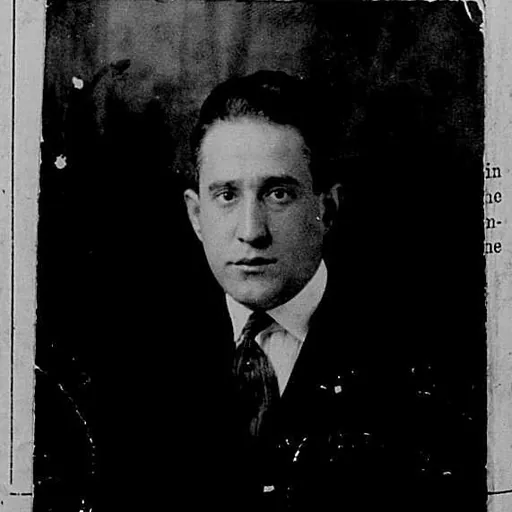
Joseph Seiden
American film director, cinematographer and film producer
About Joseph Seiden
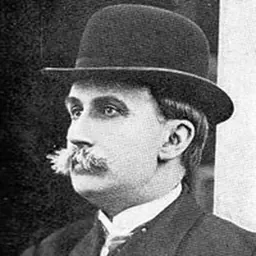
Lived 1892 – 1974 (aged 81–82). Joseph Seiden was an American film director, cinematographer, film producer, screenwriter and director.
Joseph Seiden (, 1892–1974) was a pioneering American Yiddish language film producer of the early twentieth century. He released a large number of low-budget, sentimental Yiddish dramas during the 1930s and 1940s. He also directed Paradise in Harlem, a 1940 musical film with an African American cast.
Biography Early life Seiden was born on July 23, 1892, in Manhattan. His father, Frank Seiden, a Jewish entertainer born in Galicia, Austria-Hungary, was at that time a working magician who ran a bar in the Bowery. While Joseph was still a child, his father became one of the first Yiddish language recording artists in the United States, recording comedy and music records at the turn of the century.
Career in film Projection and camera work Seiden was present at the very dawn of the film industry in the New York area as he was a picture operator and voiceover actor at age 15 for the vaudeville and Nickelodeon theaters his family ran, starting in around 1907 with a theater in Greenpoint, Brooklyn and in 1914 the Willott Street Theater on the Lower East Side. The comedian George Burns worked in the Columbia street theater as a child and described it in his memoir as a noisy place where the adjacent Billiards hall often drowned out the act. By 1916 the family moved from running theatres to founding a production company, with Joseph and his brother Jacob being on the board of the Teeaness Film Co., and in 1918 his own company, Seiden Films, which made short educational or industrial films. as film representative for Herbert Hoover and the American Relief Administration in Europe in the same year. He also continued to make industrial films in the United States, refounding his company in 1922 as the Seiden Industrial and Educational Film Corp. Associated.
Later in the 1920s Seiden continued to make money on the production and supply parts of the industry, running a company renting sound equipment for film production and another, the Seiden Camera Exchange, for film and photography equipment.
Producer It was in 1929, after the release of the first Yiddish language film, Ad Mosay, released as The Eternal Prayer, that Seiden banded together with Moe Berliner and Moe Goldman to found Judea Pictures, which immediately produced two short films with budgets of around $3,000: Style and Class and Shuster Libe. After those saw some success, the company produced its first full-length film, Mayne Yidishe Mame starring Mae Simon. The company then launched into production for a long series of full-length, low-budget Yiddish "talkie" films. Seiden knew how to skirt regulations to save money and would often film at night or on holidays to avoid scrutiny.
In 1930 Seiden tried to boost the international viewership of his films by securing a distribution deal in Mandatory Palestine.
In 1931 Seiden took over full ownership of Judea Pictures, and then in 1935 founded a new company called Jewish Talking Pictures. The new company's first major work was a remake of Jacob Gordin's The Yiddish King Lear, which was directed by Harry Thomashefsky.
By the end of the 1930s, although the market was saturated with far more Yiddish films than had existed a decade earlier, Joseph still thought he could make a profit by producing low-budget dramas. He rented a loft in Fort Lee, New Jersey to use as his new studio, and started off by filming Der Lebediker Yosem (The Living Orphan). After adapting Abraham Blum's Dray Tekhter (Three Daughters), Joseph turned to less commercially risky productions, and made the musical revues Catskill Honeymoon, Singers of Israel and Monticello, Here We Come. The center has since restored and reissued a number of Joseph's films, including God, Man and Devil in 1978 Motel the Operator in 2001, The Living Orphan in 2004, and Kol Nidre in 2012. His 1949 film God, Man and Devil was also re-released on video in 1991.
Selected filmography Yiddish Mama (מײַן ייִדישע מאַמע) (1930) Eli, Eli (193?) as producer and director. Living Orphan (Lebediker Yosem) (1937), as director and producer. Der Yiddisher Nigun (the Jewish Melody) (19??), as producer and director. Motl the Operator (1940), as producer, based on a play by Chaim Towber. Mazel Tov Yidden (1941), as producer and director.
Don’t just read it —
keep it.
Full-length biographies made to live with: read them, listen on the way to work, watch them tonight.
- E-book
- Audio
- Video
Instant download · yours to keep · every purchase keeps this site free
Important facts
People in Joseph Seiden's life
Named in this biography and alive at the same time





Related people
Same field, nearest in time

Contemporaries
People whose lives overlapped Joseph Seiden's


Frequently asked questions
Who was Joseph Seiden?
American film director, cinematographer and film producer (1892–1974)
When was Joseph Seiden born?
Joseph Seiden was born on 23 July 1892 in New York City.
When did Joseph Seiden die?
Joseph Seiden died in 1974 in New Hyde Park.
What was Joseph Seiden's occupation?
Joseph Seiden was a film director, cinematographer, film producer, screenwriter and director.
What nationality was Joseph Seiden?
Joseph Seiden was American.
Sources & further reading
Cite this page
APA: Biography.guide. (2026). Joseph Seiden. https://biography.guide/joseph-seiden/
MLA: "Joseph Seiden." Biography.guide, https://biography.guide/joseph-seiden/.
Chicago: "Joseph Seiden." Biography.guide. https://biography.guide/joseph-seiden/.
Data last updated: 2026-09-20 · Spot an error? Report a correction.
Portrait: Wikimedia Commons · author & licence
Page generated 2026-09-27 04:57 UTC