
About Jacob Gordin
Lived 1853 – 1909 (aged 56). Jacob Gordin was a Russian and American playwright, writer and journalist.
Jacob Michailovitch Gordin (; May 1, 1853 – June 11, 1909) was a Russian-American playwright active in the early years of Yiddish theater. He is known for introducing realism and naturalism into Yiddish theater.
The Cambridge History of English and American Literature characterizes him as "the acknowledged reformer of the Yiddish stage." At the time of his rise, professional Yiddish theater was still dominated by the spirit of the early (1886–1888) plays of its founder, Abraham Goldfaden, which derived in no small measure from Purim plays, often spectacles more than dramas; Goldfaden's later works were generally operettas on more serious subjects, perhaps edifying, but not naturalistic. Again quoting the Cambridge History, after his 1892 arrival in New York City, "Gordin took the Yiddish drama in America from the realm of the preposterous and put a living soul into it," bringing it up to the level of "realistic melodrama."
Life and career Gordin was born in Mirgorod in the Russian Empire (present-day Ukraine), and received a liberal though irregular education at home. He was recognized as a reformer and a Russian writer. He had also been a farmer, a journalist, a shipyard worker in Odessa, and, reportedly, an actor.
He migrated to New York in July 1891, and tried to make a living writing for Russian-language newspapers and the Yiddish socialist Arbayter tsaytung (the precursor to the Forverts, The Forward), but his acquaintanceship with the noted Jewish actors Jacob Adler and Sigmund Mogulesko prompted him to try his hand at play-writing.
His first play, Siberia, was based on a true story about a man sent as a prisoner to Siberia and who escaped, lived out a normal life for many years, and was then exiled again. Although initially it met a rocky reception (as did his second play, Two Worlds), it was a critical success. His third play The Pogrom in Russia was produced in January 1892 by the actor Boris Thomashefsky. In June 1892, Gordin signed a contract with Jacob Adler, and later that year, for Adler and his troupe, he wrote Der yidisher kenig lir (The Jewish King Lear), loosely adapted from Shakespeare and the Russian writer Ivan Turgenev's King Lear of the Steppes, and set in 19th-century Russia. It laid the foundation of his career as a Yiddish playwright. The play drew a new audience of Russian-Jewish intellectuals to the Yiddish theater and constituted a defining moment in Adler's career as well as Gordin's. It is widely seen as ushering in the first "Golden Age" of Yiddish theater in New York.
To some extent he had to compromise his modernist vision with the theatrical conventions of the time. As in the plays of Goldfaden, Moses Horowitz (Hurvitz), and Joseph Lateiner, dancing and songs unrelated to the plot still occupied a prominent part in the play, but Gordin's plots were naturalistic and the characters were living persons. Under the influence of his plays, Jewish actors began to regard their profession as one that calls for study and an earnest attitude.
Gordin is noted more for bringing naturalism and realism into the Yiddish theater than as an intrinsically great dramatist. Again quoting the Cambridge History, "With all the realism of his situations, with all the genuineness of his characters, he was rather a producer of plays for a particular theatrical troupe than a writer of drama. That his comic characters generally stand in organic relation to the play is one of his chief merits. Of his many pieces (about 70 or 80) only a score or so have been published." They single out as some of his best Mirele Efros, Got, Mentsh un Tayvl (God, Man, and Devil, based on Goethe's Faust), and Der Umbakanter (The Unknown).
Partial list of works Some of these plays may have earlier dates than indicated: it is possible that sources are referring to publication dates or revivals. Siberia, 1891 Der pogrom in rusland (The Pogrom in Russia), 1892 Tsvey veltn, oder Der groyser sotsialist (Two Worlds, or The Great Socialist). According to B. Gorin, 1892; according to Z. Zylbercweig, 1896 Der yidisher kenig lir (The Jewish King Lear), 1892 Der vilder mentsh (The Wild Man), 1893 Captain Dreyfus; Pogrom, Late 1890s "Di litvishe brider lurie" (The Lurie Brothers from Lithuania), 1894 Zelig itzik, der fidler, free adaptation of Schiller's Intrigue and Love (Kabal und Liebe) "Der folks faynd" (An Enemy of the People), an adaptation from Henrik Ibsen, 1896 Medea: a historishe tragedye, adapted from Franz Grillparzer, no later than 1897 Mirele Efros, oder di yidishe kenigin lir (Mirele Efros or the Jewish Queen Lear), 1898 Di shkhite (The Slaughter — the title refers to ritual slaughter, in accord with Kosher laws), 1899 Shloime khokhem (Solomon the Wise, Solomon Kaus), 1899-1900 Di shvue (The Oath), 1900 Got, mentsh un tayvl (God, Man, and Devil), 1900 Safo (Sappho), 1900 Der momzer (The Bastard), a reworking of Victor Hugo's Lucrezia de Borgia, 1901 Di makht fun finsternish, translation of The Power of Darkness by Leo Tolstoy 1902; Gorin lists as 1905 Di Kreytser sonata (The Kreutzer Sonata), 1902 Khasye di yesoyme (Khasia the orphan), 1903 Der emes or Die varhayt (The Truth), 1903 Ta'ares-hamishpokhe (Family Purity), 1904 Di emese kraft (The True Power), 1904 Tkhies-hameysim (Resurrection), adapted from the Tolstoy novel, 1904 Elisha Ben Abuyah, 1906 Der unbekanter (The Stranger), 1905 Der meturef (The Worthless), 1905 Der fremder (The Foreigner), 1906 On a heym (Homeless), 1907 Di sheyne Miryam, no later than 1908 Dementia Americana, 1908 Dovid'l meshoyrer (David the Choir Singer), 1907 Gots shtrof (God's Punishment)
Footnotes
Don’t just read it —
keep it.
Full-length biographies made to live with: read them, listen on the way to work, watch them tonight.
- E-book
- Audio
- Video
Instant download · yours to keep · every purchase keeps this site free
Important facts
People in Jacob Gordin's life
Named in this biography and alive at the same time

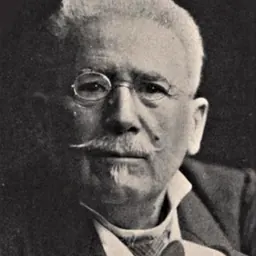

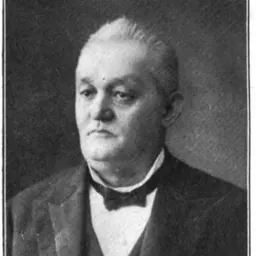
Related people
Same field, nearest in time



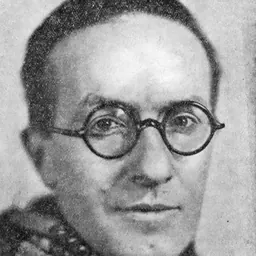

Contemporaries
People whose lives overlapped Jacob Gordin's
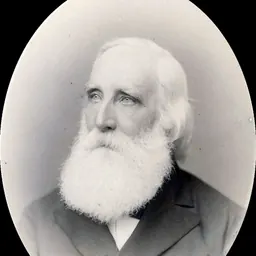

Frequently asked questions
Who was Jacob Gordin?
Yiddish playwright (1853–1909)
When was Jacob Gordin born?
Jacob Gordin was born on 1 May 1853 in Myrhorod.
When did Jacob Gordin die?
Jacob Gordin died on 11 June 1909 in New York City.
What was Jacob Gordin's occupation?
Jacob Gordin was a playwright, writer and journalist.
What nationality was Jacob Gordin?
Jacob Gordin was Russian and American.
Sources & further reading
Cite this page
APA: Biography.guide. (2026). Jacob Gordin. https://biography.guide/jacob-gordin/
MLA: "Jacob Gordin." Biography.guide, https://biography.guide/jacob-gordin/.
Chicago: "Jacob Gordin." Biography.guide. https://biography.guide/jacob-gordin/.
Data last updated: 2026-09-20 · Spot an error? Report a correction.
Page generated 2026-09-27 05:29 UTC