
About Joseph Rossé
Lived 1892 – 1951 (aged 59). Joseph Rossé was a French politician, publisher and member of parliament.
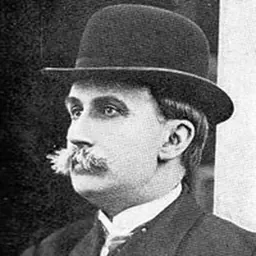
Joseph Rossé (August 26, 1892 – October 24, 1951) was an Alsatian politician and autonomist, notable for his engagement in the Union Populaire Républicaine and his controversial role during and after the Second World War.
Early life and education Rossé was born in Montreux-Vieux, then part of Alsace-Lorraine under German rule. Raised in a Catholic family, he became trilingual in French, German, and Alsatian. After the region returned to France following World War I, he became a teacher at the École primaire supérieure in Colmar.
Rossé experienced professional discrimination compared to his colleagues from mainland France, particularly in salary discrepancies. This fueled his involvement in trade unionism and later in the regionalist movement, advocating for the preservation of Alsace's linguistic and religious traditions.
Political career In 1928, Rossé was elected as a deputy for Haut-Rhin, representing the Union Populaire Républicaine. That same year, he was implicated in the Komplottprozess in Colmar, where he and other regionalists were accused of conspiring against the French state. Rossé was convicted of "plotting against state security" and briefly imprisoned before being pardoned.
Despite these setbacks, Rossé was re-elected in 1932 and again in 1936, serving as part of the Républicains du centre and later the Indépendants d'action populaire parliamentary groups. He was a staunch pacifist and supported the Munich Agreement in 1938.
World War II and controversy At the outbreak of World War II, Rossé was arrested on charges of collaboration with Nazi Germany. In 1940, after the German invasion, he and other detainees were freed by German forces. He subsequently signed the "Manifesto of the Trois-Épis," which advocated for Alsace's annexation to Germany, though he did so under duress.
Rossé later managed the publishing house ALSATIA, where he clandestinely published Catholic and anti-Nazi literature. He also maintained connections with the German resistance, including Claus von Stauffenberg. He would continue to advocate for greater Alsatican automony.
Post-war Following the liberation of France, Rossé was arrested and tried for collaboration. In 1947, he was sentenced to 15 years of forced labor. He died in 1951 while imprisoned in Villeneuve-sur-Lot.
Rossé's role during the war remains controversial. While some view him as a victim of his circumstances, others criticize his perceived collaboration. In 2016, a group in Colmar began efforts to rehabilitate his memory.
Don’t just read it —
keep it.
Full-length biographies made to live with: read them, listen on the way to work, watch them tonight.
- E-book
- Audio
- Video
Instant download · yours to keep · every purchase keeps this site free
Important facts
Related people
Same field, nearest in time






Contemporaries
People whose lives overlapped Joseph Rossé's

Frequently asked questions
Who was Joseph Rossé?
French politician (1892-1951)
When was Joseph Rossé born?
Joseph Rossé was born on 26 August 1892 in Montreux-Vieux.
When did Joseph Rossé die?
Joseph Rossé died on 24 October 1951 in Villeneuve-sur-Lot.
What was Joseph Rossé's occupation?
Joseph Rossé was a politician, publisher and member of parliament.
What nationality was Joseph Rossé?
Joseph Rossé was French.
Sources & further reading
Cite this page
APA: Biography.guide. (2026). Joseph Rossé. https://biography.guide/joseph-rosse/
MLA: "Joseph Rossé." Biography.guide, https://biography.guide/joseph-rosse/.
Chicago: "Joseph Rossé." Biography.guide. https://biography.guide/joseph-rosse/.
Data last updated: 2026-09-20 · Spot an error? Report a correction.
Page generated 2026-09-27 05:25 UTC