
About Joseph Poelaert
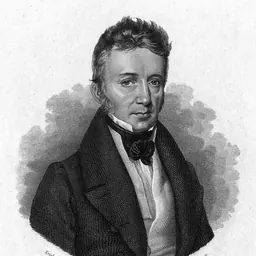
Lived 1817 – 1879 (aged 62). Joseph Poelaert was a Belgian architect.
Joseph Poelaert (21 March 1817 – 3 November 1879) was a Belgian architect. He was entrusted with important projects in Brussels, such as the Church of St. Catherine, the Church of Our Lady of Laeken, the Congress Column, the Royal Theatre of la Monnaie and above all, the Palace of Justice.
Life
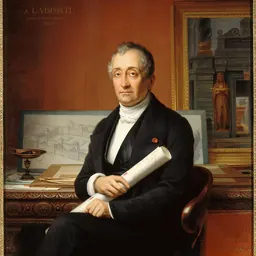
Early life Joseph Poelaert was born in Brussels on 21 March 1817. His father was Philip Poelaert (1790–1875), a former architecture student at the Royal Academy of Fine Arts in Brussels. The young Poelaert also trained there under Tilman-François Suys, and then in Paris under Louis Visconti and Jean-Nicolas Huyot.
He first came to attention with his winning competition entry for the Congress Column in 1849. He was made city architect of Brussels in 1856.
Palace of Justice
Poelaert's most significant commission was the colossal Palace of Justice of Brussels, the largest single building constructed in the 19th century and even copied in smaller scale at the Palace of Justice in Lima, Peru.
For the Palace of Justice's construction, a section of the Marolles/Marollen neighbourhood was demolished. Poelaert himself resided in the Marolles, only a few hundred metres from the building, on the /, in a house adjoining his vast offices and workshops and communicating with them. It is thus unlikely he saw himself as ruining the neighbourhood. Nonetheless, many angry citizens personally blamed Poelaert for the forced relocations, and the expression skieven architek (meaning "crooked architect") became one of the most serious insults in the dialect of the Marolles.
Family
Marriage At the age of 42, on 25 August 1859 in Brussels, Poelaert married Léonie Toussaint, aged 19, born in Ixelles on 30 March 1840, and died in Brussels on 23 July 1912, daughter of Joseph Ferdinand Toussaint, notary public in Brussels and former Member of Parliament and of Philippine Anne Catherine Joséphine Kuhne. She was also the sister of Fritz Toussaint, a painter, and of Jules Toussaint.
Later life and death Poelaert retired in 1874 to his villa at the Grande Grille, on 363, /, in the then-rural village of Laeken. He died on 3 November 1879 and was buried in Laeken Cemetery under a miniature version of his Palace of Justice.
Works 1850–1859: Congress Column in Brussels 1854–1874: Church of St. Catherine in Brussels 1854–1909: Church of Our Lady of Laeken in Brussels, site of the Royal Crypt of the Belgian royal family 1855–1857: Restoration of the Royal Theatre of La Monnaie in Brussels, after the fire of 1855 1866–1883: Palace of Justice in Brussels
Don’t just read it —
keep it.
Full-length biographies made to live with: read them, listen on the way to work, watch them tonight.
- E-book
- Audio
- Video
Instant download · yours to keep · every purchase keeps this site free
Important facts
People in Joseph Poelaert's life
Named in this biography and alive at the same time


Related people
Same field, nearest in time



Contemporaries
People whose lives overlapped Joseph Poelaert's


Frequently asked questions
Who was Joseph Poelaert?
architect (1817–1879)
When was Joseph Poelaert born?
Joseph Poelaert was born on 21 March 1817 in Brussels.
When did Joseph Poelaert die?
Joseph Poelaert died on 3 November 1879 in Brussels.
What was Joseph Poelaert's occupation?
Joseph Poelaert was an architect.
What nationality was Joseph Poelaert?
Joseph Poelaert was Belgian.
Sources & further reading
Cite this page
APA: Biography.guide. (2026). Joseph Poelaert. https://biography.guide/joseph-poelaert/
MLA: "Joseph Poelaert." Biography.guide, https://biography.guide/joseph-poelaert/.
Chicago: "Joseph Poelaert." Biography.guide. https://biography.guide/joseph-poelaert/.
Data last updated: 2026-09-25 · Spot an error? Report a correction.
Page generated 2026-09-27 05:12 UTC