
Joseph Medicine Crow
Historian, anthropologist, indigenous leader
About Joseph Medicine Crow
Lived 1913 – 2016 (aged 102). Joseph Medicine Crow was an American anthropologist, historian, author, non-fiction writer, writer and traditional leader or chief.
Joseph Medicine Crow (October 27, 1913 – April 3, 2016) was a Native American writer, historian and war chief of the Crow Tribe. His writings on Native American history and reservation culture are considered seminal works, but he is best known for his writings and lectures concerning the Battle of the Little Bighorn of 1876.
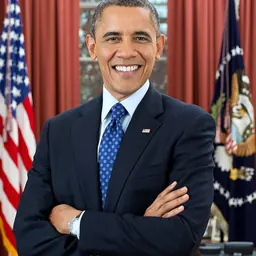
Medicine Crow was a World War II veteran, serving as a scout in the 103rd Infantry Division of the U.S. Army. He received the Bronze Star Medal and the Légion d'honneur for his service during World War II. In 2009, he was awarded the Presidential Medal of Freedom by Barack Obama.
Medicine Crow was a founding member of the Traditional Circle of Indian Elders and Youth. He was the last war chief of the Crow Tribe and the last Plains Indian war chief.
Early life
Joseph Medicine Crow (his Crow name meant High Bird) was born in 1913 on the Crow Indian Reservation near Lodge Grass, Montana, to Amy Yellowtail and Leo Medicine Crow. As the Crow kinship system was matrilineal, he was considered born to his mother's people, and gained his social status from that line. Property and hereditary positions were passed through the maternal line. Chief Medicine Crow, Leo's father, was a highly distinguished and honored chief in his own right, who at the age of 22 became a war chief. He set a standard for aspiring warriors and was his son's inspiration.
His maternal step-grandfather, White Man Runs Him, was a scout for U.S. General George Armstrong Custer and an eyewitness to the Battle of the Little Bighorn in 1876. Joe Medicine Crow's cousin was Pauline Small, the first woman elected to office in the Crow Tribe of Indians.
Education When he was young, Medicine Crow heard direct oral testimony about the Battle of the Little Bighorn in 1876 from his step-grandfather, White Man Runs Him, who had been a scout for General George Armstrong Custer. His thesis, The Effects of European Culture Contact upon the Economic, Social, and Religious Life of the Crow Indians, has become a well-respected work about Crow culture. He began work toward a doctorate, and by 1941 had completed the required coursework. He did not complete his Ph.D., due to the United States' entry into World War II. He became a scout in the 103rd Infantry Division, and fought in World War II. Whenever he went into battle, he wore his war paint (two red stripes on his arms) beneath his uniform and a sacred yellow painted eagle feather, provided by a "sundance" medicine man, beneath his helmet.
Medicine Crow is the last member of the Crow tribe to become a war chief. He was interviewed and appeared in the 2007 Ken Burns PBS series The War, describing his World War II service.
Tribal spokesman
After serving in the Army, Medicine Crow returned to the Crow Agency. In 1948, he was appointed tribal historian and anthropologist. He worked for the BIA beginning in 1951. In 1953, the "Custer Battlefield" (Little Bighorn Battlefield) Museum was established and dedicated to its founding members, Medicine Crow among them. He served as a board member or officer on the Crow Central Education Commission almost continuously since its inception in 1972.
Medicine Crow was a founding member of Little Bighorn College and of the Buffalo Bill Historical Center in Cody, Wyoming beginning in 1976.
As historian, Medicine Crow was the "keeper of memories" of his tribe. He preserved the stories and photographs of his people in an archive in his house and garage. He is survived by his only son Ron Medicine Crow, daughters Vernelle Medicine Crow and Diane Reynolds, and stepdaughter Garnet Watan.
Honors
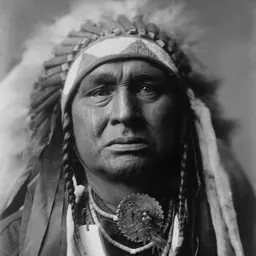
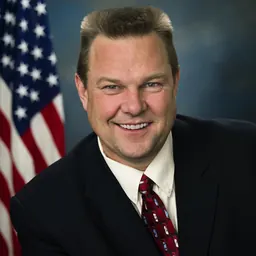
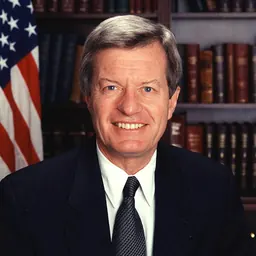
Medicine Crow received honorary doctorates from Rocky Mountain College in 1999, his alma mater the University of Southern California in 2003, His memoir, Counting Coup: Becoming a Crow Chief on the Reservation and Beyond, was chosen in 2007 by the National Council for the Social Studies as a "Notable Tradebook for Young People." On June 25, 2008, Medicine Crow received two military decorations: the Bronze Star for his service in the U.S. Army, and the French Legion of Honor Chevalier medal, both for service during World War II. His other military awards include the Combat Infantryman Badge, Army Good Conduct Medal, American Campaign Medal, European-African-Middle Eastern Campaign Medal, and World War II Victory Medal. On July 17, 2008, Senators Max Baucus, Jon Tester, and Mike Enzi introduced a bill to award him the Congressional Gold Medal; however, the bill did not garner the required sponsorship of two-thirds of the senate to move forward. Medicine Crow received the Presidential Medal of Freedom (the highest civilian honor awarded in the United States) from President Barack Obama on August 12, 2009.
Legacy In 2016, Billings Public Schools opened Medicine Crow Middle School, named in honor of Joe Medicine Crow.
In 2018, the U.S. Congress passed a law to rename a Veteran Administration Clinic in Billings to honor Joe Medicine Crow.
In 2022, the University of Southern California named the International Center for Public Affairs after Medicine Crow. At the same time, USC established a scholarship program for Native American students name in his honor. The building had previously been named after former USC President Rufus Von KleinSmid, but his name was stripped in 2020 due to controversy over his racist and eugenic views.
Decorations
Don’t just read it —
keep it.
Full-length biographies made to live with: read them, listen on the way to work, watch them tonight.
- E-book
- Audio
- Video
Instant download · yours to keep · every purchase keeps this site free
Important facts
People in Joseph Medicine Crow's life
Named in this biography and alive at the same time



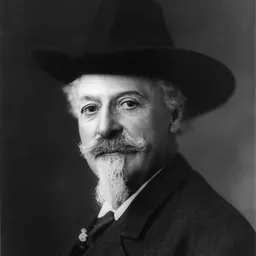
Related people
Same field, nearest in time


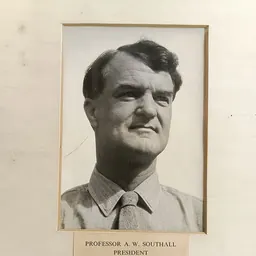
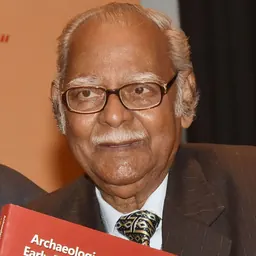
Contemporaries
People whose lives overlapped Joseph Medicine Crow's



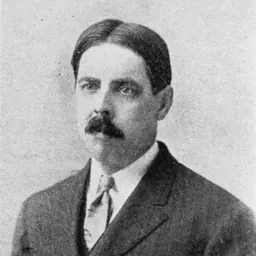

Frequently asked questions
Who was Joseph Medicine Crow?
historian, anthropologist, indigenous leader
When was Joseph Medicine Crow born?
Joseph Medicine Crow was born on 27 October 1913 in Lodge Grass, Crow Indian Reservation.
When did Joseph Medicine Crow die?
Joseph Medicine Crow died on 3 April 2016 in Billings.
What was Joseph Medicine Crow's occupation?
Joseph Medicine Crow was an anthropologist, historian, author, non-fiction writer, writer and traditional leader or chief.
What nationality was Joseph Medicine Crow?
Joseph Medicine Crow was American.
Sources & further reading
· Wikipedia: Joseph Medicine Crow
Cite this page
APA: Biography.guide. (2026). Joseph Medicine Crow. https://biography.guide/joseph-medicine-crow/
MLA: "Joseph Medicine Crow." Biography.guide, https://biography.guide/joseph-medicine-crow/.
Chicago: "Joseph Medicine Crow." Biography.guide. https://biography.guide/joseph-medicine-crow/.
Data last updated: 2026-09-20 · Spot an error? Report a correction.
Page generated 2026-09-27 05:31 UTC