
About Joseph Gottlieb Kölreuter
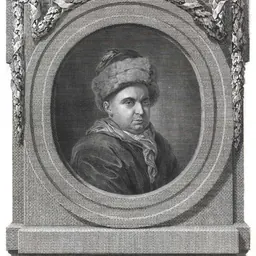
Lived 1733 – 1806 (aged 73). Joseph Gottlieb Kölreuter was a German and Russian botanist, geneticist, naturalist and zoologist, known for Reciprocal cross.
Joseph Gottlieb Kölreuter (27 April 1733 – 11 November 1806), also spelled Koelreuter or Kohlreuter, was a German botanist who pioneered the study of plant fertilisation, hybridisation and was the first to detect self-incompatibility. He was an observer as well as a rigorous experimenter who used careful crossing experiments although he did not inquire into the nature of heritability.
Biography Kölreuter was the oldest of three sons of an apothecary in Karlsruhe, Germany, and grew up in Sulz. He took an early interest in natural history and made a collection of local insects. At the age of fifteen he went to study medicine at the University of Tübingen under physician and botanist Johann Georg Gmelin who had returned from St. Petersburg. Gmelin had an interest in floral biology and he reprinted a work by Rudolf Jakob Camerarius (who also taught at Tübingen) who was the first to demonstrate sexual reproduction in plants. In his inaugural address in 1749 Gmelin talked the need for research on the origin of new species by hybridisation. This may have had an influence on Kölreuter. Gmelin died in 1755, and Kolreuter earned his degree and received an appointment at the Imperial Academy of Sciences at St. Petersburg on 23 December 1755. Here his work included botany as well as the curation of the fish and coral collections. He stayed on until 6 June 1761. From 1759 he experimented on plant hybridisation before returning to Germany. He moved to Calw in 1763 and Karlsruhe in 1764 where he was briefly professor of natural history and director of the botanical garden at Carlsruhe, Baden. He was dismissed from the botanical garden after a dispute with the head gardener about his 'futil' experiments in 1783 but stayed as a professor until 1806 when he died.
Researches
Kölreuter followed the standard idea of the period of plants and nature personified by a Creator. He expected patterns, for instance, homogeneity in the male and female contributions to the progeny. He also strongly believed in epigenetic influences which may have been derived from the teachings of C. F. Wolff. The dominant belief during his time was that an offspring was already preformed in the female or the male and that the embryo was developed after sex and the origin decided the offspring's characteristics or similarities to the parent. Kölreuter, however noted a mixing of characters and proposed the idea of “seed matters” (Saamenstoffe). According to Kölreuter there had to be two uniform fluids, male and female semen which combined in the process of fertilisation. He believed that equal quantities of the male and female fluid were needed and he therefore examined how much pollen was needed in fertilisation of a given number of seeds. In flowers with multiple stigmas, he cut all but one and found that pollinating it was enough to fertilise all the seeds. He examined the action of stigma fluid on pollen, described many plant species, and studied pollen and its transfer.
The genus Koelreuteria has been named in his honour.
Works Dissertatio inauguralis medica de insectis coleopteris, nec non de plantis quibusdam rarioribus... Tubingae: litteris Erhardianis (1755). Vorläufige Nachricht von einigen, das Geschlecht der Pflanzen betreffenden Versuchen (1761–1766). Das entdeckte Geheimniss der Cryptogamie (1777).
Don’t just read it —
keep it.
Full-length biographies made to live with: read them, listen on the way to work, watch them tonight.
- E-book
- Audio
- Video
Instant download · yours to keep · every purchase keeps this site free
Important facts
People in Joseph Gottlieb Kölreuter's life
Named in this biography and alive at the same time

Related people
Same field, nearest in time






Contemporaries
People whose lives overlapped Joseph Gottlieb Kölreuter's



Frequently asked questions
Who was Joseph Gottlieb Kölreuter?
German botanist and zoologist (1733-1806)
When was Joseph Gottlieb Kölreuter born?
Joseph Gottlieb Kölreuter was born on 27 April 1733 in Sulz am Neckar.
When did Joseph Gottlieb Kölreuter die?
Joseph Gottlieb Kölreuter died on 11 November 1806 in Karlsruhe.
What was Joseph Gottlieb Kölreuter's occupation?
Joseph Gottlieb Kölreuter was a botanist, geneticist, naturalist and zoologist.
What was Joseph Gottlieb Kölreuter known for?
Joseph Gottlieb Kölreuter was known for Reciprocal cross.
What nationality was Joseph Gottlieb Kölreuter?
Joseph Gottlieb Kölreuter was German and Russian.
Sources & further reading
· Wikipedia: Joseph Gottlieb Kölreuter
· DBpedia: Joseph Gottlieb Kölreuter
Cite this page
APA: Biography.guide. (2026). Joseph Gottlieb Kölreuter. https://biography.guide/joseph-gottlieb-kolreuter/
MLA: "Joseph Gottlieb Kölreuter." Biography.guide, https://biography.guide/joseph-gottlieb-kolreuter/.
Chicago: "Joseph Gottlieb Kölreuter." Biography.guide. https://biography.guide/joseph-gottlieb-kolreuter/.
Data last updated: 2026-09-20 · Spot an error? Report a correction.
Page generated 2026-09-27 05:20 UTC