
About Joseph Desha
Lived 1768 – 1842 (aged 73). Joseph Desha was an American politician.
Joseph Desha (December 9, 1768 – October 11, 1842) was an American politician who was a U.S. Representative from Kentucky from 1807 to 1819 and the ninth governor of Kentucky from 1824 to 1828. First known as an Indian fighter from Middle Tennessee, Desha settled in Mason County, Kentucky, where he parlayed his military record into several terms in the state legislature.
In 1807, Desha was elected to the first of six consecutive terms in the U.S. House of Representatives. A Democratic-Republican, he was considered a war hawk, supporting the War of 1812. In 1813, he volunteered to serve in the war and commanded a division at the Battle of the Thames. Returning to Congress after the war, he was the only member of the Kentucky congressional delegation to oppose the unpopular Compensation Act of 1816. Nearly every other member of the delegation was defeated for reelection after the vote, but Desha's opposition to the act helped him retain his seat. He did not seek reelection in 1818, and made an unsuccessful run for governor in 1820, losing to John Adair. By 1824, the Panic of 1819 had ruined Kentucky's economy, and Desha made a second campaign for the governorship almost exclusively on promises of relief for the state's large debtor class. He was elected by a large majority, and debt relief partisans captured both houses of the General Assembly. After the Kentucky Court of Appeals overturned debt relief laws favored by Desha and the majority of the legislature, the legislators abolished the court and created a replacement court, to which Desha appointed several debt relief partisans. The existing court refused to acknowledge the legitimacy of the move, and during a period known as the Old Court – New Court controversy, two courts of last resort existed in the state.
Although popular when elected, Desha's reputation was damaged by two controversies during his term. The first was his role in the ouster of Horace Holley as president of Transylvania University. While the religious conservatives on the university's board opposed Holley because they considered him too liberal, Desha's opposition was primarily based on Holley's friendship with Henry Clay, one of Desha's political enemies. After Desha bitterly denounced Holley in an address to the legislature in late 1825, Holley resigned. Desha's reputation took a further hit after his son, Isaac B. Desha, was charged with murder. Partially because of Desha's influence as governor, two guilty verdicts were overturned. After the younger Desha unsuccessfully attempted suicide while awaiting a third trial, Governor Desha issued a pardon for his son. These controversies, along with an improving economy, propelled Desha's political foes to victory in the legislative elections of 1825 and 1826. They abolished the so-called "Desha court" over Desha's veto, ending the court controversy. In a final act of defiance, Desha threatened to refuse to vacate the governor's mansion, although he ultimately acquiesced without incident, ceding the governorship to his successor, National Republican Thomas Metcalfe. At the expiration of his term, he retired from public life and ultimately died at his son's home in Georgetown, Kentucky, on October 11, 1842.
Early life and career Joseph Desha was born to Robert and Eleanor (Wheeler) Desha in Monroe County, Pennsylvania, on December 9, 1768. He was of part French Huguenot ancestry, and his ancestors had fled from France to Pennsylvania after the revocation of the Edict of Nantes, which had largely protected the Huguenots from religious persecution. He obtained a limited education in the state's rural schools. In July 1781, Desha's family relocated to Fayette County, Kentucky, and the following year, they settled in what was then known as Cumberland district near the present-day city of Gallatin, Tennessee. Desha's younger brother, Robert, would later represent Tennessee in the U.S. House of Representatives.
Like most frontier settlers, the Desha family frequently found themselves in conflict with American Indians after moving to Tennessee, and between the ages of 15 and 22, Joseph Desha volunteered in several military campaigns against them. In one such campaign, two of his brothers were killed while fighting alongside him. Following the war, Desha lived with William Whitley in the town of Crab Orchard, Kentucky. He married Margaret "Peggy" Bledsoe in December 1789. In 1792, the family moved to Mason County, Kentucky, where Desha worked as a farmer. He participated in General "Mad" Anthony Wayne's rout of the Indians at the August 20 Battle of Fallen Timbers.
Desha entered politics in 1797, when he was elected as a Democratic-Republican to the Kentucky House of Representatives. He again served in the House from 1799 to 1802, and was elected to the Kentucky Senate from 1802 to 1807. He was promoted to colonel on March 23, 1799, and on September 5, 1805, he was promoted to brigadier general and given command of the 7th Brigade of the Kentucky Militia.
Service in the House and the War of 1812 Desha was elected without opposition to the first of six consecutive terms in the U.S. House of Representatives in 1807. Though he was known as a capable orator, he did not speak often, claiming it was best "to think much and speak but little." Specifically, he was concerned about the fact King George III of Great Britain was a major shareholder.
Early in his career, Desha advocated an adequate army to defend American territory from Great Britain and France. He was considered a war hawk, and House Speaker Henry Clay, a fellow Kentuckian and leader of the War Hawks in the House, selected him to serve on the House Foreign Relations Committee during the Twelfth Congress (1811–13). On June 4, 1812, he voted in favor of a declaration of war on Great Britain, officially beginning the War of 1812. Desha's charge was a contributing factor in Congress's decision to remove Harrison's name from a resolution of thanks for service in the Northwest Army and withhold from him a Congressional Gold Medal. He claimed that he had only told some friends that Harrison was wary of pursuit during a council of war held at Sandwich, Ontario, after the battle, but that he had not personally witnessed a disagreement over the pursuit between Harrison and Shelby. He also opposed Secretary of War James Monroe's request to maintain a standing peacetime army of 20,000 men. Desha argued that a large standing army provided the advocates of a larger federal government with an excuse to increase taxes, and proposed that the standing army should consist of only 6,000 men. The version of the bill passed by the Senate, however, required a standing army of 15,000 men. The act, sponsored by fellow Kentuckian Richard Mentor Johnson, modified congressional compensation, paying each member a flat salary of $1,500 a year instead of a $6 per diem while Congress was in session.
Desha served as chairman of the Committee on Public Expenditures during the Fifteenth Congress (1817–19). He did not run for reelection in 1818. Sitting governor Gabriel Slaughter had lobbied for some measures favored by the state's large debtor class, particularly punitive taxes against the branches of the Second Bank of the United States in Louisville and Lexington. The Second Party System had not yet developed, but there were nonetheless two opposing factions that arose around the debt relief issue. Adair won a close election with 20,493 votes, besting William Logan's 19,947 votes, Desha's 12,418 votes, and Anthony Butler's 9,567 votes. Much debt relief legislation was passed during Adair's term, but as his term neared expiration, the Kentucky Court of Appeals struck down one popular and expansive debt relief law as unconstitutional, ensuring that debt relief would again be the central issue in the upcoming gubernatorial election.
Gubernatorial election of 1824 With Adair constitutionally ineligible to seek a second consecutive term, Desha was the first candidate to publicly declare his intention to seek the governorship in 1824. Tompkins was a little-known judge from Bourbon County who vehemently held to the principles of the Anti-Relief faction. Colonel William Russell, a military veteran of 50 years, also sought to carry the mantle of the Anti-Relief faction. While not as eloquent or well-versed in the faction's rhetoric, he had few political enemies and his military career brought him great respect among the electorate. He was generally acknowledged as the candidate of the Relief Party, but historian Arndt M. Stickles has noted that he used Anti-Relief rhetoric in some counties. Desha attacked Tompkins' record as a judge, claiming that he had consistently supported the Second Bank of the United States and the current Court of Appeals. He also charged that Tompkins was not the true choice of the Anti-Relief party, but only gained its support by being the first candidate with that position to announce his candidacy.
Anti-Relief partisans opened many lines of attack against Desha. They said his refusal to articulate a specific campaign platform showed that he was trying to be all things to all people. Desha's legislative career was also subject to scrutiny and attack. Anti-Relief partisans claimed that he had espoused certain positions for the sole purpose of pitting the state's agrarian interests against its aristocracy. The Frankfort Argus, a pro-Desha newspaper, remained confident, however, predicting that the Relief candidate would win by a margin of 4-to-1.
Desha's major accomplishment as governor was in the area of internal improvements. In 1825, he convinced the legislature to fund the creation of the Louisville and Portland Canal on the Falls of the Ohio.
Old Court – New Court controversy
Kentucky historian Thomas D. Clark wrote that Desha "made rash promises to relieve the horde of bankrupt voters ... promises on which he had to deliver." His first address to the legislature was critical of the judiciary in general, especially the Supreme Court's recent decision in the case of Green v. Biddle which held that land claims granted by Virginia in the District of Kentucky prior to Kentucky becoming a separate state took precedence over those later granted by the state of Kentucky if the two were in conflict. Encouraged by Desha's strong stance against the judiciary, Relief partisans set about removing the judges on the Court of Appeals who had earlier struck down their debt relief legislation.
Finally, on December 9, 1824, the Kentucky Senate passed a measure repealing the legislation that created the Kentucky Court of Appeals and establishing a new court of last resort in the state. The bill was sent to the House, and a vigorous debate ensued on December 23. During the debate, which continued past midnight, Desha appeared on the floor of the chamber to lobby legislators to support the bill and actually moved the previous question to end debate, which was, in the words of Kentucky historian Lowell H. Harrison, a "flagrant violation of House rules". The House passed the bill by a vote of 54–43, and Desha signed it immediately. He chose his Secretary of State, former U.S. Senator William T. Barry, as chief justice. Of the new court – called by detractors the "Desha court" – Barry "seems to have been the only one who had in a measure an even show in experience, prestige, and ability to rank as a jurist with the old-court justices", according to Stickles. Achilles Sneed, clerk of the Old Court, refused to surrender the court's records to Francis P. Blair, clerk of the New Court, so Blair took the records from Sneed's office by force, and Sneed was fined 10 pounds for contempt of court because of his refusal to cooperate.
Although Desha and his entire administration campaigned on behalf of New Court candidates during the legislative elections of 1825, Old Court supporters regained the state House and evenly split the Senate between Old and New Court supporters. Desha's message to the newly reconstituted General Assembly remained critical of banks and the judiciary, but urged legislators to seek a compromise to resolve the court question. Stickles records that Desha was sincere in his desire for a compromise, albeit one that would save face for the New Court Party. He promised that, if the legislature would again authorize appointment of a new set of judges, he would appoint them equally from both parties. Another plan would have expanded the court to six judges, with three appointed from each party. One legislator proposed that all members of both courts resign, along with Desha, lieutenant governor Robert B. McAfee, and all the legislators in the General Assembly, essentially allowing the state government to reset itself. Desha offered the appointments to three different individuals, all of whom ignored or rejected them. Desha again encouraged the legislators to compromise to resolve the court impasse. The General Assembly overrode Desha's veto on January 1, 1827.
Pardon of Isaac Desha Senator John Rowan defended Desha's son during his murder trial. Governor Desha's reputation was further tarnished because of a pardon issued to his son. On November 2, 1824, Isaac B. Desha had brutally murdered Francis Baker, a Mississippian who was visiting Kentucky. On November 24, 1824, John Rowan, one of the governor's allies in the General Assembly, introduced legislation ordering the Fleming County Circuit Court to convene a special session on January 17, 1825, for Isaac Desha's trial and providing that the accused should have the option to request a change of venue to Harrison County at that time. Miles from the scene of the murder, Harrison County was the governor's home county, and he possessed a great deal of influence with officials there. Governor Desha appeared before the legislative committee considering the bill on November 26 and asked that they report it favorably to the full legislature. Trimble personally appealed to Judge George Shannon of Lexington to hear the case. Governor Desha assembled a formidable defense team for his son, including his newly appointed Secretary of State, William T. Barry; John Rowan, who had just been elected to the U.S. Senate; and former congressmen William Brown and T. P. Taul. William K. Wall and future Congressman John Chambers – the Commonwealth's Attorneys for Harrison and Fleming counties, respectively – collaborated with attorney Martin P. Marshall to prosecute the case.
Despite the best efforts of his father to secure a favorable venue, judge, and defense team, on January 31, 1825, the jury convicted Isaac Desha of murder and sentenced him to hang. Rowan immediately requested a new trial upon grounds of jury interference, and Shannon granted the request on February 10. In September 1825, a jury was finally empaneled. Desha was again found guilty, and sentenced to hang on July 14, 1826. Judge Brown overturned the verdict because the prosecution had not proven that the murder took place in Fleming County, as alleged in the indictment against Desha.
Conflict with Horace Holley Horace Holley was ousted as president of Transylvania University largely because of Desha's denouncement of him. Another controversial issue during Desha's tenure was his disdain for Horace Holley, president of Transylvania University. From the time Holley assumed the post of president in 1818, the university had risen to national prominence and attracted well-qualified and well-respected faculty members such as Constantine Samuel Rafinesque, Daniel Drake, Charles Caldwell, William T. Barry, and Jesse Bledsoe. However, Holley's New England Unitarian beliefs were too liberal for the tastes of many in Kentucky.
Desha was drawn into the Holley controversy during the 1824 presidential election. When no candidate achieved a majority of the electoral votes cast, the contest was resolved by the U.S. House of Representatives. Desha and the New Court partisans in the General Assembly instructed the state's congressional delegation to cast their votes for Andrew Jackson, but the delegation, led by House Speaker Henry Clay, defied these instructions and voted instead for John Quincy Adams. It was Holley's practice, however, to allow students to speak openly about current political matters, regardless of which position they took.
Desha vehemently attacked Transylvania and Holley in his annual message to the General Assembly in November 1825. Afterward, he decided instead to return to Lexington and tender his resignation. Kentucky historian James C. Klotter opined that, with Holley's departure, "perhaps the state's best chance for a world-class university had passed." Harrison recorded that a visitor to Kentucky remarked in 1825, "[Desha] is said by some to possess talents; I have never been furnished with evidence." Not only did Desha not agree with Metcalfe politically, he believed that the governorship should go to a high-born aristocrat. Desha charged that Metcalfe was not allowing him to finish out his term and threatened not to vacate the governor's mansion until his term officially ended.
Don’t just read it —
keep it.
Full-length biographies made to live with: read them, listen on the way to work, watch them tonight.
- E-book
- Audio
- Video
Instant download · yours to keep · every purchase keeps this site free
Important facts
Family & relationships
People in Joseph Desha's life
Named in this biography and alive at the same time

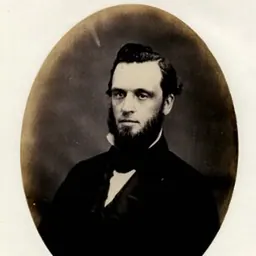
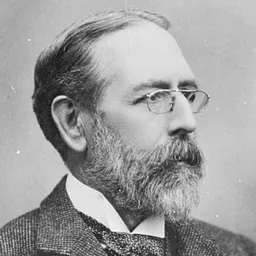
Related people
Same field, nearest in time

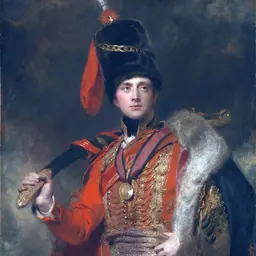

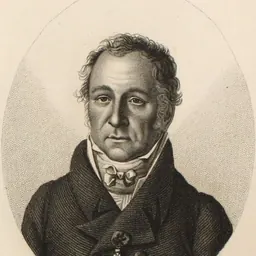

Contemporaries
People whose lives overlapped Joseph Desha's





Frequently asked questions
Who was Joseph Desha?
American politician (1768-1842)
When was Joseph Desha born?
Joseph Desha was born on 9 December 1768 in Monroe County.
When did Joseph Desha die?
Joseph Desha died on 11 October 1842 in Georgetown.
What was Joseph Desha's occupation?
Joseph Desha was a politician.
What nationality was Joseph Desha?
Joseph Desha was American.
Sources & further reading
Cite this page
APA: Biography.guide. (2026). Joseph Desha. https://biography.guide/joseph-desha/
MLA: "Joseph Desha." Biography.guide, https://biography.guide/joseph-desha/.
Chicago: "Joseph Desha." Biography.guide. https://biography.guide/joseph-desha/.
Data last updated: 2026-09-20 · Spot an error? Report a correction.
Page generated 2026-09-27 05:33 UTC