
About Joseph Boxhall
Lived 1884 – 1967 (aged 83). Joseph Boxhall was a British sailor.
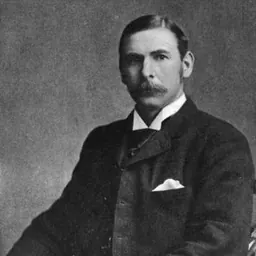
Commander Joseph Groves Boxhall (23 March 1884 – 25 April 1967) was a British merchant seaman and naval officer who was the fourth officer on the . When the ship struck the iceberg, Boxhall was on watch and subsequently became the only on-watch officer that night to survive the sinking.
During the sinking, Boxhall was in charge of firing distress rockets in an attempt to signal a nearby ship, now known to be the , and also made a second calculation of the Titanics final position. He was ordered into Emergency Cutter No. 2 and, after the ship sank, was responsible for lighting green flares which helped attract the to the wrecksite, subsequently leading to a successful rescue of all the lifeboats. He subsequently took part in both the U.S. and U.K. inquiries.
Boxhall went on to serve in World War I with the Royal Naval Reserve. He rose to senior officer in the Merchant Navy, retiring from seafaring in 1940. Though he seldom spoke about Titanic, in retirement, he was persuaded to help out with the production of the film, A Night to Remember. He later gave an interview on the BBC on the 50th anniversary of the sinking. At the time of his death in 1967, Boxhall was the last living officer of Titanic.
Early life Boxhall was born in Hull in the East Riding of Yorkshire, England, the second child and only son of Miriam and Captain Joseph Boxhall. He had three sisters, two of whom, Violet and Mabel, survived into adulthood. The youngest, Enid, died a few months after birth.
He was born into an established seafaring tradition: His grandfather had been a mariner, his uncle was a Trinity House buoymaster and Board of Trade official, and his father was a respected master with the Wilson Line of Hull. Afterwards, he joined the White Star Line.
He joined the White Star Line November 1907, his first ship with the line being the on which he served as sixth officer. He was then transferred to the in June 1908 where he served alongside Charles Lightoller, the only officer of the Titanic he knew before joining the ship.
In February 1910, he served aboard on the Australian run before returning to the New York route aboard the and then sailing on the Canadian run aboard . From December 1911 to January 1912, he was on the New York route again, serving aboard the . He was subsequently transferred to the , White Star's newest liner and the largest in the world, as Fourth Officer for the ship's maiden voyage; he was then 28 years old.
On 1 October 1911, he was made a probationary sub-lieutenant in the Royal Naval Reserve, and was confirmed in the same rank on 5 March 1912.
RMS Titanic Like the ship's other junior officers, Boxhall reported to White Star's Liverpool offices at nine o'clock in the morning on 26 March 1912, and travelled to board the ship at Belfast the following day. Before the trials, Boxhall and Third Officer Herbert Pitman were tasked with inspecting the port lifeboats and their equipment. In Southampton on 10 April, Boxhall assisted with the ship's lifeboat drill.
The White Star Line operated a watchkeeping system whereby the three senior officers worked the same four-hour watches in every 12-hour period while the junior officers stood the traditional system of four hours on/four hours off with the rest of the Titanic's deck department. This was divided into two watches, designated Port and Starboard, and pairs of junior officers were assigned to each watch. Boxhall was assigned to the Starboard Watch with Sixth Officer James Moody. During delivery trip from Belfast to Southampton, and then again during departure from Southampton, Boxhall's departure position was on the navigating bridge, in charge of the engine telegraphs, as well as assisting the captain and the harbour pilot.
After the Titanic left Southampton, Boxhall – along with his fellow junior officers – settled into his regular duties; these included scheduled watches, aiding in navigation, and assisting passengers and crew when necessary.
Final watch and collision On the evening of 14 April, Boxhall began his last watch at 8:00 PM, set to last until midnight, Hearing the lookout bell, he headed immediately to the bridge, arriving just after the impact. Captain Smith arrived almost immediately after Boxhall had, and began to assess the situation. Boxhall went off to inspect the damage and on his way down he came across passengers on the forward well-deck playing with ice.
Boxhall went as far as F-Deck and found no damage, but was later intercepted by the ship's carpenter who informed him that the ship was taking water, which was later confirmed by a mail clerk to Boxhall and Captain Smith. On the return trips up, he also noticed light ice scattered across the forward well deck. After asking Captain Smith about Titanics condition, he was told that she would sink in about an hour.
After giving the updated position to the wireless room, Boxhall began to fire distress rockets from the starboard bridge wing in an attempt to signal to the distant ship. The rockets were designed to be fired about 600 to 800 feet into the air and detonated with a loud report which Fifth Officer Harold Lowe, working at Lifeboat No. 1, described as "deafening." After Quartermaster George Rowe called the bridge from the stern, Boxhall ordered him to bring the remaining rockets from the stern to the bridge. Rowe and Boxhall subsequently fired a total of eight rockets, though that task also proved fruitless as the ship did not indicate they had seen them.
Lifeboat No. 2 and Carpathia Boxhall was ordered into lifeboat No. 2 by Captain Smith, which was lowered from the port side at 1:45 am with 18 people aboard out of a possible 40. Boxhall was ordered to pull towards the starboard aft gangway doors, which he attempted to do but eventually the lifeboat rowed away from the ship for fear of being pulled down by suction. Boxhall later stated that he did not actually see Titanic founder, as her lights had gone out and his lifeboat was about distant.
Boxhall spotted the on the horizon around 4:00 am and guided her towards Titanics lifeboats with green flares he had placed into the boat just before getting into it himself. As the lifeboat pulled alongside Carpathia, a passenger in the boat named Mahala Douglas, whom Boxhall had placed in charge of the tiller, called out "The Titanic has gone down with everyone aboard!" Boxhall quickly replied with "Shut up!" He later apologised for his outburst, and Douglas agreed that it was acceptable, given the circumstances they had just endured and their current conditions.
Once aboard the ship, Boxhall was taken to Captain Arthur Rostron who asked him, "The Titanic has gone down?" According to eyewitnesses, Boxhall's voice broke as he responded with, "Yes. She went down at about two-thirty." He subsequently informed Rostron the other lifeboats were nearby and assisted Carpathias crew as they came up to the rescue ship one by one.
Inquiries Titanics four surviving officers. Standing, left to right: Charles Lightoller, Herbert Pitman, and Boxhall. Sitting: Harold Lowe After arriving in New York on April 18, Boxhall, along with his fellow surviving officers, were served with subpoenas to testify at the American inquiry into the sinking. Initially, he testified on Day 3 of the hearings and was noted to be unwell. He had complained prior to the testimony of suffering from chest pains. Soon after, he was examined by a doctor who diagnosed him with pleurisy due to exposure whilst in the lifeboats. He would testify again about a week later.
After returning to England, Boxhall bore witness again, this time at the British inquiry. Much of his testimony concerned details of the lifeboat lowerings and Titanics navigation, including the ice warnings, a number of which Boxhall marked down. Boxhall was also the first person to testify that he saw another vessel in proximity while Titanic sank.
Later career and retirement Following the sinking of Titanic, Boxhall briefly served as Fourth Officer on White Star's and then as Third Officer of the . In November 1912, Boxhall received a promotion to senior officer, becoming Second Officer aboard the SS Irishman of the Dominion Line, on the Australian route. In June 1913, he appeared as a witness in the case of Ryan v. The Oceanic Steam Navigation Company.
He was promoted to lieutenant in the Royal Naval Reserve on 27 May 1915. During the First World War, he was commissioned to serve for one year aboard the before being dispatched to Gibraltar, where he commanded a torpedo boat, HMTB 89. On 27 May 1923, he was promoted to lieutenant-commander in the RNR. On 30 June 1926, he signed on as second officer on board , the older sister ship of Titanic. After the White Star–Cunard merger in 1933, he served in senior capacity as First and later Chief Officer of the , although he was never made a captain in the merchant marine. He also served as First Officer on and as Chief Officer on .
During a talk given at the Christchurch Red House Museum in May 1959, Boxhall remarked that he was "not too displeased" with the result, saying, "I've a great admiration for those film chaps who had to endure each shot being taken three times over in cold October whilst floundering about in Ruislip Reservoir."
Between April 1961 and July 1962, Boxhall exchanged letters with Joseph Carvalho, one of the founders of Titanic Historical Society. In them he implies that he and his wife are living in reduced financial circumstances due to "rapidly diminishing capital." He also notes he suffered from seasickness.
In 1962, for the 50th anniversary of the sinking, Boxhall gave an interview on the BBC regarding the disaster.
Personal life In the early 1910s, Boxhall was courting an Australian woman who eventually cut off their relationship. After the First World War, he married Marjory Bedells, the daughter of a Yorkshire industrialist. By all accounts, the marriage was a happy one. The couple had no children.
His health deteriorated rapidly in the 1960s, and he was eventually hospitalised. The last surviving deck officer of Titanic, Boxhall died of cerebral thrombosis on 25 April 1967 at the age of 83. His body was cremated and according to his last wishes, his ashes were scattered to sea at 41°46N 50°14W—the position he had calculated as Titanics final resting place over 50 years earlier.
Recognition
Boxhall is commemorated with a green plaque located at his former home at The Avenues, Kingston upon Hull.
He has been portrayed on screen several times:
Jack Watling – A Night to Remember (1958) Warren Clarke – S.O.S. Titanic (1979) Gerard Plunkett – Titanic (1996); Boxhall's role is merged with that of Sixth Officer James Moody and he is inaccurately portrayed as dying in the sinking. Simon Crane – Titanic (1997) Cian Barry – Titanic (2012) Ethan McHale – Titanic Sinks Tonight (2025)
Don’t just read it —
keep it.
Full-length biographies made to live with: read them, listen on the way to work, watch them tonight.
- E-book
- Audio
- Video
Instant download · yours to keep · every purchase keeps this site free
Important facts
People in Joseph Boxhall's life
Named in this biography and alive at the same time






Related people
Same field, nearest in time

Contemporaries
People whose lives overlapped Joseph Boxhall's
Frequently asked questions
Who was Joseph Boxhall?
Fourth Officer of Titanic (1884–1967)
When was Joseph Boxhall born?
Joseph Boxhall was born on 23 March 1884 in Kingston upon Hull, London.
When did Joseph Boxhall die?
Joseph Boxhall died on 25 April 1967 in Christchurch, Dorset.
What was Joseph Boxhall's occupation?
Joseph Boxhall was a sailor.
What nationality was Joseph Boxhall?
Joseph Boxhall was British.
Sources & further reading
Cite this page
APA: Biography.guide. (2026). Joseph Boxhall. https://biography.guide/joseph-boxhall/
MLA: "Joseph Boxhall." Biography.guide, https://biography.guide/joseph-boxhall/.
Chicago: "Joseph Boxhall." Biography.guide. https://biography.guide/joseph-boxhall/.
Data last updated: 2026-09-20 · Spot an error? Report a correction.
Page generated 2026-09-27 05:19 UTC