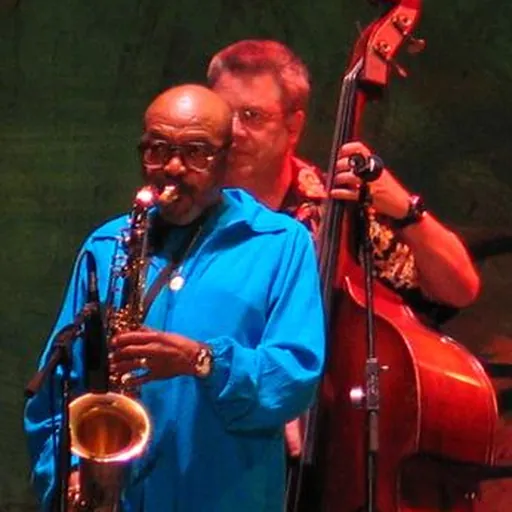
About James Moody
Lived 1925 – 2010 (aged 85). James Moody was an American saxophonist, composer, jazz musician, flautist, musician and bandleader.
James Moody (March 26, 1925 – December 9, 2010) His absent father was a trumpeter in Tiny Bradshaw`s group. He had a brother, Louis Edward Watters. he was attracted to the saxophone after hearing Lester Young, "Buddy" George Holmes Tate, Don Byas, and various saxophonists who played with Count Basie. When Moody was 16 years old, his uncle, Louis, bought him his first saxophone, an alto. His first playing model was Jimmy Dorsey, followed by Charlie Barnet and George Auld, but early on he was self-taught, playing by ear and learning mostly from listening to records.
Career Moody joined the US Army Air Corps in 1943 and played in the "negro band" at the segregated Greensboro Training Center. According to Moody,
And then I was drafted into the Air Force. And they said, "Does anyone here play an instrument?" No—they said, "Does anyone here have an instrument?" And I said, "Yeah, I've got one." They said, "Send for it." They didn't ask if you could play it, they just said if you had it. I said yeah. So I sent for the instrument and they formed a band... And they had the official Air Force Band come over and teach the Negro band. And after about a year or so, man, our band was really nice, it sounded good. So they would come over and listen to our band. And I made some good friends with some of the guys... for two years. Moody later played with Gillespie in 1964, where his colleagues in the Gillespie group, pianist Kenny Barron and guitarist Les Spann, would be musical collaborators in the coming decades.
In 1948, Moody recorded for Blue Note, his first session in a long recording career playing both saxophone and flute. That same year, he relocated to Europe, where he stayed for three years, saying he had been "scarred by racism" in the U.S. saw him add the alto saxophone to his repertoire and helped to establish him as recording artist in his own right, and formed part of the growth of European jazz. Then in 1952, he returned to the U.S. to a recording career with Prestige Records and others, playing flute and saxophone in bands that included musicians such as Pee Wee Moore and others.
Even up to recording "Moody's Mood for Love", Moody was still an ear player. It was not until he returned to the U.S. and toured with The Brook Benton Revue (with The James Moody Orchestra) that he became acquainted with music theory, crediting Tom McIntosh with explaining to him chord changes.
In the 1960s, Moody rejoined Dizzy Gillespie and later also worked with Mike Longo.
From 1974 into the 1980s, Moody found steady work playing in Las Vegas show bands. He was part of the Gene Harris-led Phillip Morris Super Band which toured the world during the late 1980s and early 1990s.
In 1997, Moody appeared as William Glover, a law-firm porter, in Clint Eastwood's movie adaptation of John Berendt's novel Midnight in the Garden of Good and Evil. He walked Patrick, an invisible dog, in the movie. During the dog's lifetime, Glover was paid $10 by its owner, attorney John Bouhan, to walk Patrick. After the death of both Bouhan and his dog, a judge agreed that Glover should continue to receive $10 for walking Patrick.
In a 1998 interview with Bob Bernotas, Moody stated that he believed jazz has definite spiritual resonance.
Personal life Moody was married three times; the first two marriages ended in divorce. His third marriage was to the former Linda Petersen McGowan, whom he married in 1989. He had a daughter and, through Linda, three stepsons. Moody and his wife resided in San Diego, California.
Moody suffered from alcoholism and accompanying mental-health issues during part of his career. In April 1958, with the help of his mother, Moody checked into Overbrook Asylum and was treated until his discharge in September of that year.
He was an active member of the Baháʼí Faith. at the Conservatory of Music at Purchase College-State University of New York (SUNY Purchase). Moody was awarded an NEA Jazz Masters Fellowship in 1998 and often participated in educational programming and outreach, including with the International Association for Jazz Education (IAJE).
Moody was fluent in Italian.
Death On November 2, 2010, Moody's wife announced on his behalf that he had pancreatic cancer, and had chosen not to have it treated aggressively. After palliative care, Moody died in San Diego, on December 9, 2010, from complications resulting from the cancer.
Discography As leader
1949: James Moody's Greatest Hits! with The Swedish All Stars (Prestige ) 1951: More of James Moody's Greatest Hits with The Swedish All Stars (Prestige ) 1952: James Moody and his Modernists (Blue Note) 1952: James Moody with Strings (Blue Note) – Conducted by André Hodeir (originally Moody's Mood, Vogue (France)) 1954: Moody (Prestige) 1954–55: James Moody's Moods (Prestige) 1955: Hi Fi Party (Prestige) 1955: Wail, Moody, Wail (Prestige) 1956: Flute 'n the Blues (Argo) 1956: Moody's Mood for Love (Argo) 1958: Last Train from Overbrook (Argo) 1959: James Moody (Argo) 1960: Hey! It's James Moody (Argo) 1960–61: Moody with Strings (Argo) 1961: Cookin' the Blues (Argo) 1962: Another Bag (Argo) 1963: Great Day (Argo) 1963: Comin' On Strong (Argo) 1964: Running the Gamut (Scepter) 1966: Moody and the Brass Figures (Milestone) 1968–69: The Blues and Other Colors (Milestone) 1969: Don't Look Away Now! (Prestige) 1970: Teachers (Perception) 1971: Heritage Hum (Perception) 1971: Chicago Concert (Prestige) with Gene Ammons 1972: Never Again! (Muse) 1973: Feelin' It Together (Muse) 1973: Sax and Flute Man (Paula) 1976: Timeless Aura (Vanguard) 1976: Sun Journey (Vanguard) 1977: Beyond this World (Vanguard) 1986: Something Special (Novus) 1989: Sweet and Lovely (Novus) 1991: Moving Forward (Novus) 1991: Honey (Novus) 1995: Moody's Party: Live at the Blue Note (Telarc) 1996: Young at Heart (Warner Bros.) 1997: Moody Plays Mancini (Warner Bros.) 1997: Warner Jams, Vol. 2: The Two Tenors with Mark Turner, Larry Goldings (Warner Bros.) 1998: At the Jazz Workshop GRP AllMusic 2003: Homage (Savoy) 2005: The World Is a Ghetto (Fuel 2000) 2008: Our Delight with Hank Jones (IPO) 2009: Moody 4A (IPO) 2010: Moody 4B (IPO)
As sideman
With Art Farmer New York Jazz Sextet: Group Therapy (Scepter, 1966) With Gil Fuller Night Flight (Pacific Jazz, 1965)—all titles released on CD reissue of Gil Fuller & the Monterey Jazz Festival Orchestra featuring Dizzy Gillespie With Dizzy Gillespie The Complete RCA Victor Recordings (Bluebird, 1937-1949 ) Big Band in Concert (GNP Crescendo, 1948) The New Continent (Limelight, 1962) Something Old, Something New (Philips, 1963) Dizzy Gillespie and the Double Six of Paris (Philips, 1964) Dizzy Goes Hollywood (Philips, 1964) The Cool World (Philips, 1964) Jambo Caribe (Limelight, 1964) I/We Had a Ball (Limelight, 1965) - 1 track The Melody Lingers On (Limelight, 1966) Swing Low, Sweet Cadillac (Impulse!, 1967) The Dizzy Gillespie Reunion Big Band (MPS, 1968) The Real Thing (Perception, 1969) Musician, Composer, Raconteur (Pablo, 1981) Live at the Royal Festival Hall (Enja, 1989) With The Dizzy Gillespie Alumni All-Stars Dizzy's World directed by Jon Faddis (Shanachie, 1999) Things to Come (Telarc, 2001) With The Dizzy Gillespie All-Star Big Band Dizzy's Business (MCG Jazz, 2006) I'm Be Boppin' Too (Half Note, 2009) With Dexter Gordon The Tower of Power! (Prestige, 1969) More Power! (Prestige, 1969) With Milt Jackson Big Bags (Riverside, 1962) Milt Jackson at the Museum of Modern Art (Limelight, 1965) Milt Jackson and the Hip String Quartet (Verve, 1968) With Elvin Jones Summit Meeting (Vanguard, 1976) with Clark Terry, Bunky Green and Roland Prince With Quincy Jones I/We Had a Ball (Limelight, 1965) Quincy Plays for Pussycats (Mercury, 1959-65 ) With Charles Mingus Charles Mingus and Friends in Concert (Columbia, 1972) With Max Roach New Sounds: Max Roach Quintet/Art Blakey's Band (Blue Note, 1952) With Lalo Schifrin Once a Thief and Other Themes (Verve, 1965) With Bobby Timmons Got to Get It! (Milestone, 1967) With Cedar Walton Soul Cycle (Prestige, 1969) With Tubby Hayes Return Visit! (Fontana, 1962) Credited as "Jimmy Gloomy" With Roberta Gambarini Easy to Love (Groovin' High/Kindred Rhythm, 2006) Moody plays tenor sax and sings with Roberta on "Lover Man" and "Centerpiece". So in Love (Groovin' High/EmArcy/UMe, 2009)
Don’t just read it —
keep it.
Full-length biographies made to live with: read them, listen on the way to work, watch them tonight.
- E-book
- Audio
- Video
Instant download · yours to keep · every purchase keeps this site free
Important facts
People in James Moody's life
Named in this biography and alive at the same time




Related people
Same field, nearest in time
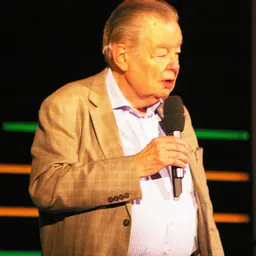
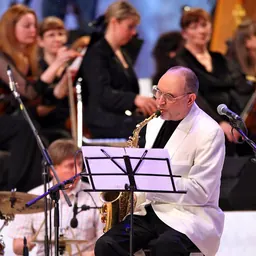
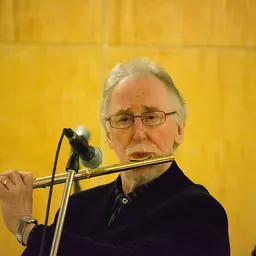

Contemporaries
People whose lives overlapped James Moody's
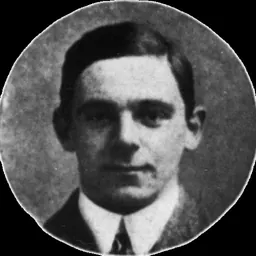



Frequently asked questions
Who was James Moody?
American jazz musician (1925-2010)
When was James Moody born?
James Moody was born on 26 March 1925 in Savannah.
When did James Moody die?
James Moody died on 9 December 2010 in San Diego.
What was James Moody's occupation?
James Moody was a saxophonist, composer, jazz musician, flautist, musician and bandleader.
What nationality was James Moody?
James Moody was American.
Sources & further reading
· DBpedia: James Moody (saxophonist)
Cite this page
APA: Biography.guide. (2026). James Moody. https://biography.guide/james-moody-saxophonist/
MLA: "James Moody." Biography.guide, https://biography.guide/james-moody-saxophonist/.
Chicago: "James Moody." Biography.guide. https://biography.guide/james-moody-saxophonist/.
Data last updated: 2026-09-21 · Spot an error? Report a correction.
Portrait: Wikimedia Commons · author & licence
Page generated 2026-09-27 05:00 UTC