
About Col Loughnan
Born 1942. Col Loughnan is an Australian saxophonist and composer.
Colin John Loughnan (; born 26 October 1942) is an Australian jazz saxophonist, teacher and composer, best known as a member of the Delltones, Ayers Rock, Judy Bailey quartet and as a teacher of saxophone at the Sydney Conservatorium of Music. Although Loughnan has long been associated with jazz music, the first nine years of his career were spent as a non-instrumental vocalist with vocal harmony groups The Crescents, and The Delltones starting in 1958. In the 60s, he learnt to play the saxophone, performing as an instrumentalist with Col Nolan and The Soul Syndicate, and as a founding member of the Daly-Wilson Big Band. At this time Loughnan was proficient in saxophones, flutes, and clarinet.
By the early 1970s, Loughnan had included session work, arranging music for television, and studying in the United States under Victor Morosco to his achievements. He was playing with Kala in London in 1973, before returning to Australia to join progressive rock, jazz fusion outfit Ayers Rock. Loughnan was a major influence on the sound of the band, and wrote most of their musically adventurous material. At the end of Ayers Rock's second tour of the United States, Loughnan chose to remain in the United States to continue his studies. He flew back to Australia in 1978 to take up the position of lecturer in saxophone, and arranging at the Sydney Conservatorium of Music Jazz Faculty. Concurrent with teaching, he was playing jazz, working as a studio musician, and acting as musical director for Marcia Hines, and John Farnham, for ABCTV specials.
Loughnan has played with many top international artists including Sammy Davis Jr., Freddie Hubbard, Shirley Bassey, Frank Sinatra and Johnny Mathis. He has played with a very long list of Australian musicians including Don Burrows, John Sangster, George Golla, Rhonda Burchmore, Errol Buddle, Bob Barnard and New Zealander Ricky May. His long-term collaboration with Judy Bailey has extended from the late 1970s to the present. Another collaborator, guitarist Steve Murphy joined Loughnan to record the album Feel the Breeze as a duo in 1981. In the early 1980s, he studied under venerated saxophone teacher Joe Allard in New York City. He has led his own combo's the Col Loughnan Endeavour, and the Col Loughnan quartet.
Loughnan toured with Georgie Fame and The Aussie Blue Flames on Fame's frequent visits to Australia from 1979 to 2006. He has entertained both great and small, playing with the Sydney and Queensland Symphony Orchestras, and creating children's music in the studio for Australia's ABC Records. Loughnan recorded a solo album Ellen St., in 2007, of his own compositions, which was produced by his son, bassist Lyal Loughnan, and Loughnan himself. He was involved in a scientific experiment at The University of New South Wales, nicknamed the "Frankensax" experiment, which investigated the acoustics inside the mouth, and throat of a saxophonist while playing. He remains active in teaching and playing, often with friend Judy Bailey
Early life
Loughnan was born on 26 October 1942, in Sydney. His parents, Con and Merle lived in Ellen St., Randwick, an inner south–east suburb of Sydney. They were a musical family, and enjoyed the jazz and popular artists of the day. By coincidence, Frank Coughlan, a Sydney bandleader and trombonist, lived next door. Interactions with Coughlan lead the young Loughnan to ask his parents to buy him a trumpet, which received a polite but firm "no". It was decided that it would be better to stick to singing. Loughnan briefly played drums in the school marching band. He also excelled in swimming. From 1957, he studied at South Sydney Junior Technical High School (now known as South Sydney High School), after which he was employed as an apprentice fitter and turner. who lived near O'Keefe, to form a vocal quartet, The 4 Tops. Loughnan was 16 years old. The 4 Tops were regular performers, in late 1958, at the Leichhardt Police Boys Club dances, run by Johnny O'Keefe (no relation to Dennis O'Keefe).
The Crescents, (l to r) Mike Downes, Col Loughnan, and Kel Palise. O'Keefe invited The Crescents to appear on his television program "Six O'Clock Rock" on 7 March 1959. This success later lead to further appearances on "Six O'Clock Rock", "Bandstand", and "Teen Time". The Crescents were heavily influenced by American vocal groups of the period, practising and working on their arrangements at Palace's parents' house, with Loughnan on the piano.
Chart success In October 1959, Leedon released their first single, "Everlovin'" backed with "You Broke My Heart", the latter being co-written by Loughnan and O'Keefe, but it failed to chart. suffering severe head, and facial injuries, and spending a fortnight in hospital. This had a profound effect on O'Keefe's life. Five months later, Loughnan was, himself, a passenger in a car crash. In November 1960, Loughnan, Alan Heffernan, Barry Stanton, and Ray Hoff were rounding a bend on a Victorian road, when a tyre blew out. Loughnan explained: "The Crescents were on the way out ... [we] had jammed a lot with the Delltones at parties, etc ... I was pretty good mates with Warren Lucas and I'm sure he was one of the main ones who plugged for me to take over as lead singer of the Delltones. Auditions weren't held". He joined original members Warren Lucas (tenor), Ian (Peewee) Wilson (bass), and Brian Perkins (baritone). In November 1962, they cut a new single "Come a Little Bit Closer" by Leiber and Stoller, which became the Delltones biggest hit, The surf music inspired "Hangin' Five" by Ben Acton was also a big hit in November 1963. In this period, due to chart success, radio airplay, live performances, and many TV appearances, The Delltones were one of the most recognisable names in Australian music. From 1965, Loughnan was privately learning to play the saxophone at home in Randwick. The Delltones set out on an East Asian tour which included entertaining Australian soldiers in Vietnam. One of the five concerts in Vietnam was at Bien Hoa Air Base on 1 March 1966 in stifling heat. Loughnan married Rhonda Moore on 30 May 1966. During his time with the group, they released nine singles and two albums (excluding compilation albums). By October 1967, Loughnan had joined the band, not as a vocalist, but as a saxophonist. In his book Behind the Rock and Beyond, Leon Isackson describes the band's reaction: "everybody remembered [Loughnan] as the lead singer [of] the Delltones ... [and] here he was blowing us all away with the saxophone!" Whatever It's Worth (1968) was Nolan's second album as a bandleader, and it has become an extremely rare disc in the current era. The band was augmented by Doyle on guitar, Loughnan wrote the first tune, "Shades of McSoul", and sang the vocal on the last track, "By the Time I Get to Phoenix" written by Jimmy Webb.
Ayers Rock
In October 1973, Loughnan was invited to join a recently formed band, Ayers Rock, by his friend, and former bandmate Doyle. Loughnan's family relocated to Melbourne during his time with the band. By December 1973 Ayers Rock had signed with Mushroom Records, and Mushroom co-owner, Michael Gudinski, was their manager. Chris Brown replaced Burton on guitar and vocals four months later.
High expectations were placed on Ayers Rock during this formative period. Juke Magazine reported that they were hailed as "potentially the most exciting group ever to come together in this country". Juke also claimed that Ayers Rock were "individually some of the most respected, versatile and experienced musicians on the local circuit". Kennedy said: "the more people you can listen to the better. The more flexible you are in taste the better, otherwise you fall into limiting your playing to a few feels and that's it".
Loughnan wrote two new tunes, "Crazy Boys" and "Big Red Rock", initially for the band's live sets, and eventually for their first album. "Crazy Boys" had a spoken introduction, with Doyle and Loughnan ham-acting as typical people found at an Aussie hamburger joint (counter staff and patron) leading to the song's nickname, "The Hamburger Song". The banter was deliberately comical, and ridiculous. Juke referred to the song as "free form jazz", and featured a long middle section, which gradually built from a soft beginning to a frenetic crescendo before breaking down to a slow, gentle mood again.
Ayers Rock were described as "a real Muso's band", "musician's musicians", This phenomenon was encouraged by Ayers Rock changing the arrangements and solos,
Recording Big Red Rock
Negotiations were held in regard to recording the first album with EMI"but they put so much pressure and so much bullshit on us: they said that we had to use one of their producers and that he had to OK the musical content of the thing, that there was to be no one present except ourselves. It was just going to be so tight and so straight [...] they sent us a telegram like an ultimatum saying if that's not good enough forget it, so after we heard all that we went back to Gudinski". Gudinski explained to Tony Wilson of The Sun: "Their album has met with reasonable success here, but when I took it overseas, the reaction was incredible". Jerry Moss, president of A&M Records, was "blown out" by Big Red Rock, and shortly thereafter Ayers Rock were signed to A&M for a two-album contract with an advance of $US 60,000. The deal allowed A&M the right to release the band's albums and singles internationally, while Mushroom retained the Australasian rights. The North American release of Big Red Rock went ahead on 28 February 1975, and the English release in March. and Cashbox gave the album positive reviews, with Billboard correctly predicting that it would receive US FM radio airplay. Their A&M connections had secured support billing with international acts like Status Quo, Bachman–Turner Overdrive, the J. Geils Band, as well as smaller venues on the east and west coasts of America. The biggest support gig was a stadium show in Seattle, Washington on 27 July 1975 The most unusual gig was when the band were paid not to play as a support for Rod Stewart. Loughnan told The Advertiser: "We got $1000 not to play and the best seats in the house to watch Rod Stewart perform". Multi-instrumentalist Stevie Wonder was recording in the next studio, and David Bowie, The Eagles, and Jim Keltner visited the band during the sessions. According to the Sunday Press: "All have been thrilled by the music and have gone out to spread the word about Ayers Rock". In addition, Loughnan wrote arrangements for the band, and the 23 piece orchestra featuring top L.A. musicians, and conducted the orchestra in the studio. Many of Loughnan's students have established professional careers in music, including Dale Barlow, Sandy Evans, Richard Maegraith, Matt Keegan, and Mark Taylor. He has taught at the Conservatorium of Music every year from 1978 to the present.
Discography Solo and duo albums Year Artist Title Label Catalogue Date Recorded 1981 Loughnan and Murphy Feel The Breeze Seaside YRPX 1862 Sept 1979 – Jul 1981 2007 Col Loughnan Ellen St Newmarket NEW3240.2 Nov 2004 – Jan 2005 Feel The Breeze was re-released on CD in 2004 by La Brava Music (LB0060).
Albums (selected discography) Year Artist Title Label Catalogue Date Recorded 1963 The Delltones Come a Little Bit Closer Leedon LL-31013 1968 Col Nolan & The Soul Syndicate Whatever It's Worth CBS SBP-233621 1970 Daly-Wilson Big Band Live! At The Cellblock Columbia SCXO-7979 1972 Daly-Wilson Big Band The Exciting Daly-Wilson Big Band Festival SFL-934453 1973 Claude Papesch Hammond Spectacular HMV SOEX-10021 1974 Jim Keays The Boy From The Stars EMI 106335 1974 Billy Green Stone (Film Soundtrack) Warner Bros. 600,002 1974 Ayers Rock Big Red Rock Mushroom L 35354 Sept 1974 1975 Linda George Step by Step Image ILP-750 1976 Ayers Rock Beyond Mushroom L 35707 Sept 1975 1979 Doug Parkinson & The Southern Star Band I'll Be Around Southern Star L 36824 1980 Judy Bailey Notwithstanding ABC Jazz 510600-2 1981 Ricky May Ricky May J&B JB 057 1981 Play School, Kindergarten Hickory Dickory ABC ABCL 8110 1982 John Sangster Fluteman (Film Soundtrack) Rain-Forest RFLP-006 July 1982 1983 David Fennell Harbour Crossing Larrikin LRJ-130 1983 Ricky May with the Julian Lee Orchestra Fats Enough! ABC L 60011/2 1983 Slim Dusty On The Wallaby Columbia SCXO.8045 1987 Tim Finn The Les Patterson Long Player (Film Soundtrack) WEA 254779-1 1988 Electric Chamber Orchestra Morning (opus one) WEA 255667-1 1988 Georgie Fame No worries Four Leaf Clover FLC 5099 1989 Vince Jones & Grace Knight Come in Spinner ABC 838 984-1 1991 Grace Knight Stormy Weather Columbia 4649029 2 1994 Australian Jazz Quintet plus One Reunion AEM AEM 25801-2 1993 1996 Grace Knight Grace Knight Live ABC Jazz 4835822 1997 Ed Wilson Big Band Song for Joel WP WP CD2 2002 John Leigh Calder Indigo La Brava LB0052 2008 Lisa Michel Shaken & Stirred Lyre Bird 5637375644 7—9 April 2008
Don’t just read it —
keep it.
Full-length biographies made to live with: read them, listen on the way to work, watch them tonight.
- E-book
- Audio
- Video
Instant download · yours to keep · every purchase keeps this site free
Important facts
People in Col Loughnan's life
Named in this biography and alive at the same time





Related people
Same field, nearest in time


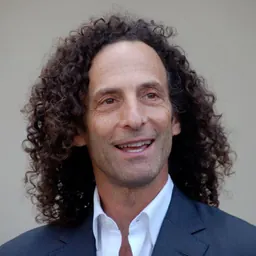
Contemporaries
People whose lives overlapped Col Loughnan's


Frequently asked questions
Who is Col Loughnan?
Australian saxophonist
When was Col Loughnan born?
Col Loughnan was born on 26 October 1942 in Sydney.
What is Col Loughnan's occupation?
Col Loughnan is a saxophonist and composer.
What nationality is Col Loughnan?
Col Loughnan is Australian.
Sources & further reading
Cite this page
APA: Biography.guide. (2026). Col Loughnan. https://biography.guide/col-loughnan/
MLA: "Col Loughnan." Biography.guide, https://biography.guide/col-loughnan/.
Chicago: "Col Loughnan." Biography.guide. https://biography.guide/col-loughnan/.
Data last updated: 2026-09-20 · Spot an error? Report a correction.
Page generated 2026-09-27 05:24 UTC