
About Joseph ben Isaac Sambari
Lived 1640 – 1703 (aged 62–63). Joseph ben Isaac Sambari was a historian.
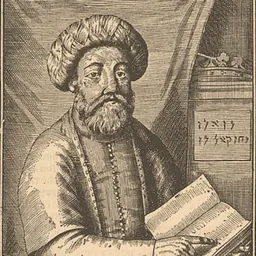
Joseph ben Isaac Sambari (Hebrew: יוסף בן יצחק סמברי; – 1703) also known as Qātāya (Arabic: قاطية) was a 17th century Egyptian Jewish historian and chronicler whose works provide important details about the affairs and conditions of 17th century Egyptian and Levantine Jewry.
Biography Born around 1640 in Cairo, Egypt, very little is known about his family or his personal life, and that which is known solely derives from details he gives about himself in his works. In his early years he studied under Rav Hananiah Barhun, a student of the historian Abraham Iskandari. According to Sambari's own testimony, Iskandari's rich library aroused in him an intense curiosity in history, and later on he made extensive use of it in writing his works. Around 1660 he worked as a scribe for the minister of finance, and became a follower of Sabbatai Zevi. After the collapse of Sabbateanism, Sambari became extremely disillusioned and decided to begin chronicling the events around him. He knew Arabic, Hebrew, and Spanish, yet his Hebrew orthography and grammar are very faulty. Sambari's main sources for his works were "Yuḥasin" by Abraham Zacuto, "Shevet Yehudah" by Solomon Ibn Virga, "Divrei ha-Yamim" by Joseph ha-Kohen, "Shalshelet ha-Kabbalah" by Gedaliah Ibn Yahya, "Kore ha-Dorot" by David Conforte, and "Seder Eliyahu Zuta" by Elijah Capsali. He also used some of the Responsa of Maimonides and David Ibn Abi Zimra. In his later life, Sambari became very interested in Kabbalah, which led him to write a hagiography of Isaac Luria. The circulation of Sambari's works was very limited in the 17th to 19th centuries, and only small sections dealing with the Ottoman sultans, messianic figures and kabbalists were published in other works. It would not be until the modern era that Sambari's works became of great interest. Sambari died in Cairo in 1703. The Qatawi family of Cairo claim Sambari as the family's patriarch.
Works Sefer Divrei Hakhamim Sambari's first work Divrei Hakhamim ("ספר דברי חכמים", The Book Containing the Sayings of the Sages) is no longer extant, and is only known of because of a passing comment in his other works. The work was apparently a historical account from Adam to the Savoraim.
Porat Yosef Another obscure work of Sambari, Porat Yosef (פורת יוסף) is only extant in a unique manuscript in the Alliance Israélite Universelle library. The work deals exclusively with the topics of Massorah and biblical cantillation. It is a satirical work that employs biblical illusions and midrashim to critique Islam and Sabbateanism, and construct a Jewish ethnoreligious identity. Sambari was a former Sabbatean and had become disillusioned with that movement.
Don’t just read it —
keep it.
Full-length biographies made to live with: read them, listen on the way to work, watch them tonight.
- E-book
- Audio
- Video
Instant download · yours to keep · every purchase keeps this site free
Important facts
People in Joseph ben Isaac Sambari's life
Named in this biography and alive at the same time

Related people
Same field, nearest in time



Contemporaries
People whose lives overlapped Joseph ben Isaac Sambari's





Frequently asked questions
Who was Joseph ben Isaac Sambari?
Egyptian Jewish historian (1640–1703)
When was Joseph ben Isaac Sambari born?
Joseph ben Isaac Sambari was born in 1640 in Cairo.
When did Joseph ben Isaac Sambari die?
Joseph ben Isaac Sambari died in 1703.
What was Joseph ben Isaac Sambari's occupation?
Joseph ben Isaac Sambari was a historian.
Sources & further reading
· Wikipedia: Joseph ben Isaac Sambari
· DBpedia: Joseph ben Isaac Sambari
Cite this page
APA: Biography.guide. (2026). Joseph ben Isaac Sambari. https://biography.guide/joseph-ben-isaac-sambari/
MLA: "Joseph ben Isaac Sambari." Biography.guide, https://biography.guide/joseph-ben-isaac-sambari/.
Chicago: "Joseph ben Isaac Sambari." Biography.guide. https://biography.guide/joseph-ben-isaac-sambari/.
Data last updated: 2026-09-20 · Spot an error? Report a correction.
Page generated 2026-09-27 05:33 UTC