
José Pérez Hervás
Spanish writer, translator and lexicographer
About José Pérez Hervás
Lived 1880 – 1946 (aged 66). José Pérez Hervás was a Spanish writer, translator, lexicographer, opinion journalist, poet and linguist.
José Pérez Hervás (23 May 1880 – 21 July 1946) was a Spanish writer, lexicographer, translator and publicist who also worked as art director of the Espasa Encyclopedia. He published works under both his real name and various pseudonyms, including: Pervás, Pimpín, Plinio «el Joven», Sávreh Zerepésoj, Singenio, Telégono, Urbi y Flora Ossette.
Biography
Early life and youth Born in Valencia, José was the youngest of three siblings, born to his parents – Santiago Pérez García and Magdalena Hervás y de Dios – after his sister Ángela (1875-1929) and his brother Santiago (1878-1933). When he was still very young his father died and his mother got remarried then to José Sánchez Agudo, who was director at the Military Hospital of Bilbao. The couple had two other sisters and another son. After the death of his stepfather, in 1889, his family started an application process for him to enroll in the War Orphans School of Guadalajara (Spain), which he eventually joined in 1891. They had three daughters (Magdalena, Ángela and Florita) and a son (José). The three girls formed a trio known as 'Preziossette', a portmanteau combining the two surnames 'Pérez' and 'Osete'.
During his time in Barcelona, Pérez Hervás kept working as a foreign languages teacher and also held several positions in the publishing sector, namely as proof-reader, translator, author and art director. After nine years at the publishing house Montaner y Simón, in 1917, Pérez Hervás joined another publisher, Espasa, to work as a writer on its encyclopedia and became its art director in 1919. He held that position until 1933, when all the volumes of the encyclopedia got completed.
Conflict with Espasa-Calpe According to Philippe Castellano, once the encyclopedia was completed, its editorial team was made redundant and offered a redundancy package, but Pérez Hervás was not happy with the offer and therefore decided to push back.
However, Luis Silva-Villar and Susana Silva Villar
Works As an author, Pérez Hervás was familiar with almost all literary genres, including poetry, novels, short stories and essays. His work as a lexicographer is particularly noteworthy and he also translated 20 works, most of them between 1911 and 1927.
Lexicography Gran Diccionario de la Lengua Castellana, initiated by Anicet de Pagès (1843-1902), then continued by Miguel Mir y Noguera (1841-1912) and eventually revised and completed by Pérez Hervás and Flora Osete. Manual de Rimas Selectas o Pequeño Diccionario de la Rima Diccionario de Correspondencia Comercial (Spanish, French, English, Italian and German).
Essays Pérez Hervás published numerous articles in newspapers and magazines and also wrote several essays published along some of the works by other authors he translated.
One of the most relevant essays he published was a history of the renaissance in three volumes: Historia del Renacimiento, Montaner y Simón, 1916.
In 1935 he published Espakalpe, already discussed in the previous section.
Novels Joyas del aire, 1910. Brani, 1911. El hijo de la momia, 1913.
Short stories El cirio de arroba, en La Ilustración Artística (24/10/1910) La viudez de Luisa, en La Ilustración Artística (23/10/1911) El hijo del verdugo, en La Ilustración Artística (08/04/1912) La mismísima energía, en La Ilustración Artística (08/07/1912) El llanto de Alfredo, en La Ilustración Artística (10/03/1913) Mutua salvación, en La Ilustración Artística (16/06/1913) La madre aviadora, en La Ilustración Artística (20/10/1913) Amor perjuro, en La Ilustración Artística (11/05/1914) El "Don Carlos" de la Costa, en La Ilustración Artística (31/08/1914) Alma Baturra, en La Ilustración Artística (14/09/1914) La Gargantilla, en La Ilustración Artística (22/02/1915) La aventura de Jonás, en La Ilustración Artística (21/06/1915) La Ruth alcareña, en La Ilustración Artística (10/07/1916) Cosmogonía japonesa, en La La Ilustración Artística (02/10/1916) 'El Ama' y 'Dulcinea', dentro del libro Las mujeres de Cervantes, 1916, de José Sánchez Rojas Las diez moneditas, en La Ilustración Española y Americana (08/10/1918) Lorito real, en La Ilustración Española y Americana (08/11/1918) La maldición de Elvira, en La Ilustración Española y Americana (30/03/1919) El padre elegido, en Diario de Alicante (30/08/1927) Alma fascista, en Mi Revista (15/02/1937) Sor Fai, en Mi Revista (15/03/1937)
Translations El convite del divino amor, 1911, Giuseppe Frassinetti. Barcelona: Eugenio Subirana. El cerro perdido ó Un cuento de Sonora, 1911, Thomas Mayne-Reid. Versión castellana de José PÉREZ HERVÁS. Edición ilustrada. Barcelona: Francisco Seix. Tomás Alva Edison: Sesenta años de la vida íntima del gran inventor, 1911, F. A. Jones. Traducida al español por José Pérez Hervás. Edición ilustrada. Biblioteca Universal. Barcelona: Montaner y Simón. Municipalización y nacionalización de los Servicios Públicos, 1912, Sir John Lubbock. Traducción de la tercera edición inglesa por José Pérez Hervás. Barcelona: Eugenio Subirana Rodney Stone, 1912, Arthur Conan Doyle. Traducción de José Pérez Hervás. Edición ilustrada. Barcelona: Sopena. China: dos años en la Ciudad Prohibida. Vida íntima de la Emperatriz Tzu Hsi, 1913, Der Ling. Versión de José Pérez Hervás. Edición ilustrada. Barcelona: Montaner y Simón. Los terrores del radio, 1913, Albert Dorrington. Traducción de José Pérez Hervás. Edición ilustrada. La Ilustración Artística. Barcelona: Montaner y Simón. La mujer y el trabajo, 1914, Olive Schreiner. Edición ilustrada. Barcelona: Montaner y Simón. Traducción española firmada por Flora Ossette y atribuida a Pérez Hervás. La isla del tesoro, 1914, Robert Louis Stevenson. Versión castellana de José Pérez Hervás. Barcelona: Editorial Ibérica. Narraciones de un cazador, 1914, Ivan Tugueneff. Barcelona: Editorial Ibérica. Traducción anunciada como directa del ruso por F. O y atribuida a Pérez Hervás, pese a no ser conocedor de dicha lengua. El Dinamitero, 1914 or 1915, Robert Louis Stevenson. Versión directa del inglés por José Pérez Hervás. Barcelona: Editorial Ibérica.
Don’t just read it —
keep it.
Full-length biographies made to live with: read them, listen on the way to work, watch them tonight.
- E-book
- Audio
- Video
Instant download · yours to keep · every purchase keeps this site free
Important facts
Family & relationships
People in José Pérez Hervás's life
Named in this biography and alive at the same time





Related people
Same field, nearest in time

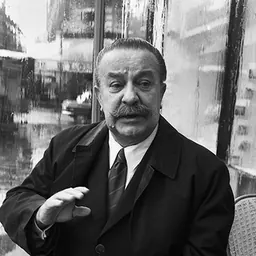
Contemporaries
People whose lives overlapped José Pérez Hervás's

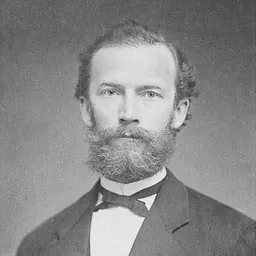
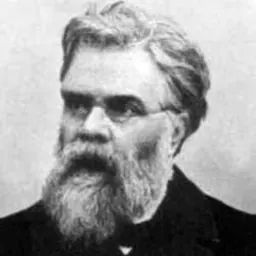


Frequently asked questions
Who was José Pérez Hervás?
Spanish writer, translator and lexicographer
When was José Pérez Hervás born?
José Pérez Hervás was born on 23 May 1880 in Valencia.
When did José Pérez Hervás die?
José Pérez Hervás died on 21 July 1946.
What was José Pérez Hervás's occupation?
José Pérez Hervás was a writer, translator, lexicographer, opinion journalist, poet and linguist.
What nationality was José Pérez Hervás?
José Pérez Hervás was Spanish.
Sources & further reading
· Wikipedia: José Pérez Hervás
Cite this page
APA: Biography.guide. (2026). José Pérez Hervás. https://biography.guide/jose-perez-hervas/
MLA: "José Pérez Hervás." Biography.guide, https://biography.guide/jose-perez-hervas/.
Chicago: "José Pérez Hervás." Biography.guide. https://biography.guide/jose-perez-hervas/.
Data last updated: 2026-09-20 · Spot an error? Report a correction.
Page generated 2026-09-27 05:07 UTC