
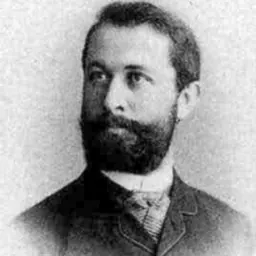
José María Gayarre Lafuente
Spanish journalist, football pioneer, and sports leader
About José María Gayarre Lafuente
Lived 1893 – 1968 (aged 75). José María Gayarre Lafuente was a Spanish sports executive, journalist and association football referee.
José María Gayarre Lafuente (8 February 1893 – 8 February 1968) was a Spanish journalist, football pioneer, and sports leader. Despite never playing football, he was one of the most important figures in the amateur beginnings of this sport in Zaragoza, being noted for his prominent role in promoting football in the city and for founding and presiding over the first football clubs in the region, such as Sociedad Gimnástica Zaragozana in 1912 and Iberia Sport Club in 1917, and later Real Zaragoza in 1932, holding the presidency for two years. He was also the fundamental head behind the foundation of Aragonese Football Federation in 1922, which he also presided. However, his contact with the university allowed him to interact with the most advanced circles of Zaragoza society and to immerse himself in sporting culture. Gayarre, enthusiastic about the idea, gave them the black uniforms that he still had from Gimnástica and thus, on one of the benches in the popular Plaza del Pilar, on 24 March, the Iberia Sport Club was formed, chaired by Ricardo Ostalé. Several of the founders had played in Gimnástica's youth team, Juvenia,
In 1918, after the board chaired by Francisco Ginés, who had replaced Basilio Berdejo and who in turn had replaced Ostalé, refused to support the constitution of the Aragonese Federation, his brother Luis Gayarre assumed the presidency, the one who held the position the longest and who built the Torrero field in 1923.
Aragonese Federation Gayarre worked tirelessly to create an independent Aragonese Federation, since in those early years of Aragonese football, there was more than one attempt from the Catalan Football Federation to absorb it.
On 21 June 1922, Gayarre requested the admission of the AFF into the Royal Spanish Football Federation (RFEF), which approved it by acclamation at its ordinary assembly held on 20 and 21 July in Vigo.
He held the presidency for just one year, until 1923, when he was replaced by José María Muniesa. Two weeks later, on 1 April 1932, he was named second vice-president and acting president of the club, initially as an interim and later as a permanent president. This situation, coupled with the fatigue of the responsibility of the presidency, led him to announce his irrevocable resignation, after which the club's most prominent members, mainly the old guard of Iberia, those who had never failed, did not hesitate to organize a tribute to Gayarre in the form of a dinner at the Salduba restaurant on 28 July.
After his resignation, Gayarre immediately went to the club's secretariat, from where he set up the Zaragoza team that achieved the long-awaited promotion to the First Division in 1936. A year and a half earlier, in January 1935, the AFF awarded him its first Medal for Sporting Merit. In 1952, he wrote that "Iberia changed its name and colors, but it did not change its style, and its survival is assured as long as the essential virtues that gave him life. Iberia made possible all the brilliant performances of Aragonese football.
Spanish Football Federation In the mid-1930s, Gayarre befriended Commander Julián Troncoso, a director of Zaragoza since 1934 and a great promoter of Aragonese athletics; in May 1937, he actively participated in the meetings in San Sebastián for the creation of the Spanish Federation of the national zone, becoming the right-hand man of its first president, Troncoso, and playing a key role in the development of this federation in the first months of its life in 1937.
Despite his adherence to the National Movement, Gayarre also suffered the effects of the Spanish Civil War, having to leave Zaragoza in 1938 when it was revealed that he was homosexual. He first went to San Sebastián, where he continued to collaborate with Troncoso, and when the conflict was over he settled in Madrid, far from his family and friends, and distanced himself from the football scene. His absence proved costly for Zaragoza, who returned to the Third Division in 1947, being on the verge of disappearing. Six years later, in 1953, President Cesáreo Alierta brought him back as a technical advisor and gave him full powers, but Gayarre only lasted one season in office because his return was not welcomed unanimously by the club and there were people interested in not having him.
Journalist career Professionally, Gayarre was a sales representative for various wineries in Haro and Jerez, as well as an administrative employee, and later a manager, of the Portland cement factory. In addition, he worked as a sports journalist in the Zaragoza newspapers , , and Heraldo de Aragón, where he signed with the pseudonyms Goal and XXX. He had an agile, cultivated and very entertaining pen, although the exercise of sports journalism was just a means to promote and consolidate football.
Gayarre was also a notable speaker, with his lectures advocating for sport becoming famous throughout Aragon, which successively toured the halls of the Café de Europa, Salduba El Oriental, and La Perla.
Political career His political concerns led him to found and preside over the "Citizen Action Party" in 1921, with a clear pro-Maurist leaning, and he even ran in the municipal elections of 5 February 1922, but despite not being elected, Gayarre persisted and was then elected as a provincial deputy for the Pilar-La Almunia district in June 1923, the last elections held in Spain before the military coup of General Miguel Primo de Rivera.
Death Gayarre died in Madrid on 8 February 1968, at the age of 75. Just before he died, however, he had time to see his Real Zaragoza win two Copa del Rey titles in 1963–64 and 1965–66.
Don’t just read it —
keep it.
Full-length biographies made to live with: read them, listen on the way to work, watch them tonight.
- E-book
- Audio
- Video
Instant download · yours to keep · every purchase keeps this site free
Important facts
Related people
Same field, nearest in time


Contemporaries
People whose lives overlapped José María Gayarre Lafuente's





Frequently asked questions
Who was José María Gayarre Lafuente?
Spanish journalist, football pioneer, and sports leader
When was José María Gayarre Lafuente born?
José María Gayarre Lafuente was born on 8 February 1893 in Zaragoza.
When did José María Gayarre Lafuente die?
José María Gayarre Lafuente died on 8 February 1968 in Madrid.
What was José María Gayarre Lafuente's occupation?
José María Gayarre Lafuente was a sports executive, journalist and association football referee.
What nationality was José María Gayarre Lafuente?
José María Gayarre Lafuente was Spanish.
Sources & further reading
· Wikipedia: José María Gayarre Lafuente
Cite this page
APA: Biography.guide. (2026). José María Gayarre Lafuente. https://biography.guide/jose-maria-gayarre-lafuente/
MLA: "José María Gayarre Lafuente." Biography.guide, https://biography.guide/jose-maria-gayarre-lafuente/.
Chicago: "José María Gayarre Lafuente." Biography.guide. https://biography.guide/jose-maria-gayarre-lafuente/.
Data last updated: 2026-09-20 · Spot an error? Report a correction.
Page generated 2026-09-27 05:23 UTC