
About José Maria de Eça de Queirós
Lived 1845 – 1900 (aged 54). José Maria de Eça de Queirós was a journalist, diplomat, writer and novelist.
José Maria de Eça de Queiroz or Queirós (; 25 November 1845 – 16 August 1900) is generally considered to have been the greatest Portuguese writer in the realist style. Zola considered him to be far greater than Flaubert. In the London Observer, Jonathan Keates ranked him alongside Dickens, Balzac and Tolstoy.
Biography Eça de Queiroz was born in Póvoa de Varzim, Portugal, on the 25th of November 1845, as the illegitimate child of José Maria de Almeida Teixeira de Queiroz and Carolina Augusta Pereira d'Eça, both unmarried.
Carolina's mother forbade their relationship, and it was only following her death that the couple were able to wed, when Eça was already four years old. To avoid a possible scandal, Carolina had had to leave the family home temporarily so that she could give birth away from prying eyes. The child, the first of seven siblings, would be christened as the son of an unknown mother and was recognized only after his parents married. Eça was raised chiefly by, and continued to live with, his grandparents up to the age of ten. Through his parents he was a relative of several authors like Alexandre O'Neill, Fernando Pessoa or Júlio Dantas, and the Portuguese footballer João Neves. He is also the great-great-grandfather of contemporary Portuguese author Afonso Reis Cabral.
At age 16, he began studying law at the University of Coimbra, where he met and befriended the Azorean poet Antero de Quental. Eça's first work consisted of a series of prose poems published in the Gazeta de Portugal, which eventually appeared in book form in a posthumous collection, edited by Batalha Reis, and entitled Prosas Bárbaras ("Barbarous texts"). He worked as a journalist at Évora, then returned to Lisbon and, together with his former school friend Ramalho Ortigão and others, conceived and created the Correspondence of the fictional adventurer Fradique Mendes. The work was first published in 1900.
Between 1869 and 1870, Eça de Queiroz travelled to Egypt to witness the grand opening of the Suez Canal. The voyage inspired several of his works, most notably O Mistério da Estrada de Sintra ("The Mystery of the Sintra Road", 1870), written in collaboration with Ramalho Ortigão, in which Fradique Mendes makes an appearance. He likewise authored A Relíquia ("The Relic") during this period, but it would be published only in 1887. The work was strongly influenced by Memorie di Giuda ("Memoirs of Judas") by Ferdinando Petruccelli della Gattina, to such an extent that the perceived similarities led some scholars to accuse the Portuguese writer of plagiarism.
Having been dispatched to Leiria to work as a municipal administrator, Eça wrote his first realist novel, O Crime do Padre Amaro ("The Crime of Father Amaro"), set in the same city, and first published in 1875.
Eça then worked in the Portuguese consular service and after two years' service at Havana was stationed, from late 1874 until April 1879, at 53 Grey Street, Newcastle upon Tyne, where there is a memorial plaque in his honour. His diplomatic duties included the dispatch of detailed reports to the Portuguese foreign office concerning the unrest in the Northumberland and Durham coalfields – in which, as he points out, the miners earned twice as much as those in South Wales, along with free housing and a weekly supply of coal. The Newcastle years were among the most productive of his literary career. He published the second version of O Crime de Padre Amaro in 1876 and another celebrated novel, O Primo Basílio ("Cousin Bazilio") in 1878, as well as working on some other projects. These included the first of his "Cartas de Londres" ("Letters from London") which were printed in the Lisbon daily newspaper Diário de Notícias and afterwards appeared in book form as Cartas de Inglaterra.
As early as 1878, he had at least conceived a title for his masterpiece Os Maias ("The Maias"), though it was largely written while he was Portuguese consul in Bristol from 1879 to 1888. It was published the year he left Bristol to become the Portuguese consul-general in Paris. In 1898, upon growing more pessimistic about the future of Portugal and Europe, he described himself as a "vague, saddened anarchist". Together with Ortigão and others he had formed an informal group of intellectuals known as Life's Vanquished.
Bust of Eça de Queiroz in the Avenue Charles de Gaulle, Neuilly-sur-SeineHe had actively sought the position of Portuguese consul-general in Paris and, having obtained it in 1888, remained in post for the rest of his life. He lived at Neuilly-sur-Seine and continued to write journalism (Ecos de Paris, "Echoes from Paris") as well as literary criticism. He died in 1900 of either tuberculosis or, according to numerous contemporary physicians, Crohn's disease. His son António Eça de Queiroz would hold government office under António de Oliveira Salazar. He was first buried in a family vault in Alto de São João Cemetery and later exhumed and moved to a grave in Santa Cruz do Douro Cemetery, in Baião Municipality, Portugal. His remains were transferred to the Church of Santa Engrácia (the National Pantheon) in January 2025.
Works by Eça de Queiroz
O Mistério da Estrada de Sintra ("The Mystery of the Sintra Road") 1870, in collaboration with Ramalho Ortigão O Crime do Padre Amaro ("The Crime of Father Amaro", 1875, revised 1876, revised 1880) O Primo Basílio ("Cousin Bazilio", 1878) O Mandarim (The Mandarin, 1880) As Minas de Salomão, translation of H. Rider Haggard's King Solomon's Mines (1885) A Relíquia 1887 ("The Relic", 1994) Os Maias ("The Maias", 1888) Uma Campanha Alegre ("A Cheerful Campaign") (1890–1891) Correspondência de Fradique Mendes ("Correspondence of Fradique Mendes"), 1890 A Ilustre Casa de Ramires, 1900; ("The Illustrious House of Ramires", 2017)
Posthumous works A Cidade e as Serras ("The City and the Mountains") (1901, Posthumous) Contos ("Stories") (1902, Posthumous) ("Barbarous Texts", 1903, Posthumous) Cartas de Inglaterra ("Letters from England") (1905, Posthumous) Ecos de Paris ("Echos from Paris") (1905, Posthumous) Cartas Familiares e Bilhetes de Paris ("Family Letters and Notes from Paris") (1907, Posthumous) Notas Contemporâneas ("Contemporary Notes") (1909, Posthumous) São Cristóvão, published in English in 2015 as Saint Christopher. Originally published in Portuguese as part of the volume Últimas páginas ("Last Pages") (1912, Posthumous) A Capital ("To the Capital") (1925, Posthumous) O Conde d'Abranhos ("The Earl of Abranhos") (1925, Posthumous) Alves & C.a ("Alves & Co."). (1925, Posthumous) published in English as "The Yellow Sofa", and as "Alves & Co." in 2012 by Dedalus O Egipto ("Egypt", 1926, Posthumous) A Tragédia da Rua das Flores ("The Tragedy of the Street of Flowers") (1980, Posthumous)
Periodicals to which Eça de Queiroz contributed Gazeta de Portugal As Farpas (The Barbs) Diário de Notícias
Translations
The works of Eça have been translated into about 20 languages, including English. Since 2002 English versions of eight of his novels and two volumes of novellas and short stories, translated by Margaret Jull Costa, have been published in the UK by Dedalus Books.
A capital (To the Capital): translation by John Vetch, Carcanet Press (UK), 1995. A Cidade e as serras (The City and the Mountains): translation by Roy Campbell, Ohio University Press, 1968. A Ilustre Casa de Ramires (The illustrious house of Ramires): translation by Ann Stevens, Ohio University Press, 1968; translation by Margaret Jull Costa, Dedalus Books, 2017 A Relíquia (The Relic): translation by Aubrey F. Bell, A. A. Knopf, 1925. Also published as The Reliquary, Reinhardt, 1954. A Relíquia (The Relic): translation by Margaret Jull Costa, Dedalus Books, 1994. A tragédia da rua das Flores (The Tragedy of the Street of Flowers): translation by Margaret Jull Costa, Dedalus Books, 2000. Alves & Cia (Alves & Co.): translation by Robert M. Fedorchek, University Press of America, 1988. Cartas da Inglaterra (Letters from England): translation by Ann Stevens, Bodley Head, 1970. Also published as Eça's English Letters, Carcanet Press, 2000. O Crime do Padre Amaro (El crimen del Padre Amaro): Versión de Ramón del Valle – Inclan, Editorial Maucci, 1911 O Crime do Padre Amaro (The Sin of Father Amaro): translation by Nan Flanagan, Bodley Head, 1962. Also published as The Crime of Father Amaro, Carcanet Press, 2002. O Crime do Padre Amaro (The Crime of Father Amaro): translation by Margaret Jull Costa, Dedalus Books, 2002. O Mandarim (The Mandarin in The Mandarin and Other Stories): translation by Richard Frank Goldman, Ohio University Press, 1965. Also published by Bodley Head, 1966; and Hippocrene Books, 1993. Um Poeta Lírico (A Lyric Poet in The Mandarin and Other Stories): translation by Richard Frank Goldman, Ohio University Press, 1965. Also published by Bodley Head, 1966; and Hippocrene Books, 1993. Singularidades de uma Rapariga Loura (Peculiarities of a Fair-haired Girl in The Mandarin and Other Stories): translation by Richard Frank Goldman, Ohio University Press, 1965. Also published by Bodley Head, 1966; and Hippocrene Books, 1993. José Mathias (José Mathias in The Mandarin and Other Stories): translation by Richard Frank Goldman, Ohio University Press, 1965. Also published by Bodley Head, 1966; and Hippocrene Books, 1993. O Mandarim (The Mandarin in The Mandarin and Other Stories): translation by Margaret Jull Costa, Hippocrene Books, 1983. O Mandarim (The Mandarin in The Mandarin and Other Stories): translation by Margaret Jull Costa, Dedalus Books, 2009. José Mathias (José Mathias in The Mandarin and Other Stories): translation by Margaret Jull Costa, Dedalus Books, 2009. O Defunto (The Hanged Man in The Mandarin and Other Stories): translation by Margaret Jull Costa, Dedalus Books, 2009. O Primo Basílio (Dragon's teeth): translation by Mary Jane Serrano, R. F. Fenno & Co., 1896. O Primo Basílio (Cousin Bazilio): translation by Roy Campbell, Noonday Press, 1953. O Primo Basílio (Cousin Bazilio): translation by Margaret Jull Costa, Dedalus Books, 2003. Suave milagre (The Sweet Miracle): translation by Edgar Prestage, David Nutt, 1905. Also published as The Fisher of Men, T. B. Mosher, 1905; The Sweetest Miracle, T. B. Mosher, 1906; The Sweet Miracle, B. H. Blakwell, 1914. Os Maias (The Maias): translation by Ann Stevens and Patricia McGowan Pinheiro, St. Martin's Press, 1965. Os Maias (The Maias): translation by Margaret Jull Costa, New Directions, 2007. O Defunto (Our Lady of the Pillar): translation by Edgar Prestage, Archibald Constable, 1906. Pacheco (Pacheco): translation by Edgar Prestage, Basil Blackwell, 1922. A Perfeição (Perfection): translation by Charles Marriott, Selwyn & Blovnt, 1923. José Mathias (José Mathias in José Mathias and A Man of Talent): translation by Luís Marques, George G. Harap & Co., 1947. Pacheco (A man of talent in José Mathias and A Man of Talent): translation by Luís Marques, George G. Harap & Co., 1947. Alves & Cia (The Yellow Sofa in Yellow Sofa and Three Portraits): translation by John Vetch, Carcanet Press, 1993. Also published by New Directions, 1996. Published as Alves & Co. by Dedalus in 2012. Um Poeta Lírico (Lyric Poet in Yellow Sofa and Three Portraits): translation by John Vetch, Carcanet Press, 1993. Also published by New Directions, 1996. José Mathias (José Mathias in Yellow Sofa and Three Portraits): translation by Luís Marques, Carcanet Press, 1993. Also published by New Directions, 1996. Pacheco (A man of talent in Yellow Sofa and Three Portraits): translation by Luís Marques, Carcanet Press, 1993. Also published by New Directions, 1996. O Mistério da Estrada de Sintra (The Mystery of the Sintra Road): translation by Margaret Jull Costa, Dedalus Books, 2013 São Cristóvão (Saint Christopher): translation by Gregory Rabassa and Earl E. Fritz, Tagus Press, 2015 Adam and Eve in Paradise (Adão e Eva no Paraíso): translation by Margaret Jull Costa, New Directions, 2025.
Adaptations Several cinema and TV adaptations of Eça's works can be found at:
The first adaptation of an Eça de Queirós novel was probably O Primo Basílio, which has been adapted five times for cinema and television
Os Maias has been adapted three times. The first, in 1979, by RTP Rádio e Televisão de Portugal as a 3 episode TV series. The second in 2001 by Rede Globo as a series, available through Globo's Streaming Service Globoplay. The third, again by RTP, was in 2015 as a 4-episode TV Series (that has also a condensed theatrical movie version). This series is available on RTPs streaming service RTP Play.
There have been two film versions of O Crime do Padre Amaro, a Mexican one in 2002 and a Portuguese version in 2005. released shortly after the film. Both these adaptations were modernised versions of the novel. In 2023, it was, again, adapted into a 6-episode TV series for RTP Rádio e Televisão de Portugal, now faithfully set in 1860.
Eça's works have been also adapted on Brazilian television. In 1988 Rede Globo produced O Primo Basílio in 35 episodes. Later, in 2007, a movie adaptation of the same novel was made by director Daniel Filho. In 2001 Rede Globo produced an acclaimed adaptation of Os Maias as a television series in 40 episodes.
A movie adaptation of O Mistério da Estrada de Sintra was produced in 2007. The director had shortly before directed a series inspired in a whodunit involving the alleged descendants of the original novel's characters (Nome de Código Sintra, Code Name Sintra), The movie was more centered on Eça's and Ramalho Ortigão's writing and publishing of the original serial and the controversy it created and less around the book's plot itself.
In September 2014, film director João Botelho released the film Os Maias based on the novel with the same name Os Maias.
Galleon Theatre Company, the resident producing company at the Greenwich Playhouse, London, has staged theatre adaptations by Alice de Sousa of Eça de Queiroz' novels. In 2001 the company presented Cousin Basílio, and in 2002 The Maias.
Don’t just read it —
keep it.
Full-length biographies made to live with: read them, listen on the way to work, watch them tonight.
- E-book
- Audio
- Video
Instant download · yours to keep · every purchase keeps this site free
Important facts
People in José Maria de Eça de Queirós's life
Named in this biography and alive at the same time
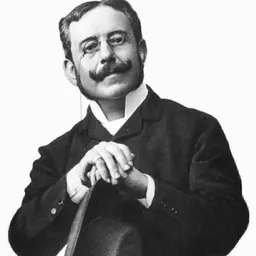




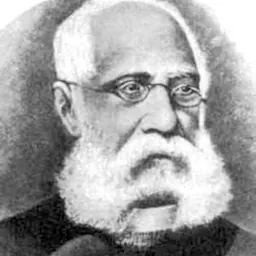
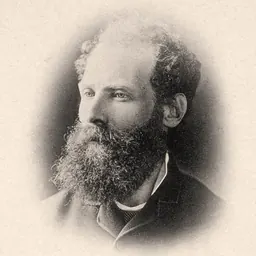
Related people
Same field, nearest in time
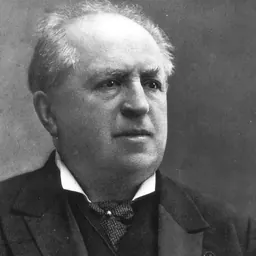
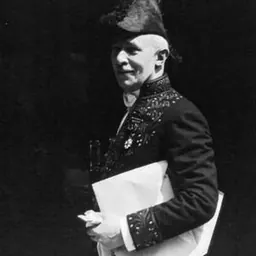
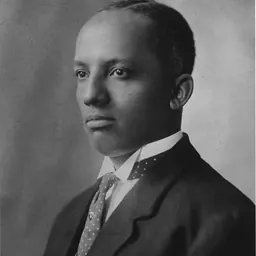
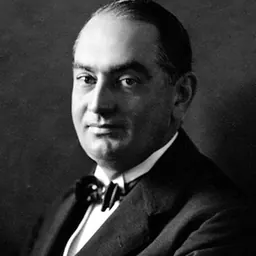
Contemporaries
People whose lives overlapped José Maria de Eça de Queirós's


Frequently asked questions
Who was José Maria de Eça de Queirós?
Portuguese writer and diplomat (1845–1900)
When was José Maria de Eça de Queirós born?
José Maria de Eça de Queirós was born on 25 November 1845 in Póvoa de Varzim.
When did José Maria de Eça de Queirós die?
José Maria de Eça de Queirós died on 16 August 1900 in Paris.
What was José Maria de Eça de Queirós's occupation?
José Maria de Eça de Queirós was a journalist, diplomat, writer and novelist.
What nationality was José Maria de Eça de Queirós?
José Maria de Eça de Queirós's recorded nationality: Kingdom of Portugal.
Sources & further reading
· Wikipedia: José Maria de Eça de Queirós
Cite this page
APA: Biography.guide. (2026). José Maria de Eça de Queirós. https://biography.guide/jose-maria-de-eca-de-queiros/
MLA: "José Maria de Eça de Queirós." Biography.guide, https://biography.guide/jose-maria-de-eca-de-queiros/.
Chicago: "José Maria de Eça de Queirós." Biography.guide. https://biography.guide/jose-maria-de-eca-de-queiros/.
Data last updated: 2026-09-20 · Spot an error? Report a correction.
Page generated 2026-09-27 05:19 UTC