
About José Joaquim da Rocha
Lived 1737 – 1807 (aged 69–70). José Joaquim da Rocha was a painter.
José Joaquim da Rocha ( 1737 – October 12, 1807) was a Brazilian painter, engraver, gilder and restorer. His entire production was in the field of religious art, with the Catholic Church as his exclusive patron. He left numerous works of a scholarly character, moving away from the popular tradition that was common during the colonial period. Although his work has many moments of high level, it is uneven, partly because, since he became recognized, he always had many disciples and apprentices to assist him, to whom he delivered large portions of the work, and partly because of the use, as inspiration, of a varied iconography in engraving of irregular quality. Both practices were, however, common at the time.
He painted many easel pieces, but his most famous compositions are the great ceilings of churches made in the illusionistic perspective technique, organizing complex virtual architectural structures ornamented with garlands and scrolls, which support a central medallion, where the main scene of the set appears, usually showing Jesus or the Virgin Mary in glorifying situations. Like other works of the Baroque period, the painting should edify the observer and instruct him in the precepts of the Catholic Church, making use of a sumptuous plasticity that, through the seduction of the senses, leads the devotee to the contemplation of the beauties of the spirit.
Despite having garnered critical attention from various scholars, further exploration of his oeuvre remains necessary, particularly concerning authorship. As he did not sign his works, many attributions are based solely on oral tradition, lacking corroborative documentation. Nonetheless, José Joaquim da Rocha is recognized as a significant figure in the history of Brazilian art, noted as the founder of the Bahian school of painting and acknowledged as one of the masters of the Brazilian Baroque. He mentored several disciples and left a lasting influence on two generations of artists, who upheld the principles of his aesthetic until the mid-19th century.
Biography There is limited information available about his life, and most of the works attributed to him lack supporting documentation. An anonymous manuscript found by Carlos Ott in the National Library, dated between 1866 and 1876, suggests that José Joaquim originated from Minas Gerais, though this claim is questionable. Alternative sources propose Salvador, Rio de Janeiro, or even Portugal. The exact year of his birth remains uncertain, although it is reported that he was 70 years old at the time of his death in 1807.
Between 1764 and 1765, he was in Salvador, where he may have studied under Antônio Simões Ribeiro. During this period, he collaborated with Leandro Ferreira de Sousa on a panel painting of Christ tied to a column and on the gilding of the frame for a work commissioned by the Santa Casa da Misericórdia da Bahia. At that time, he resided in a modest two-story house owned by the Santa Casa. According to oral tradition, he may have gone to Lisbon during this period to further his education and came into contact with Antonio Lobo and Jerônimo de Andrade - although it is not known who might have been his patron. However, researcher Maria de Fátima Campos argues that Salvador was already capable of providing a suitable education for a talented young artist. In 1770, he might have decorated the Church of the Third Order of the Blessed Virgin Mary of Our Lady of the Conception of the Mulatto Brothers. By 1772 or 1773, he was in Salvador, where he was commissioned to paint an illusionistic perspective on the ceiling of the Basilica of the Immaculate Conception, one of the most important churches in Bahia at the time. This work became his masterpiece and is regarded as one of the most remarkable paintings of its kind in Brazil. It features a grand depiction of the Glorification of the Immaculate Conception, surrounded by allegories of the four continents, divine figures, and monumental illusionistic architecture. The contract also included painting the chancel and crafting a statue of Mary on the main altar. The success of the ceiling composition cemented his reputation as the foremost painter in Bahia. Following this, he was able to establish a permanent team of assistants and train disciples. In 1777, he undertook the task of painting a Visitation of Mary to Saint Elizabeth for the altarpiece of the chapel of the Santa Casa da Misericórdia, which is considered one of his finest works on canvas. Around 1780, he painted another Visitation for the Secretariat of the Santa Casa while simultaneously working on the ceilings of the Church of the Good Jesus of the Afflicted (circa 1780), the Church of the Third Order of Our Lady of the Rosary of the Black People (1780) and the Church of the Third Order of Saint Dominic (1781). In 1785, he began work on the Church and Convent of Our Lady of the Palm, a project that would remain incomplete for several years. During the initial phase, he designed the central medallion and the perspective of the ceiling, but the actual execution was carried out by an unknown painter, possibly his disciple Veríssimo de Freitas. This diverse array of European imports, many of which were copies of famous works, contributes to the imitative and creative nature of Brazilian Baroque and Joaquim's work. He often adapted established formulas in innovative ways, using these images as models, which accounts for the variability in the quality of his production. Additionally, his use of apprentices at different stages of training complicates the identification of his style and contributions. Nonetheless, such characteristics were typical of the period and helped define the Brazilian Baroque.
Legacy Angel with Instruments of the Passion: Ladder, cloves, and ointment jar, 1786. Bahia Museum of Art Until José Joaquim's emergence, painting in Bahia was relatively modest. Although Salvador was the capital of the colony and a bustling commercial hub, it remained a small city, reaching a population of only 50,000 by 1808. It was also the principal cultural center of Brazil, but its culture was largely provincial, heavily influenced by religion, and reliant on slave labor. Artistically, Salvador depended on improvisation and poorly trained, underpaid craftsmen, including slaves and freedmen. Notable early artists included Calmão, Simões, Filgueira, and Maciel, who were predecessors and contemporaries of José Joaquim. While these artists made significant contributions as pioneers, Joaquim’s greatest legacy lies in his transformative impact on the Bahia school of painting. He is credited with revitalizing and advancing the school, establishing himself as its founder and most distinguished member, and preserving the baroque tradition well into the mid-19th century.
In a 1961 survey, Carlos Ott cataloged 52 works attributed to Joaquim, including both confirmed and disputed pieces. By 2005, Percival Tirapeli noted that the number of identified works had increased to 150. However, these figures may be subject to debate, as there is considerable controversy over the attributions. The ceiling of the Church of the Third Order of Our Lady of the Rosary of the Black People, attributed to Rocha by Carlos Ott. Among José Joaquim's disciples were Sousa Coutinho, Franco Velasco, Lopes Marques, Antônio Dias, Nunes da Mota, Mateus Lopes, Veríssimo de Freitas, Rufino Capinam, and José Teófilo de Jesus, who was both the most significant of his pupils and his favorite. His work has been studied by Manuel Raimundo Querino (who introduced the concept of the "School of Bahia"), Carlos Ott, Clarival do Prado Valadares, Marieta Alves, and Maria de Fátima Campos, among others. However, further research is needed to resolve ongoing controversies and uncertainties, particularly concerning the attribution of authorship. The works of the Old Chapel of Saint Peter, considered among his best, were destroyed in a renovation in the 20th century.
Don’t just read it —
keep it.
Full-length biographies made to live with: read them, listen on the way to work, watch them tonight.
- E-book
- Audio
- Video
Instant download · yours to keep · every purchase keeps this site free
Important facts
People in José Joaquim da Rocha's life
Named in this biography and alive at the same time


Related people
Same field, nearest in time

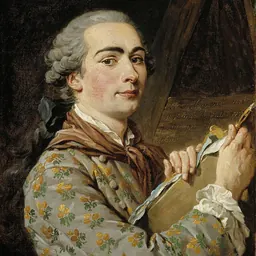

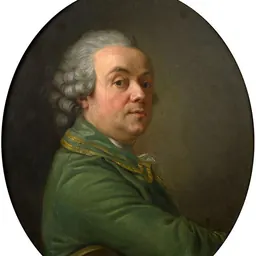
Contemporaries
People whose lives overlapped José Joaquim da Rocha's


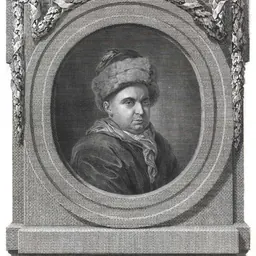



Frequently asked questions
Who was José Joaquim da Rocha?
Brazilian painter (1737-1807)
When was José Joaquim da Rocha born?
José Joaquim da Rocha was born in 1737 in Colonial Brazil.
When did José Joaquim da Rocha die?
José Joaquim da Rocha died in 1807 in Salvador.
What was José Joaquim da Rocha's occupation?
José Joaquim da Rocha was a painter.
What nationality was José Joaquim da Rocha?
José Joaquim da Rocha's recorded nationality: Colonial Brazil.
Sources & further reading
· Wikipedia: José Joaquim da Rocha
· DBpedia: José Joaquim da Rocha
Cite this page
APA: Biography.guide. (2026). José Joaquim da Rocha. https://biography.guide/jose-joaquim-da-rocha/
MLA: "José Joaquim da Rocha." Biography.guide, https://biography.guide/jose-joaquim-da-rocha/.
Chicago: "José Joaquim da Rocha." Biography.guide. https://biography.guide/jose-joaquim-da-rocha/.
Data last updated: 2026-09-20 · Spot an error? Report a correction.
Page generated 2026-09-27 05:20 UTC