
José Cabrera
Dominican activist
About José Cabrera
Lived 1810 – 1884 (aged 73–74).
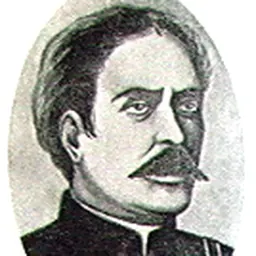
José Cabrera Gómez (1810 – March 14, 1884) was a Dominican soldier and politician who was a prominent figure in the Dominican War of Independence and the Dominican Restoration War. In the latter conflict, he was one of the leaders behind the Grito del Capotillo, which triggered the start of the war against the Kingdom of Spain. In his later years, he became involved in the fight against the United States in the Six Years' War.
Early life He was born in 1810, during the early years of España Boba. Some historians, like Manuel Rodríguez Objío, place his birthplace in Dajabón, and others in Higüerito, near Sabaneta. He was the son of Agustín Cabrera and Juliana Gómez.
He was a soldier of the Dominican War of Independence, after which he retired from military activities until the 1860s.
Restoration War In exile, he was one of the first to oppose the proclaimed Annexation to Spain in 1861 by Pedro Santana.
In April 1862, he crossed the border again from La Vissite and Ouanaminthe into Dominican territory to fight for the reconquest of independence. He was pursued to the hill of David by General Campillo, the sadistic executioner of the inhabitants of La Línea, but he managed to elude his pursuers. He did not accept the amnesty granted by the Spanish regime and remained in Dominican territory with his closest comrades in arms, Gume Fortuna and Pablo Reyes, as well as a small number of combatants with the intention of harassing the colonialists, while they established contact with the group commanded by Masagó, Pedro Antonio Pimentel and Benito Monción who planned the resumption of the war from Haiti.
When Lucas de Peña raided the town of Guayubín on February 21, 1863, Cabrera distinguished himself as one of the most daring combatants. Having failed in this action, he rejected the guarantees offered by the Spanish authorities and fled to the border area, taking refuge on a hill that was known by his name from then on, as well as a town today. He stayed there until August 16 of that year when he was finally able to make contact with the group led by Rodríguez, Monción and Pimentel and together with them he crossed the northern border and on the hill of Capotillo, located on the northern border with Haiti, they raised the tricolor flag, made by the Curaçaoan tailor Humberto Marsan, in what is known as the Grito del Capotillo, which ignited the Dominican Restoration War.
Death He died in poverty on March 14, 1884 at the age of 74 in Peladero, Montecristi. Another version states that he died in Las Aguas, jurisdiction of the same province. His remains were buried in the Montecristi cemetery.
Don’t just read it —
keep it.
Full-length biographies made to live with: read them, listen on the way to work, watch them tonight.
- E-book
- Audio
- Video
Instant download · yours to keep · every purchase keeps this site free
Important facts
People in José Cabrera's life
Named in this biography and alive at the same time

Contemporaries
People whose lives overlapped José Cabrera's






Frequently asked questions
Who was José Cabrera?
Dominican activist (1810–1884)
When was José Cabrera born?
José Cabrera was born in 1810.
When did José Cabrera die?
José Cabrera died in 1884.
Sources & further reading
· DBpedia: José Cabrera (soldier)
Cite this page
APA: Biography.guide. (2026). José Cabrera. https://biography.guide/jose-cabrera-1810/
MLA: "José Cabrera." Biography.guide, https://biography.guide/jose-cabrera-1810/.
Chicago: "José Cabrera." Biography.guide. https://biography.guide/jose-cabrera-1810/.
Data last updated: 2026-09-20 · Spot an error? Report a correction.
Page generated 2026-09-27 05:03 UTC