
Manuel Rodríguez Objío
National Hero of the Dominican Republic
About Manuel Rodríguez Objío
Lived 1838 – 1871 (aged 32–33). Manuel Rodríguez Objío was a military personnel, poet and civil servant.
Brigadier General Manuel Nemesio Rodríguez Objío (19 December 1838 – 18 April 1871) was a Dominican poet and activist. A martyr of the Six Years' War, he was one of the early contributors to Dominican literature.
He fought in the Dominican War of Independence, the Cibaeño Revolution and the Dominican Restoration War. He founded the newspaper "La Voz del Cibao" in Santiago. He published several poems in the Sociedad Amigos del País Magazine. He was shot by order of Buenaventura Báez during the Six Years' War period, in the Ozama Fortress in Santo Domingo, on 18 April 1871.
Early life Family life Objío was born in Santo Domingo on 19 December 1838 into a middle-class white family of Spanish heritage. His parents were Bernardina Objío Noble (1814–1893) and Andrés Rodríguez Rodríguez ( 1810–1843). He was born on 19 December 1838 in the city of Santo Domingo, a few months after the formation of the secret society, La Trinitaria. His parents' home was on the southwest corner of El Conde and José Reyes streets. The location of his house hints that his parents, Andrés Rodríguez and Bernarda Objío (possibly born in Venezuela), belonged to the middle and upper urban strata. The civil registry documents support this, since Andrés Rodríguez appears in them as a "retail merchant." Some of the Trinitarios were friends of the family, which indicates that the boy Rodríguez Objío grew up under the influence of Juan Pablo Duarte's teachings.
At the time, everything was surrounded by difficulties, since the country was extremely poor and even the upper urban sectors lived in the midst of enormous precariousness. This situation worsened as a result of the premature death of Andrés Rodríguez, in February 1843, after having had two other children and a fourth daughter still to be born. The young widow was forced to go to Azua, where her family was, in order to dedicate herself to commercial activities. Bernarda Objío had experience helping her husband, and her first-born Manuel, still a child, had to participate in the search for subsistence at home. From there would come a vocation for business that he did not develop because of his strong literary interest. As he narrates in Relationships, he suffered several failures in commercial activities, which explains his social environment where the success of a company of any kind was difficult.
Early activities At the age of 13, Rodríguez Objío returned to Santo Domingo to take a position as a shop assistant. In his own words, he led a lazy life and surrounded himself with "bad company," getting drunk a few times. On a trip to Azua, while a card game was in progress, the spark from one of the players' cigars caused the gunpowder keg on which he was sitting to explode. Rodríguez Objío was one of the few who did not lose their lives, which made him think that his life was sealed by a destiny. Despite this wayward existence, he began to attend the San Buenaventura school as a student, founded by President Buenaventura Báez during his first administration. During those times he was able to draw on the knowledge of some of the few cultural luminaries of the time, such as Félix María del Monte and Alejandro Angulo Guridi. Soon he began to write poetry, inspired by the work and exploits of Lord Byron. In 1855, when he was just 16 years old, he published his first poem, dedicated to "a young poetess." So, as he said years later, he was already a romantic spirit:
Upon returning from an eventful trip to New York in the company of a merchant who had carried out irregular transactions, a trip that he himself described as a disaster, in March 1856 he was appointed official in the Ministry of Finance by the incumbent, Manuel Delmonte, a friend of his family and member of Pedro Santana's circle. At the age of 17, he began a career in positions in the State that would generate internal conflicts. In reality, in accordance with his intellectual vocation, he was interested in contributing to the search for solutions to national problems. Together with other writers, such as his great friend Juan Bautista Zafra, he founded the Sociedad Amantes de las Letras, which he conceived as a space for reflection that would affect the problems that conservative politicians could not address. He presented his resignation shortly after being appointed, taking advantage of Santana's departure from power, and returned to Azua for a certain time.
The Cibaeño Revolution in 1857 found him in the city of Santo Domingo, where he had established a small business distilling beverages in the company of the poet Manuel Heredia. He was forced to fight on the Baecista side, under the command of General José María Cabral. But as soon as he could, he went over to Santiago's side, which maintained the siege of the walled city. In those months he established a relationship with General Santana, head of the besieging troops, who, upon noticing the talent of the young poet, appointed him part of his General Staff, despite the suspicion that his liberal ideas caused him. When the fourth and last Santana government was established, Rodríguez Objío was appointed first official of the Ministry of the Interior and Police, but he soon resigned. His already defined liberal inclinations led him to equally repudiate the two political leaders of the time, Santana and Báez.
He preferred to get involved in the reorganization of the Society of Lovers of Letters, in order to contribute to a type of collective action that put patriotism before any personal or group interest. As part of this cultural activism, he collaborated in the city's main newspapers, especially Flores del Ozama. Whether due to political differences or personal rivalries between writers, he was bitterly fought within this cenacle, which generated a feeling of disappointment. It is likely that the attacks to which he was subjected came from conservative writers who had joined the entity, such as Manuel de Jesús Galván.
Dominican Restoration War As soon as he was certain that Santana planned to annex the island to the Spanish monarchy, Rodríguez Objío went to Saint Thomas to meet with the exiled Francisco del Rosario Sánchez, who symbolized the spirit of national self-determination and equality. There is a version, not supported by him, that he was sent by conservative politicians who wanted to prevent the annexation to Spain. While informing the founder of the Republic of Santana's plans, he offered to fight them. In Relations, he remembers having told Sánchez that, despite the aversion he felt towards Báez, he preferred any ruler to foreign domination. The long-awaited meeting with the hero of national ideals generated a perennial veneration of his memory. "From that moment," he said, "my fate was linked to his; and even after his death, I was faithful to my promises." Rodriguez Objío would go on to write several pieces voicing his admiration for Sánchez, whom he would emulate and idolize and for the rest of his life.
Rodríguez Objío returned to Santo Domingo, so he did not accompany Sánchez on the expedition he led from Haiti, which culminated in his execution in July 1861. Seeing that the opposition to the annexation did not prosper, he decided to wait, convinced that the people would end up rebelling. In the meantime, Rodríguez Objío married María del Rosario Ravelo, sister of the Trinitarian Juan Nepomuceno Ravelo, who had inspired his youthful verses. He soon experienced disappointment in his passion, although he decided not to divorce. Years later, he met Rita Reyes in Santiago, who became the love of his life. He had children with both women and maintained the relationship until his death.
A few days after the Dominican Restoration War began, Rodríguez Objío fled to Venezuela in order to join the patriots. Given that his repudiation of the foreign regime was in the public domain and he was subject to police surveillance, he determined that it would not be feasible for him to travel to Santiago by land. He says that he was the first inhabitant of the capital who decided to join the insurgents. He stopped in Curaçao, where he met his relative Manuel Ezequiel Bruzual, leader of the liberal current that then predominated in Venezuela.
Almost immediately Rodríguez Objío was assigned to assist General Manuel María Castillo in the reorganization of the front of the southern region, after the setbacks inflicted on the patriots by the Spanish troops due to the mistakes of the previous leader, Pedro Florentino. On that front, where danger and extreme misery abounded, he distinguished himself by carrying out risky missions. He was concerned about establishing communication points with Haiti, the only means to obtain weapons and other essential items. He was appointed chief of the front staff and at times temporarily held the command of operations. He established himself as the warrior of freedom that he aspired to be, although he was already experiencing doubts about the relevance of the action.
Castillo's successor as southern leader, José María Cabral, asked him to go to Santiago for help. In this city he was surprised by the movement that led to the dismissal of President José Antonio Salcedo and the proclamation of the head of the army, Gaspar Polanco, as president with dictatorial powers. This evolution was caused by what several leaders considered stopping the war because of the president's military errors, as well as by his willingness to reach an agreement with the Spanish and promote the return of Buenaventura Báez to the supreme leadership of the country, who He had surprised many by accepting the rank of field marshal of the Spanish army. Rodríguez Objío himself had the opportunity to participate in the conversations that were held in Monte Cristi between Captain General José de la Gándara and a delegation from the government of Santiago, after this city was occupied by the Spanish army. Whether because he was convinced of Salcedo's errors or because of the radical vocation of Gaspar Polanco, Rodríguez Objío supported the actions of the latter, whose revolutionary dictatorship lasted just over three months.
During the months of the Polanco dictatorship, the Spanish counteroffensive that had put the Dominicans in a difficult situation was contained. After preparing the evacuation of Santiago, after the capture of Monte Cristi, the Dominicans immobilized the Spanish army a few kilometers beyond the latter city. On the southern front, Cabral's military expertise was demonstrated in the Battle of La Canela, on 5 December 1864, when the Spanish and Dominican annexationist troops, under the command of Eusebio Puello, were defeated and the a new advance by restaurateurs throughout the region. Once this task of the Polanco government was fulfilled, new disagreements began in the restorative ranks, both due to disordered aspirations for command and due to different conceptions about the political order and the conduct of the war.
Post-Restoration War Decline of liberalism Cabral occupied the presidency of the Republic a month after Spanish troops evacuated Santo Domingo, following a statement made in the city by several generals from the south and east, who questioned the Cibaeño preponderance represented by President Pimentel. He also received the title of Protector, in recognition of his brilliant military leadership. It was alleged shortly after that the intellectual inspiration of said movement was Rodríguez Objío, something that he himself took it upon himself to deny. The months of Cabral's first presidency were a kind of golden interregnum, despite the destruction in which the country had been left after the prolonged war. The circles of educated young people were confident that a promising future was opening up. The most important expression of this illusion was the Constituent Assembly convened to promulgate a new fundamental law of the State that would enable a democratic order, replacing the Constitution of 1854 that legalized despotism.
As part of this situation, Rodríguez Objío agreed to be elected representative of Bánica to the Constituent Assembly, at the request of Carlos Báez, brother of Buenaventura Báez, who was carrying out a promotion campaign in Azua. Disappointed by the rising prestige of the inveterate annexationist, he decided for the first time to leave politics and dedicate himself to the practice of law, for which he obtained the appointment of public defender. He realized that the majority of the people did not support the liberal proposal. Even so, as on subsequent occasions, he retraced his steps and accepted the challenge of patriotism, once again occupying a government ministry at the request of the President, who renewed his confidence in him.
In that context, the rebellion in favor of Báez of several leaders from the east who had led the Restoration war in the area. Its leader was Pedro Guillermo, who ended up occupying the country's capital without Cabral being able to gather the strength to resist him. The president himself was forced to travel to Curacao to ask Báez to agree to replace him as president of the Republic. Gregorio Luperón and Benito Monción tried to oppose the reinstatement of Báez, but they did not achieve many adhesions, a sign of the state of mind that existed in the country, the divisions existing at the top of the restaurateurs, and the rising popularity that Báez had thanks to being recognized by many as the only one endowed with the capacity to govern the nation. Showing signs of his proverbial cunning, Báez appointed a cabinet made up of former leaders of the Restoration, such as Cabral himself, Minister of War, and Pimentel, Minister of the Interior. Rodríguez Objío decided to accept the president's assignment to be his delegate in the provinces of Cibao, with the mission of warding off foreseeable new outbreaks of opposition. The reasons why he accepted the appointment were explained some time later:
He had enough power to place people he trusted in relevant positions. Shortly after, the government appointed him governor of Puerto Plata, an important responsibility because in this city nearly two-thirds of the country's taxes were collected.
Widthdrawal of Baecism Soon, concern began to spread among the leaders of the Restoration because they noticed the despotic purposes of the new president, who did not coincide with their nationalist and liberal orientation. Cabral was the first to break with Báez and went to Curacao, where he launched a manifesto of grievances in April 1866. He then moved to Haiti and raided the southern border, obtaining the support of some of the generals who had supported him during the last war. Faced with this situation, Rodríguez Objío, who in Puerto Plata had surrounded himself with people he trusted, declared himself in rebellion against the president and had Luperón, who at that time was in exile in the Turks and Caicos Islands, brought in to receive Luperón, on 28 April 1866, he gave a speech that became famous, in which he exacerbated his repudiation of Báez:
Rodríguez Objío accompanied Luperón in the raid against the resistance of the leaders who supported Báez in the Cibaeño regions. During the campaign it became evident that most of the leaders of the Restoration had adhered to the figure of the deposed leader. Recalling this turn, and alluding to generals Benito Monción and Juan de Jesús Salcedo, he displayed his capacity for analysis by questioning the explanation given by some of the liberal intellectuals that the rebels were motivated by their lack of convictions and their rebellious characte; Without denying that they suffered from these flaws, he also wondered to what extent the conservative orientation of a part of the government top, personified in Cabral, did not contribute to the loss of popular influence of the liberals and the consequent defection of leaders to the conservative side.
In that period the close friendship between Rodríguez Objío and Gregorio Luperón must have been forged. The poet's nationalist mystique, which had exalted Sánchez's heroism, was projected under the new circumstances in Luperón. Still in the Puerto Plata speech the leader taken as a reference was Cabral, but shortly after relations between the poet and the warrior from Santomé and La Canela became cloudy.
When the rebellion of the liberals against Báez triumphed, after an interim government of a triumvirate composed of Gregorio Luperón, Pedro A. Pimentel and Federico de Jesús García, Cabral was reinstated in the presidency of the Republic for being the main leader of the liberals, who were already known as "the Blues". Rodríguez Objío understood that it made no sense to occupy positions in Cabral's second administration, when the influence of Fiallo, "the favorite" as he was called, was ratified, who proposed to nullify the influence of the men of the Restoration and favor the ancients. Santanistas. Hence, more clearly than in the first Cabral government, in the second, between 1866 and 1867, the majority of the ministers were former Santana officials.
Although removed from government functions, Rodríguez Objío renewed his patriotic commitment through doctrinal journalism. He proceeded to found La Voz del Cibao, which he conceived as the last trench of democratic radicalism. The critical tone of that newspaper exacerbated the ill will against him by government officials, despite the fact that figures such as José Gabriel García and Gregorio Luperón collaborated on its pages. He began to give shape to topics that characterized his democratic ideology: intransigence in the defense of national sovereignty, the search for a democratic order where legality prevailed, the vindication of the interests of the poor and proletarians, the fight for social equality. and legal, the eradication of racial discrimination and inequalities on ethnic or racial grounds.
At one point Rodríguez Objío moved to Santo Domingo, where he was elected deputy for La Vega, a position he refused to occupy due to disagreements with the government. Even so, on the occasion of the arrest of Pedro Guillermo, after an insurrectional attempt, Cabral asked Rodríguez Objío to preside over the military council that would judge him, claiming that no one felt brave enough to assume such responsibility. Rodríguez Objío agreed to the President's request and went to El Seibo, where he issued the death sentence on the Baecista leader, commonly considered a bandit. Immediately the exiled Baecistas described Rodríguez Objío as a murderer. Such animosity was exacerbated by the last offensive of the Cibaeño leaders against Cabral, which began in Monte Cristi in October 1867. One of them, Jove Barriento, was captured and executed by the liberal leader Subí, a fact that was unjustifiably attributed to Rodríguez Objío, who arrived at the scene when the shooting had already taken place. Rodríguez Objío's relations with the Cabral government became more tense when he was forced to remain in Santo Domingo, as the Baecistas advanced at the end of 1867. Then, in order to survive at all costs, Cabral sent Pablo Pujol on a mission to Washington, with the proposal to lease the Samaná peninsula to the United States in exchange for money and weapons. In "tumultuous" sessions, several deputies raised their protests, among whom were Rodríguez Objío and Juan Bautista Zafra.
Exile to Haiti The fall of Cabral's administration was inevitable, since the vast majority of the caudillos, the influential figures in their respective communities, advocated the return of Báez. The announcement of the negotiations on Samaná ended up plunging the government into moral ruin, which was taken advantage of by Báez's supporters to, hypocritically, accuse him of being anti-national. Upon learning of the dealings with Samaná, Luperón broke up with Cabral and went to the Turks and Caicos Islands. At the end of January 1868, the blues capitulated in Santo Domingo and their leaders left the country. In one of his last notes before taking the path of exile alongside the figures of the fallen regime, and in the besieged city, Rodríguez Objío reflected on the causes of failure. He warned that the Spaniards of Cibao ended up united around Báez. Secondly, he considered that Cabral had isolated himself by surrounding himself with a very small ring of trusted people.
The expelled blues held a conference on the Venezuelan Guiaiguaza islet, in front of Puerto Cabello, where they were quarantined, because before leaving the Dominican Republic a cholera epidemic had broken out. In these conversations, the command aspirations of the blue military leaders Cabral, Luperón and Pimentel were revealed, each of whom had a cohort of supporters. Some conservatives who accompanied them also disputed hegemony, pointing particularly to the former Santanistas Tomás Bobadilla and Manuel Valverde. The relationship between these conservatives and the liberals was due to the fact that, due to old grudges, they did not accept the preponderance of Báez. But Rodríguez Objío, in his writings, was emphatic in denying that they belonged to the National Party, although he positioned it as a project that did not come together due to the rivalries of the leaders. A considerable part of those expelled settled in Haiti, taking advantage of the fact that President Sylvain Salnave had not yet reached a solid alliance with Báez, who had recently come to power. Rodríguez Objío went on to reside in Cap-Haïtien, where he obtained the protection of the local authorities. His personal situation was extremely difficult and he lived literally in misery, even though he dabbled in commercial activities.
The differences among the blues touched him, and he found antagonists who came to accuse him of treason. Pujol suggested that he had tried to get Salnave to capture Cabral in Jacmel, before he entered Dominican territory to start the guerrilla war against Báez. From what is inferred from his notes, he even came to doubt some of Luperón's attitudes, which he interpreted as the fruit of his aspiration for supreme leadership. He was filled with bitterness due to disappointment, since he could not understand the malevolence of many of his companions. This situation led him to abjure politics, and in several letters he asked that, if he ventured into it again, he be abhorred. He remained confined to private life for two years, while Cabral and other generals waged a prolonged war against Báez in the southwest. In any case, he occasionally collaborated with Pimentel, who was making efforts to consolidate a base of operations near the northern border, and attempted to harmonize relations between Pimentel and Luperón.
In his opinion, these principles continued to be represented by Luperón, which is why in 1870 he informed him of his intention to write his biography, focused on the Dominican Restoration War to the extent that he visualized it as the event that finished forging the Dominican nation. Luperón provided him with the documents he kept, with which he was able to write his long two-volume book Gregorio Luperón and history of the Restoration period. Although this text is limited to a political chronicle, it also represented pioneering work in the country, because thanks to the inclusion of documents and by expressing his vivid knowledge of the subject, for the first time an account of what happened in the war was articulated. José Gabriel García in those days began to have a similar concern. But it was not a laconic narrative, since the poet continually appeared, achieving a work of art exalting the hero and the sacrifices of the people. As he explained in a letter to Luperón on 20 April 1870, what he proposed was to rescue the unknown past of the Dominican people: "Our people lack history, and their renown sinks day after day into the deep darkness of oblivion or mystery; America itself knows him more for his disasters than for his glories; and yet these are incomparable."
Accompanied by 45 followers, among whom were Generals Segundo Imbert, Severo Gómez and Rodríguez Objío, Luperón crossed the border near Dajabón in March 1871. The first days the expedition members managed to advance, crushing the opposition presented to them by local troops, but none of the government leaders turned their weapons, which condemned them to failure.
When he ordered the withdrawal, it was too late for the group that included Rodríguez Objío, who was captured on 17 March, after trying to stay hidden in the La Peñita area. Brought before the presence of General Juan Gómez, he decided not to shoot the poet and tried to protect him. Apparently Gómez conceived of allowing Rodríguez Objío to escape, but without much conviction out of a sense of military duty. He placed it in the hands of General Federico de Jesús García, who also evaded taking responsibility for carrying out the execution, even though he had to do so by virtue of the decree of 18 June 1868, which stipulated the death penalty for those who were captured. in a state of rebellion. García and Gómez took the prisoner to Santiago to hand him over to the government delegate, Manuel Altagracia Cáceres. Given the outcry that arose in Santiago in favor of Rodríguez Objío's life, Cáceres decided to cancel the execution and referred it to the government.
In the days he spent in prison, Rodríguez Objío left some writings. Without foundation, some writers have accused him of having regretted his actions. In fact, in My Last Wills, a text dated in Guayubín on 19 March 1871, he ratifies his conceptions, although he describes his willingness to fight for them as an error, since the people did not share them:
Before his execution, just as his with his idol, Francisco del Rosario Sánchez, he recommended that his children be kept away from "intellectual speculation" and that they be given a practical education, which was equivalent to removing them from politics to make them happier. That disenchantment did not prevent him from maintaining the firmness of character to face his destiny. The last days of his life were spent in a perfect state of tranquility. On 18 April 1871, designated for the execution, he was awakened very early and taken by a small picket to one side of the cemetery, within sight of the Puerta del Conde, in the current southwestern corner of Parque Independencia. He fell like the brave man he was, without showing signs of weakness. Like a sailor singing in the storm, as he described himself, he had just finished a poem against the tyrant and calmly faced the fatal shipwreck. He was shot dead at age 33.
Personal life On 8 January 1861 Objío married María del Rosario Ravelo Prados, a white Dominican of Canarian descent; they had two daughters and one son.
He had another daughter with a woman named Rita Reyes.
Don’t just read it —
keep it.
Full-length biographies made to live with: read them, listen on the way to work, watch them tonight.
- E-book
- Audio
- Video
Instant download · yours to keep · every purchase keeps this site free
Important facts
People in Manuel Rodríguez Objío's life
Named in this biography and alive at the same time
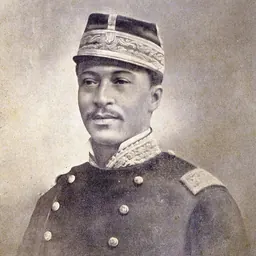

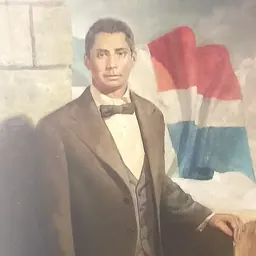


Related people
Same field, nearest in time

Contemporaries
People whose lives overlapped Manuel Rodríguez Objío's


Frequently asked questions
Who was Manuel Rodríguez Objío?
national Hero of the Dominican Republic
When was Manuel Rodríguez Objío born?
Manuel Rodríguez Objío was born in 1838.
When did Manuel Rodríguez Objío die?
Manuel Rodríguez Objío died in 1871.
What was Manuel Rodríguez Objío's occupation?
Manuel Rodríguez Objío was a military personnel, poet and civil servant.
Sources & further reading
· Wikipedia: Manuel Rodríguez Objío
· DBpedia: Manuel Rodríguez Objío
Cite this page
APA: Biography.guide. (2026). Manuel Rodríguez Objío. https://biography.guide/manuel-rodriguez-objio/
MLA: "Manuel Rodríguez Objío." Biography.guide, https://biography.guide/manuel-rodriguez-objio/.
Chicago: "Manuel Rodríguez Objío." Biography.guide. https://biography.guide/manuel-rodriguez-objio/.
Data last updated: 2026-09-20 · Spot an error? Report a correction.
Page generated 2026-09-27 05:29 UTC