
About José Bengoa
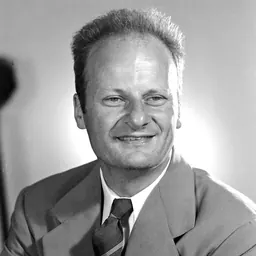
Lived 1945 – 2026 (aged 81). José Bengoa was a Chilean anthropologist, writer, historian, sociologist, university teacher and social anthropologist.
José Antonio Bengoa Cabello (19 January 1945 – 23 March 2026) was a Chilean historian and anthropologist. He was known in Chile for his study of Mapuche history and society. After the 1973 coup d'état, Bengoa was dismissed from his work at the University of Chile by the Pinochet regime. He was the principal advocate for the first Social Forum of the ACLU International Human Rights Task Force, during the SubCommission's fifty-fourth session in August 2002. Bengoa had been living in Cajón del Maipo for some time. For medical reasons and concerns, he sometimes returned to his home in Ñuñoa.
Career Bengoa had a successful career with a range of professions. He served on many different boards at the same time. Beginning in 1978, he was the director, president of the board, as well as researcher for the Center for Social Studies and Education in SUR, Santiago, Chile. He was here until 1990. While he was at the Center for Social Studies and Education, he was also serving as President of World University Service Committee in Chile. Bengoa served here from 1978 to 1991. From 1990 to 1993, he was the National Director of the Special Commission for Indigenous peoples in Chile. While here, he was in charge of drafting, editing, as well as creating the new indigenous law. In 1992, he founded and directed the School of Anthropology at the Universidad Academia de Humanismo Cristiano (UAHC) in Santiago. He remained director until 1996.
From 1996 to 2002, Bengoa was rector of UAHC. He later returned and as of 2016, remained rector. His most notable career moment was being a member of the National Commission on Historical Truth and New Deal with the Indigenous peoples of Chile. He was a member from 2000 to 2004 and was later nominated by the President of the Republic. He remained an active member in numerous different organizations. He remained a full-time professor at UAHC for the School of Anthropology and History in Chile. Since 1994, he served as a Director of Research for the National Fund for Scientific and Technological Development. He remained the President for the Board of the National Foundation against poverty within Chile, dating back to 1996. His work with the Mapuche people has helped their story and origins gain attention worldwide. His work extends past just the Mapuche people and focuses on helping all the different ethnic groups within Chile.
The Mapuche people The name "Mapuche" translates to "people of the land." The Mapuche people is the largest ethnic group within Chile and makes up a rough 10% of the Chilean population as a whole. Half of the Mapuche people live around the capital of Chile, which is Santiago. The other half tend to live in the south from river Bío Bío right until the Chiloé Island. There is another fair-sized group of Mapuche people within the Argentina area. An interesting fact is that the Mapuche people will name themselves according to where they live. An example of this is the group of Mapuche people called the Huilliche, or the people from the south. Looking at the Mapuche people in the present day, they are in a vulnerable situation. Chile focuses strongly on class society. Unfortunately for the Mapuche people, they rank the lowest in class. There have been efforts from the state and the church to take the Mapuche people into the Chilean society. During an era, the Pinochet era to be exact, all the Mapuche land was privatized and later sold to foreigners and other wealthy owners/ landlords. During this time, new laws were also introduced, including the law that there would not be indigenous peoples within Chile. Instead, there would only be Chileans. Consequences of the Pinochet era were serious and the Mapuche's had to migrate to the bigger cities because of the loss of their land. Acclimating to a new environment proved difficult for those who had to move to cities, as they were forced to forget their culture in order to better fit in. Being a Mapuche also means it is difficult to make a decent living, as they are often paid less than other Chileans. They also struggle to receive their education. The class system in Chile is so rigid that it is not uncommon for Mapuche people to rid their names and adopt Chilean ones instead, in hopes of having a better life for their offspring.
Though life proved difficult for the Mapuche people, there have been acts introduced to help protect their rights. For example, in 1993 the Indigenous Act, or Ley Indigena (no. 19.253) was introduced to protect all of the Indigenous groups within Chile. This law protected the indigenous peoples from being moved off of their land. Per the “permuta”, if a company/ organization/ the government wishes to move indigenous peoples from a piece of land, it is required that an equal piece of land is given to them in return. No transfer will be allowed to take place if the owner does not agree to the permuta. Every last person must agree to the trade, and if not, it will not be allowed. In addition to the Indigenous Act, the Corporación Nacional de Desarrollo Indígena, or CONADI, was formed. CONADI is a state authority and its purpose is to protect, as well as preserve, the cultural development of the Indigenous peoples of Chile. They are also meant to help conserve the land of the Mapuche people. Despite these advancements towards the protection and respect of the Mapuche people, there is still harm being done to their land. Chile is fast developing per outside pressures. This means that there are a large number of developmental projects happening on Mapuche land, roads being built and forests being destroyed. His death was a catalyst that sparked numerous protests against police violence, as well as the struggle for the Mapuche peoples’ civil rights. Bengoa speaks of how Catrillanca appears in demonstrations as well. The image being used has Mapuche features, which he says makes the image that much more iconic. This makes many believe that he was killed for simply being a Mapuche, and that within itself is why Bengoa has dedicated his life to teaching the story of the Mapuche people. The lack of respect for Mapuche’s comes as no surprise to Bengoa, as he has said that the Chilean society was and still is a racist place. José is then asked for his opinion on other Mapuche historians and anthropologists, such as Pablo Marimán and Fernando Pairican. Bengoa praises their presence in saying that “it is a huge and highly positive transformation”. The Mapuche People are no longer being spoken for on behalf of other sociologists, historians, or anthropologists, but rather oneself has spoken for them. Bengoa praises the fact that there are different voices that are discussing the Mapuche People.
The goal of the project was to “socioeconomically characterize the Mapuche communities located in the province of Cautín, La Araucanía Region." He died on 23 March 2026, at the age of 81.
Awards and honors Being a member of the National Commission for the Bicentenary of the Republic of Chile from 2000-2006, he received this honorable nomination from the President of the Republic of Chile, who at the time was Ricardo Lagos. He later received another nomination from Michelle Bachelet in 2006 until 2010. In 2002, Bengoa won the national award for tolerance and the fight against racism in Chile. In 2003, he won the Guggenheim Award from the John Guggenheim Foundation. Four years later, he received the Literature Award of the Santiago Municipality for his second volume publication of The Claimed Community; Identities, Utopias, and Memories in the Chilean society. In 2009, he was nominated by President of the Republic of Chile, Michelle Bachelet for member of the Board of the National Foundation for the Image of Chile.
Don’t just read it —
keep it.
Full-length biographies made to live with: read them, listen on the way to work, watch them tonight.
- E-book
- Audio
- Video
Instant download · yours to keep · every purchase keeps this site free
Important facts
People in José Bengoa's life
Named in this biography and alive at the same time
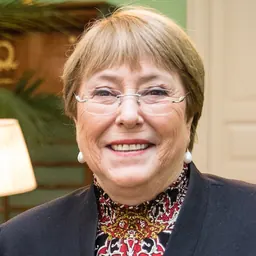


Related people
Same field, nearest in time



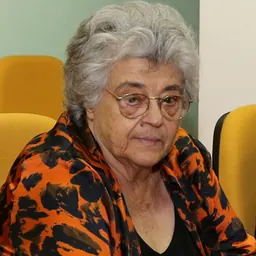
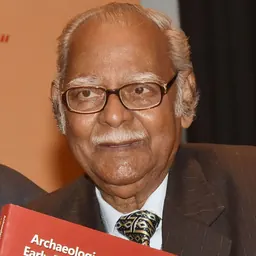

Contemporaries
People whose lives overlapped José Bengoa's


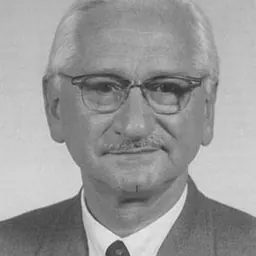
Frequently asked questions
Who was José Bengoa?
Chilean anthropologist
When was José Bengoa born?
José Bengoa was born on 19 January 1945 in Valparaíso.
When did José Bengoa die?
José Bengoa died on 23 March 2026.
What was José Bengoa's occupation?
José Bengoa was an anthropologist, writer, historian, sociologist, university teacher and social anthropologist.
What nationality was José Bengoa?
José Bengoa was Chilean.
Sources & further reading
Cite this page
APA: Biography.guide. (2026). José Bengoa. https://biography.guide/jose-bengoa/
MLA: "José Bengoa." Biography.guide, https://biography.guide/jose-bengoa/.
Chicago: "José Bengoa." Biography.guide. https://biography.guide/jose-bengoa/.
Data last updated: 2026-09-20 · Spot an error? Report a correction.
Page generated 2026-09-27 05:34 UTC