
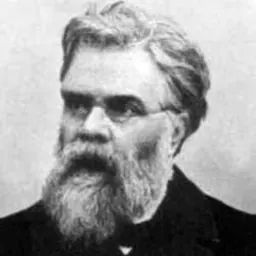
About Joscelyn Plunket Bushe-Fox
Lived 1880 – 1954 (aged 74). Joscelyn Plunket Bushe-Fox was an archaeologist.
Joscelyn Plunket "J.P." Bushe-Fox CBE, FSA, MA (7 July 1880 – 15 October 1954), was a British archaeologist, civil servant, and an officer in the British Army.
Early life Joscelyn Plunket Bushe-Fox was born in Hampstead in Middlesex (now Greater London) on the 7th of July 1880. He was the youngest child of Luke Loftus Bushe Fox and Mary Ann Bushe Fox (nee Browne). His father was from Cordara, County Longford, Ireland who was a Major in The Prince of Wales’s Royal Regiment of Longford Rifles. Mary Ann Bushe Fox was born in Hampstead.
Luke Loftus Bushe Fox was baptised as Luke Loftus Bushe after the maiden name of his mother Kathleen Bushe, and in turn Luke Loftus Bushe Fox baptised his children with the name Bushe. By the time of Luke Bushe-Fox’s death in 1894 his surname was hyphenated as Bushe-Fox.
J P Bushe-Fox was educated at St Paul’s school London. He did not attend university and worked in a bank after leaving school.
Archaeological career In 1910, after contracting tuberculosis, he was sent to Egypt to recover. There he worked for the Egyptologist Flinders Petrie on his excavations.
Returning to Britain he worked on the excavations at the Roman site of Corstopitum, modern Corbridge, in Northumberland, that were directed by R H Forster and W H Knowles. He contributed to the report on the 1911 excavations.
J P Bushe-Fox then directed a series of excavations for the research committee of the Society of Antiquaries of London. The first site he dug for the committee was at Hengistbury Head (then in Hampshire, now in Dorset) from December 1911 to June 1912, which was published in 1915.
Bushe-Fox then directed three seasons of work at the Roman site of Wroxeter in Shropshire. The first season, July to November 1912, was published in 1913. The second season was from June 1913 until the beginning of December 1913. The report was published in 1914. The third and final season began in June 1914 and lasted until January 1915. This report was published in 1916.
World War I Despite being thirty-four years old when war broke out J P Bush-Fox joined the British army during the First World War. He was assigned to the General List and worked for the Directorate of Graves Registration and Enquiries, the predecessor to the Commonwealth War Graves Commission. He was promoted to acting captain in November 1917 and on his demobilisation in November 1920, he was granted the rank of Major.
The Office of Works After the war, he joined the Office of Works and was appointed as an Inspector of Ancient Monuments in 1920 and became Chief Inspector of Ancient Monuments in 1933 until his retirement in 1945.
While working as an inspector of Ancient Monuments he also continued to direct excavations for the Research Committee of the Society of Antiquaries. In 1921 he directed the excavation of the Iron Age cemetery site at Swarling near to Canterbury in Kent. The report was published in 1925.
In the summer of 1922, Bushe-Fox began excavating at the site of the Roman fort at Richborough in Kent. Excavations continued on and off until 1938. The results of the excavations were published in several volumes, volume 1 in 1926, volume 2 in 1928, and volume 3 in 1932. In 1931 J P Bushe-Fox suffered a serious accident when he was buried by a collapsing trench while inspecting an excavation in Colchester, which had a continuing effect on his health. A fifth and final report on the Richborough excavations was edited by Barry Cunliffe and published in 1968.
Bushe-Fox served on the Council of the Society of Antiquaries in 1924-5, in 1930, and again in 1936-7 and was an active member of the Research Committee from 1912 until 1943.
Honours and awards Elected FSA June 1915 Honorary MA degree from Manchester 1928 Awarded a CBE in January 1945
Personal life J P Bushe-Fox’s father died when he was fourteen. His older brother Luke Henry Kendal Bushe-Fox died in 1916, leaving J P Bushe-Fox as the main support for his mother and five older sisters. He married Cicely Catherine Agnes Pratt in 1939. He died at the Horton Hospital in Epsom, Surrey on the 15th of October 1954.
Don’t just read it —
keep it.
Full-length biographies made to live with: read them, listen on the way to work, watch them tonight.
- E-book
- Audio
- Video
Instant download · yours to keep · every purchase keeps this site free
Important facts
People in Joscelyn Plunket Bushe-Fox's life
Named in this biography and alive at the same time

Related people
Same field, nearest in time


Contemporaries
People whose lives overlapped Joscelyn Plunket Bushe-Fox's




Frequently asked questions
Who was Joscelyn Plunket Bushe-Fox?
British archaeologist (1880–1954)
When was Joscelyn Plunket Bushe-Fox born?
Joscelyn Plunket Bushe-Fox was born on 7 July 1880 in Hampstead.
When did Joscelyn Plunket Bushe-Fox die?
Joscelyn Plunket Bushe-Fox died on 15 October 1954 in Epsom.
What was Joscelyn Plunket Bushe-Fox's occupation?
Joscelyn Plunket Bushe-Fox was an archaeologist.
Sources & further reading
· Wikipedia: Joscelyn Plunket Bushe-Fox
· DBpedia: Joscelyn Plunket Bushe-Fox
Cite this page
APA: Biography.guide. (2026). Joscelyn Plunket Bushe-Fox. https://biography.guide/joscelyn-plunket-bushe-fox/
MLA: "Joscelyn Plunket Bushe-Fox." Biography.guide, https://biography.guide/joscelyn-plunket-bushe-fox/.
Chicago: "Joscelyn Plunket Bushe-Fox." Biography.guide. https://biography.guide/joscelyn-plunket-bushe-fox/.
Data last updated: 2026-09-20 · Spot an error? Report a correction.
Page generated 2026-09-27 05:25 UTC