
About Jorge Arrate
Born 1941. Jorge Arrate is a Chilean economist, politician, lawyer, essayist and jurist.
Jorge Félix Arrate Mac Niven (born May 1, 1941) is a Chilean lawyer, economist, writer and politician. He has been Minister of State in the governments of Chilean presidents Salvador Allende (1970–1973), Patricio Aylwin (1990–1994), and Eduardo Frei Ruiz-Tagle (1994–2000). A long-time member of the Socialist Party of Chile, Arrate was during much of the 1990s the leader of the eponymous Arratismo faction in the party. During the indictment and arrest of Augusto Pinochet (1998–2000) Arrate was positive to the prospect of Pinochet being judged abroad. Given that his was contrary to the government stance he was removed from his post as minister in June 1999.
Early life He is the son of a former navy officer, and municipal employee Juan Gabriel Arrate Ducoing and Ines Mac-Niven Seymour. He spent his early years in the Santiago neighborhood of Plaza Brasil. He later moved to Viña del Mar (1945–1953) and then to Puente Alto (until 1965).
He attended basic education in the Saint Paul School and the Mackay School of Viña del Mar. He attended secondary studies at the Instituto Nacional of Santiago de Chile. He obtained the degree of Master of Arts in economics. He returned home to the Institute of Economics of the University of Chile to wrote his doctoral thesis, which he never completed. During his exile he was secretary of the Committee of Chileans Abroad.
Marriage and children He was married for the third time with writer Diamela Eltit. He has two children from his first marriage with attorney Ana Maria Fernandez. His second spouse was the psychologist Maria Soledad Larraín Heiremans.
In office At the end of 1970 president Salvador Allende commissioned him for the purchase of the Zig-Zag Editorial Group and the management of the firm that replaced it, Quimantú Editors. Later in 1971 he was designated as an economic advisor, and subsequently as chief executive officer of the Cuper Corporation (Codelco), where he was responsible for the nationalization of mineral deposits. In June and July 1972 he served at the same time, on an interim basis, as Minister of Mining. Between 2000 and 2003, he served as ambassador in Argentina during the administration of Ricardo Lagos.
Academic activities Arrate held teaching university functions since 1966, first at the Faculty of Law of the University of Chile, then at the School of Sociology of the Catholic University and the Faculty of Economics of the University of Chile. In 1970 he served as director of the Institute of Economy and Planning of the said university.
In 1977, he founded the Institute for the New Chile-based in Rotterdam, with the former minister of Allende, Orlando Letelier. He directed the center, continuously subsidized by the Dutch government of different political orientation from its founding until 1991. He also led the eight International Summer School in Rotterdam, Mendoza, Argentina and Santiago, organized by the institute.
Since 1987 he has been visiting professor at the National University of Cuyo (Argentina), the University of California, Berkeley twice, and the University of Virginia.
In 1992, Arrate was the first director of the School of Public Administration at the University of Santiago. from 2003 to 2006, he chaired the ARCIS University Corporation (Chile). In 2008 he was a professor at the University of Talca.
Political activity
Jorge Arrate started his political career in 1957, serving secretary-general of the Federation of Secondary Students of Santiago. In 1989 he was elected in the first election by universal suffrage by a political party in Chile, as general secretary (at that time head of the organization) of the Socialist Party of Chile. in which was elected Jaime Ravinet, his partner in the list by the Christian Democratic Party of Chile. In 2005, he accepted the nomination as a candidate for senator from the Coquimbo Region, in which the Socialist Party of Chile had not elect anyone to the Senate since 1973. Arrate lost the election, being chosen his running mate Jorge Pizarro and the conservative candidate, Evelyn Matthei.
On January 14 of 2009, he presented his resignation to the Socialist Party of Chile, to addressing the 2009 elections supported by socialist factions outside the coalition government. These officially proclaimed him four days later.
Its official proclamation as candidate of the covenant Juntos Podemos took place in a national assembly of the political left on April 25, a day in overtook the leader communist Guillermo Teillier, removed the evening of the election, and Tomás Hirsch Humanist Party candidate.
In July he lost the support of Humanist Party, who accused him of excessive approach to candidate Concertación, Eduardo Frei Ruiz-Tagle. The Humanist Party of Chile then went on to support the former socialist Marco Enríquez-Ominami.
Days later, Arrate joins the Communist Party of Chile for the sole purpose of complying with the electoral law.
On December 13 in first round Arrate got 6.21% of votes, surpassed by the 20.13% of Marco Enriquez-Ominami, the 29.60% of Eduardo Frei Ruiz-Tagle and 44.05% of the conservative business magnate Sebastián Piñera.
He left the communist militancy in early 2010.
After the presidential election, he joined the board of "The Broad Left Movement", he resigning in the year 2012 due to the approaches of the party leadership with the parties of the old coalition. Away from active politics for 2013 Chilean general election decided not to support any candidate of extra-parliamentary left, otherwise he was to the formation of the covenant New Majority, which replaced the former coalition government.
International activities Arrate chaired the Inter-American Conference of Ministers of Culture (La Serena, 1993), the Andres Bello (based Bogotá, Colombia, 1993–1994) and American Conference of Ministers of Education (Santiago, 1994).
In 1996 he was elected chairman of the Board of Directors of the International Labour Organization (ILO), a post he held for one year.
In 1995 he was vice president of the Conference of Ministers of Labor Non-Aligned Movement to New Delhi.
He is currently a member of the Whitney R. Harris World Law Institute's International Council.
Writer In addition to his collection of articles, interviews, and speeches, he has published essays and fiction. The most recent (2011) is the story collection "Unas Doradas". In 2010 he received the first prize in the genre "memory writes" delivered by a jury of the National Book Council by the text "Passenger in Transit", a true story of testimony and reports on their attempts to go back to Chile during the military dictatorship.
One of his most famous books is Memoria de la Izquierda Chilena (2003) co-authored with Eduardo Rojas. Also coauthored with Paulo Hidalgo is Pasión y razón del socialismo (1989), on the history of socialism in Chile. La fuerza democrática de la idea socialista (1985), written in exile and published in several issues in his country, had wide influence on the political leanings of the final years of the military dictatorship and the beginning of the democratic transition.
Brief political texts, collected in three compilations, have appeared in newspapers and magazines as Arauco, Chile América, Plural, Pensamiento Socialista, Convergencia, La Época, La Tercera, El Mercurio, Ercilla, APSI, Análisis, El Mostrador, Rocinante, Asuntos Públicos, "Punto Final", La Nación (Buenos Aires), La Nación (Santiago), Le Monde Diplomatique, Encuentro XXI, Crítica Social, and Letra Internacional, among others.
Don’t just read it —
keep it.
Full-length biographies made to live with: read them, listen on the way to work, watch them tonight.
- E-book
- Audio
- Video
Instant download · yours to keep · every purchase keeps this site free
Important facts
Family & relationships
People in Jorge Arrate's life
Named in this biography and alive at the same time

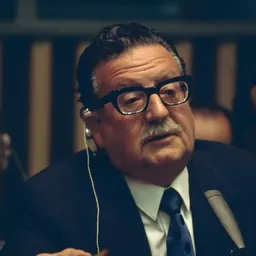
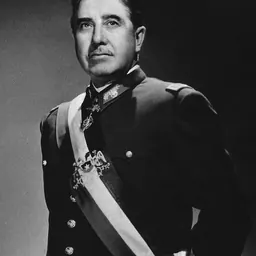
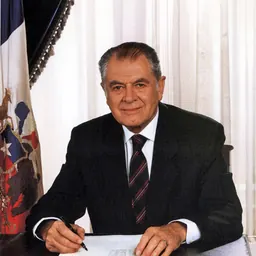




Related people
Same field, nearest in time


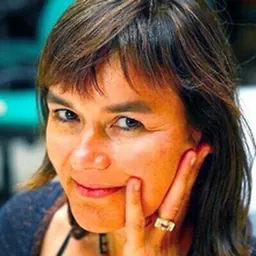
Contemporaries
People whose lives overlapped Jorge Arrate's

Frequently asked questions
Who is Jorge Arrate?
Chilean politician
When was Jorge Arrate born?
Jorge Arrate was born on 1 May 1941 in Santiago.
What is Jorge Arrate's occupation?
Jorge Arrate is an economist, politician, lawyer, essayist and jurist.
What nationality is Jorge Arrate?
Jorge Arrate is Chilean.
Sources & further reading
Cite this page
APA: Biography.guide. (2026). Jorge Arrate. https://biography.guide/jorge-arrate/
MLA: "Jorge Arrate." Biography.guide, https://biography.guide/jorge-arrate/.
Chicago: "Jorge Arrate." Biography.guide. https://biography.guide/jorge-arrate/.
Data last updated: 2026-09-20 · Spot an error? Report a correction.
Page generated 2026-09-27 05:24 UTC