
About Evelyn Matthei
Born 1953. Evelyn Matthei is a Chilean politician and economist.
Evelyn Rose Matthei Fornet (born 11 November 1953) is a Chilean politician associated with the Independent Democratic Union (UDI).
Over more than three decades of public service, she has served as Minister of Labor and Social Provision, senator, deputy and mayor. Educated in economics at the Pontifical Catholic University of Chile, Matthei began her career as a lecturer before moving into financial regulation and private-sector management. She was first elected to Congress in 1989 and later to the Senate, where she served on committees related to labour, finance and economic policy.
From 2011 to 2013 she served as Minister under Sebastián Piñera, where she was recognised for her direct style and emphasis on institutional accountability. In 2013, Matthei advanced to the second round of Chile's presidential election, losing to Michelle Bachelet by a wide margin. Between 2016 and 2024, she was Mayor of Providencia, focusing on urban management, public safety and administrative transparency.
Ideologically, Matthei describes herself as a pragmatic conservative, supporting market economics and fiscal discipline while maintaining moderate positions on social issues such as gender equality and reproductive rights. Her pragmatic orientation has placed her among the centrist figures of the Chilean right.
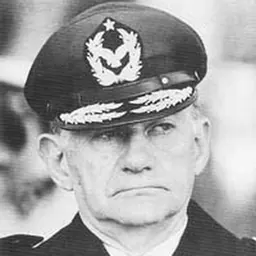
Family and early life Matthei's father, Fernando Matthei (pictured in 1982), was a member of the Pinochet junta that ruled Chile from 1973 to 1990. He was the first member of the government to recognise Pinochet's defeat in the 1988 plebiscite, aiding the Chilean transition to democracy.
Matthei was born in Santiago de Chile, the second child of Elda Fornet Fernández, of Spanish descent, and Fernando Matthei Aubel, a military officer of German origin. As a child living in Antofagasta, the Matthei family maintained a close friendship with that of future president Michelle Bachelet. Bachelet's father, Alberto Bachelet, a brigadier general in the Air Force, was a friend and colleague of Fernando Matthei.
Following the 1973 overthrow of Salvador Allende, Alberto Bachelet—who had opposed the coup—was imprisoned and died in custody, while Fernando Matthei succeeded him within the Air Force hierarchy. Decades later, in the 2013 presidential race, the daughters of these two men—Bachelet and Matthei—would face each other as political rivals. Educated at the German School of Santiago, Matthei developed an early passion for music and piano, securing scholarships to pursue a career as a concert pianist. While studying, she worked as a research assistant with future president Sebastián Piñera on a Latin American Economic Commission paper on poverty and collaborated on a textbook on monetary theory with Professor Hernando Cortés.
Elected to the Chamber of Deputies in 1989 for District 23 (Las Condes, Lo Barnechea and Vitacura), she served on the Finance and Labour committees and promoted the 1992 law on organ transplantation following extensive public consultations. Within RN she helped form the “Youth Patrol” alongside Sebastián Piñera, Andrés Allamand, and Alberto Espina, a group that modernized party leadership.
In 1992, her presidential ambitions were interrupted by the Piñeragate scandal, after a recording of Piñera disparaging her was aired publicly; Matthei later admitted to having obtained the tape through a military contact and withdrew her candidacy. She soon resigned from RN and sat as an independent near the UDI bench.
Elected again as deputy for Valparaíso (1994–1998) with UDI backing, she joined committees on Labour, Economy, and Foreign Relations. During this period she supported former minister Francisco Javier Cuadra in the “Allamand Drug Case,” which strained her ties with Allamand for years. In 1998 she co-founded the “Women’s Movement for Chilean Dignity” to protest Augusto Pinochet’s arrest in London.
Support for Pinochet: 1998 A significant aspect of Matthei’s political legacy is her early and unequivocal support for Augusto Pinochet during the 1988 plebiscite—a position largely influenced by her family background, given that her father served in the military junta. Over time, however, she has moderated her rhetoric on this issue. While she acknowledges her past support, she now emphasizes a commitment to moving past Pinochet, distancing herself from the more doctrinaire elements of her earlier positions.
In 2018, she stated that "I have never been a Pinochet supporter in my life ... nor was my father. I have never been a fanatic ... [the impacts of Pinochet] are mixed, nobody is that good, and nobody is that bad."
Regardless, she continues to defend her father, who has never been charged with any crime after the dictatorship.
This candid evolution is consistent with Matthei's overall political style, which prizes honesty and adaptability over strict ideological adherence. She has maintained since redemocratization a belief in the prosecution of human rights violation and criticized the denial of such atrocities. Her relatively liberal views on abortion, same-sex marriage and taxation distinguished her within the conservative bloc.
After replacing Pablo Longueira as the UDI’s presidential candidate, she advanced to the runoff but lost to Michelle Bachelet with 38% of the vote. She later stepped away from national politics, teaching mathematics before returning as Mayor of Providencia (2016–2024). In January 2025, both RN and the UDI proclaimed her as their presidential candidate for the 2025 Chilean presidential election. She placed fifth in the election and did not advance to the runoff, endorsing José Antonio Kast.
Political positions and persona
Matthei's views have shifted over time, but she has always been described as center-right, existing in the political middle.
Reflecting on her own political evolution, Matthei declared at the close of her tenure as mayor of Providencia, “less ideology, more pragmatism”, emphasizing the urgent need for unity and practical solutions to national challenges. Even in her first run for public office, her platform was one of "reasoned moderation".
Matthei supports gay marriage and opposes significant regression of Chile's abortion laws. Even in the 1990s, her speeches and some of her votes in Congress revealed a more liberal stance on social issues—supporting divorce, the morning-after pill, and abortion under three circumstances. She considers herself an ardent feminist.
Matthei opposes legalized euthanasia, but supports the death penalty.
Immigration Matthei believes immigration is an issue of public order and empathy, but has continued to drive a hard line against President Boric. She opposes significant structures being built at ports of entry. On illegal or irregular immigrants who commit crimes, she has stated that “I would expel them and their families as well,” and regarding the threats posed by organized crime to authorities, she suggested that “it might be necessary to talk about the death penalty for these cases.”
Economic policy Matthei’s economic policy is firmly rooted in free‑market principles, developed during her tenure reforming the social security administration of the Pinochet regime. She advocates for reduced taxation, deregulation, and fiscal discipline as the means to stimulate private enterprise and generate sustainable growth. Matthei has described active government deregulation as the depoliticization of the economy, criticizing the interventionist policies of President Gabriel Boric.
Personal life Evelyn Matthei is married to fellow economist Jorge Desormeaux Jiménez, with whom she has three children. Desormeaux served as Chilean Central Bank Deputy Governor from 1999 to 2009. Matthei is Catholic, like her mother, but her husband is Lutheran. She has said she has explored Buddhism and says she has her house embrace a policy of religious relativism.
Matthei is a classically trained pianist, and speaks English and German as well as her native Spanish.
Electoral history
Don’t just read it —
keep it.
Full-length biographies made to live with: read them, listen on the way to work, watch them tonight.
- E-book
- Audio
- Video
Instant download · yours to keep · every purchase keeps this site free
Important facts
People in Evelyn Matthei's life
Named in this biography and alive at the same time
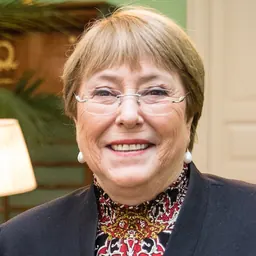

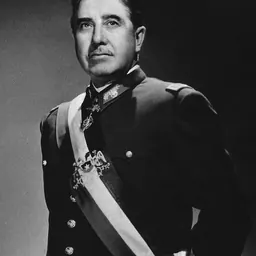




Related people
Same field, nearest in time





Contemporaries
People whose lives overlapped Evelyn Matthei's

Frequently asked questions
Who is Evelyn Matthei?
Chilean politician (born 1953)
When was Evelyn Matthei born?
Evelyn Matthei was born on 11 November 1953 in Santiago.
What is Evelyn Matthei's occupation?
Evelyn Matthei is a politician and economist.
What nationality is Evelyn Matthei?
Evelyn Matthei is Chilean.
Sources & further reading
Cite this page
APA: Biography.guide. (2026). Evelyn Matthei. https://biography.guide/evelyn-matthei/
MLA: "Evelyn Matthei." Biography.guide, https://biography.guide/evelyn-matthei/.
Chicago: "Evelyn Matthei." Biography.guide. https://biography.guide/evelyn-matthei/.
Data last updated: 2026-09-22 · Spot an error? Report a correction.
Portrait: Wikimedia Commons · author & licence
Page generated 2026-09-27 05:03 UTC