
About Jörg Asmussen
Born 1966. Jörg Asmussen is a German economist, banker and ministry official.
Jörg Asmussen (born 31 October 1966) is a German economist and politician who was State Secretary of the Federal Ministry of Finance from 2008 to 2011 and Parliamentary State Secretary for the Federal Ministry of Labour and Social Affairs from 2014 to 2016. He has been Chief Executive Officer of the German Insurance Association (GDV) since 2020.
Asmussen was a member of the Executive Board of the European Central Bank (ECB) from 2012 to 2014. He also served in the German federal government, most prominently as State Secretary at the Federal Ministry of Labour and Social Affairs from 2014 to 2016 and the Federal Ministry of Finance from 2008 to 2011. Asmussen has been a member of the Social Democratic Party of Germany (SDP) since 1987.
After leaving the government, Asmussen joined the investment bank Lazard in 2016 as managing director in financial advisory and rose to head of M & A for Europe and head of the Financial Institutions Group for Continental Europe.
Early life and education Asmussen earned a master's degree in business administration, Bocconi University in 1992 and a Diplom degree in economics, University of Bonn in 1994. In Bonn, he studied under Manfred J. M. Neumann and Axel A. Weber alongside Jens Weidmann, among others.
Career in the public sector After two years (1994–96) at the in Cologne, Asmussen held a succession of positions in the German Federal Ministry of Finance.
As a financial advisor of the coalition government 2005–2009 and as the Finance Ministry's representative for True Sale International, an association of banks and financial service interest groups in Germany, Asmussen supported bank deregulation and an extension of the market of asset-backed securities (ABSs). Some sources highlighted his role before the 2008 financial crisis. Whilst at the Ministry, Asmussen was responsible for the German Federal Financial Supervisory Authority (Bafin) at the time when the Düsseldorf based IKB Deutsche Industriebank had to be restructured – mainly due to ABS investments. Asmussen was member of the supervisory board of that bank at that time (2007).
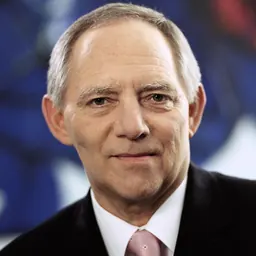
State Secretary at the German Federal Ministry of Finance, 2008–11 From 2008 to 2011, Asmussen was State Secretary at the Ministry led by Wolfgang Schäuble, responsible for the Directorate's fiscal policy and macroeconomic affairs, financial market policy and European policy. He later became a central figure in negotiations with other euro zone countries on how to deal with the sovereign debt crisis.
During his time in office, Asmussen also was chairman of the Administrative Council of Germany's Federal Financial Supervisory Authority (BaFin); chairman of the inter-ministerial steering committee of the Financial Market Stabilisation Authority (FMSA); member of the Financial Stability Board (FSF); and board member of the European Financial Stability Facility (EFSF). In addition, he was on the supervisory boards of Deutsche Telekom and Deutsche Gesellschaft für Internationale Zusammenarbeit (GIZ).
In May 2011, Asmussen – acting on behalf the German government – endorsed deploying the European Bank for Reconstruction and Development through loans to business in the Middle East, under the condition that countries make “a firm commitment to the core principles of democracy, political pluralism and the market economy.” At the time, the EBRD was led by fellow German Social Democrat Thomas Mirow and pushing to extend its mandate to North Africa as part of a larger effort by Europe and the United States to help countries in the region during the Arab Spring.
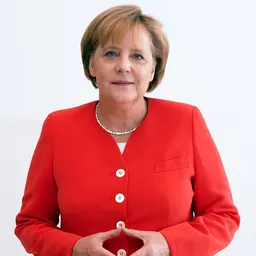
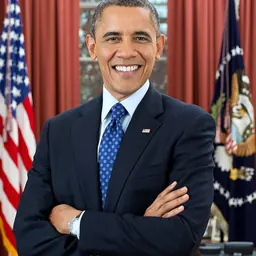
On 7 June 2011 Asmussen attended the state dinner hosted by President Barack Obama in honor of Chancellor Angela Merkel at the White House.
In November 2011, Asmussen was Chancellor Merkel's acting Sherpa to the G20 summit. The selection of Asmussen was announced at the meeting of Group of 7 countries in Marseille, France. —a position for which French ECB board member Benoît Cœuré was also a candidate—Asmussen was instead given responsibility for International and European Relations on the board, which Draghi has expanded to include attending, alongside himself, meetings of Eurozone government leaders and finance ministers. Belgian Peter Praet was given responsibility for the Economics department. Some saw the debate around this appointment as highly controversial, when questions were asked about the North-South balance in the ECB's governing structure.
Throughout his tenure, Asmussen often helped communicate policy to – as New York Times described it – a German public fearful that the ECB was a conduit for transferring their wealth to stricken countries like Greece. In German media, he was publicly supportive of bank measures to subdue the euro zone crisis that were unpopular in Germany.
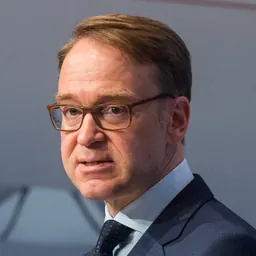
In June 2013, Asmussen defended ECB policies in testimony to the Federal Constitutional Court of Germany after citizens’ groups challenged their constitutionality. Asmussen and Weidmann gave opposing evidence to the German Constitutional Court this year in a hearing to determine the legality of the Outright Monetary Transactions program. Countering Weidmann's testimony, Asmussen argued the OMT program did not relieve countries of the need to reform their own economies as they would have to sign up to rescue plans monitored by the EU's bailout fund, the International Monetary Fund and the European Commission. While Weidmann argued that bond markets exert discipline on countries’ finances, Asmussen said the euro area faced break-up last year as investors began to price in an end to the currency. At the time, he was mentioned in the media as a possible finance minister if the SPD had managed to grasp control of the ministry from incumbent Wolfgang Schäuble in the negotiations on a coalition government following the 2013 elections.
State Secretary at the Federal Ministry of Labour and Social Affairs, 2014–16 In his position as State Secretary under Labor Minister Andrea Nahles, Asmussen oversaw the introduction of a national minimum wage.
In late 2015, Economy Minister Sigmar Gabriel and Finance Minister Wolfgang Schäuble reached agreement on Asmussen moving to a managerial position at Germany's state development bank KfW, which ultimately did not happen due to a disagreement with the KfW management.
Career in the private sector Upon leaving politics, Amussen has taken on numerous positions on corporate boards, including the following: Funding Circle, non-executive director of the board Generali Investments Europe, independent member of the board of directors (since 2016) Lazard, managing director in Financial Advisory (since 2016)
In 2020, Asmussen was appointed managing director of the German Insurance Association (GDV).
Other activities Corporate boards Deutsche Bahn, ex-officio member of the supervisory board (2008–2011) Deutsche Telekom, ex-officio member of the supervisory board (2008–2011) Deutsche Postbank AG, ex-officio member of the supervisory board (2005–2008) Euler Hermes Kreditversicherungs AG, ex-officio member of the supervisory board (2007–2008) IKB Deutsche Industriebank, ex-officio member of the supervisory board (2005–2008)
Non-profit organizations Grüner Wirtschaftsdialog, Member of the Advisory Board (since 2021) House of Finance, Goethe University Frankfurt, Member of the Board of Trustees Jacques Delors Institute Berlin, deputy chairman of the advisory board
Controversy In a September 2014 opinion piece for Berliner Zeitung and Les Échos, Asmussen and European Central Bank executive board member Benoît Cœuré wrote that “Germany can use some of its budgetary room of maneuver to support investment and reduce tax wedges – the difference between what employers pay in wages and the total take-home pay for workers – while preserving its sound fiscal position. In doing so, it would tackle some its own future economic challenges.” The two officials also called on France to press ahead with labour market reforms while sticking to the budget deficit targets agreed with the European Commission. “The article does not reflect current government policy and we don’t agree,” a spokesperson for Germany's finance ministry said.
Don’t just read it —
keep it.
Full-length biographies made to live with: read them, listen on the way to work, watch them tonight.
- E-book
- Audio
- Video
Instant download · yours to keep · every purchase keeps this site free
Important facts
People in Jörg Asmussen's life
Named in this biography and alive at the same time



Related people
Same field, nearest in time



Contemporaries
People whose lives overlapped Jörg Asmussen's



Frequently asked questions
Who is Jörg Asmussen?
German economist and former ministry official
When was Jörg Asmussen born?
Jörg Asmussen was born on 31 October 1966 in Flensburg.
What is Jörg Asmussen's occupation?
Jörg Asmussen is an economist, banker and ministry official.
What nationality is Jörg Asmussen?
Jörg Asmussen is German.
Sources & further reading
Cite this page
APA: Biography.guide. (2026). Jörg Asmussen. https://biography.guide/jorg-asmussen/
MLA: "Jörg Asmussen." Biography.guide, https://biography.guide/jorg-asmussen/.
Chicago: "Jörg Asmussen." Biography.guide. https://biography.guide/jorg-asmussen/.
Data last updated: 2026-09-20 · Spot an error? Report a correction.
Portrait: Wikimedia Commons · author & licence
Page generated 2026-09-27 04:58 UTC