
About Jacques Delors
Lived 1925 – 2023 (aged 98). Jacques Delors was a French economist, politician, trade unionist, banker, official and mayor.
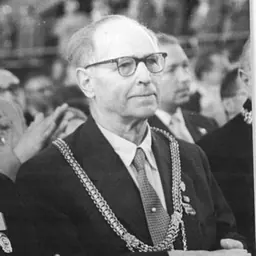
Jacques Lucien Jean Delors (; 20 July 192527 December 2023) was a French politician who served as president of the European Commission from 1985 to 1995. Delors played a key role in the creation of the European single market, the euro and the evolution of the (then) European Economic Community (EEC) towards the modern European Union (EU).
As president of the European Commission (EC), Delors was the most visible and influential leader in European affairs. He proposed policies that closely linked the member nations together and promoted greater union. Executing the decisions of the European Council, he established a single market that made possible the free movement of goods, capital, services, and workers (known collectively as the "four freedoms of the European Union"). He also headed the Delors Committee, which proposed the monetary union to create the euro, a new single currency to replace individual national currencies. This was achieved when member states ratified the Maastricht Treaty in 1992.
Delors was a member of the French Socialist Party. Before becoming president of the EC, he was France's finance minister from 1981 to 1984, and a member of the European Parliament from 1979 to 1981.
French politics Born in Paris in a family originating from Corrèze, Delors first held in the 1940s through the 1960s a series of posts in French banking and state planning with the Bank of France. As a member of the French Confederation of Christian Workers (CFTC), he participated in its secularization and the foundation of the French Democratic Confederation of Labour (CFDT). In 1969, he became social affairs adviser to the Gaullist Prime Minister Jacques Chaban-Delmas, a move which was presented as part of Chaban's outreach to the centre-ground and first attracted media attention to Delors personally. He served in the European Parliament from 1979 to 1981, becoming chairman of its Committee on Economic and Monetary Affairs, actively taking part in debates about economic, social, and monetary policies.
President of the European Commission
Delors became the President of the European Commission in January 1985. During his presidency, he oversaw important budgetary reforms and laid the groundwork for the introduction of a single market within the European Community. It came into effect on 1 January 1993 and allowed the free movement of persons, capital, goods, and services within the Community.
Delors also headed the Committee for the Study of Economic and Monetary Union, widely known as the Delors Committee, that in early 1989 proposed the creation of a new currency—the euro—to replace individual national currencies. This was achieved in the 1992 Maastricht Treaty.
In opposition to the strident neoliberalism of US president Ronald Reagan (1981–1989) that dominated the American political agenda, Delors promoted an alternative interpretation of capitalism that embedded it in the European social structure. He synthesized three themes. First, from the left came support for the redistribution of wealth and protection of the weakest. Second, a neo-mercantilist approach was designed to maximize European industrial output. And the third was reliance on the marketplace. His emphasis on the social dimension of Europe was and remains central to a strong narrative that became a key element of the self-identification of the European Union.
The Delors presidency is considered to have been the apex of the European Commission's influence on European integration. This work continues to have a significant influence on discourse on lifelong learning, forming the conceptual foundation for both the Canadian Composite Learning Index as well as the European Lifelong Learning Indicators (ELLI) project.
In 1994, members of the French Socialist Party attempted to persuade Delors to run for president of France. Polls showed that he would have a very good chance of defeating either of the main conservative contenders, Prime Minister Édouard Balladur and Mayor of Paris Jacques Chirac. However Delors declined to run and the eventual Socialist nominee, Lionel Jospin, was defeated in the 1995 presidential election by Jacques Chirac.
Delors founded the Paris-based, centre-left think tank Notre Europe in 1996 and remained one of its presidents for the rest of his life. He was president of the , and an honorary member of both the Institut Aspen France and the Club of Rome. In 2010, Delors was the first to be given the Leonardo European Corporate Learning Award.
In 2012, Delors stated in the Handelsblatt newspaper that "If the British cannot support the trend towards more integration in Europe, we can nevertheless remain friends, but on a different basis. I could imagine a form such as a European economic area or a free-trade agreement."
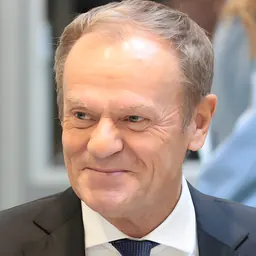
On 25 June 2015, Donald Tusk announced that Delors would become the third person to have the title of Honorary Citizen of Europe bestowed upon them, in recognition of "his remarkable contribution to the development of the European project".
In March 2024, Delors was posthumously given a "Special Recognition" award at The Parliament Magazine annual MEP Awards, in recognition of his contributions towards the European project, to mark the awards' 20th anniversary.
Personal life and death
Delors was married to Marie Lephaille until her death in 2020. They had a daughter, Martine Aubry, who served as First Secretary of the Socialist Party from 2008 to 2012,
Delors died in his sleep at his home in Paris, on 27 December 2023, aged 98. He was honored with a state funeral at the Hôtel des Invalides in Paris on 5 January in the presence of political figures from all over Europe before his burial alongside his wife and his son at the Fontaine-la-Gaillarde cemetery.
Awards 1990: Franklin D. Roosevelt Freedom Medal for Freedom of Speech. 1998: UEFA President's Award. 1999: Member of the Royal Academy of Science, Letters and Fine Arts of Belgium. 2005: Pax Christi International Peace Award. 2015: Honorary Citizen of Europe. Medal of the Order of Merit of Baden-Württemberg
Selected works
Don’t just read it —
keep it.
Full-length biographies made to live with: read them, listen on the way to work, watch them tonight.
- E-book
- Audio
- Video
Instant download · yours to keep · every purchase keeps this site free
Important facts
Family & relationships
People in Jacques Delors's life
Named in this biography and alive at the same time




Related people
Same field, nearest in time


Contemporaries
People whose lives overlapped Jacques Delors's


Frequently asked questions
Who was Jacques Delors?
French economist and politician (1925–2023)
When was Jacques Delors born?
Jacques Delors was born on 20 July 1925 in 14th arrondissement of Paris.
When did Jacques Delors die?
Jacques Delors died on 27 December 2023 in 5th arrondissement of Paris.
What was Jacques Delors's occupation?
Jacques Delors was an economist, politician, trade unionist, banker, official and mayor.
What nationality was Jacques Delors?
Jacques Delors was French.
Sources & further reading
Cite this page
APA: Biography.guide. (2026). Jacques Delors. https://biography.guide/jacques-delors/
MLA: "Jacques Delors." Biography.guide, https://biography.guide/jacques-delors/.
Chicago: "Jacques Delors." Biography.guide. https://biography.guide/jacques-delors/.
Data last updated: 2026-09-20 · Spot an error? Report a correction.
Page generated 2026-09-27 05:19 UTC