
About Jon Cleary
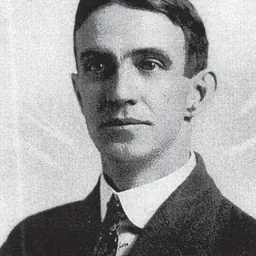
Lived 1917 – 2010 (aged 92). Jon Cleary was an Australian novelist and screenwriter.
Jon Stephen Cleary (22 November 191719 July 2010 ) was an Australian writer and novelist. He wrote numerous books, including The Sundowners, a portrait of a rural family in the 1920s as they move from one job to the next, and The High Commissioner (1966), the first of a long series of popular detective stories featuring Sydney Police Inspector Scobie Malone. A number of Cleary's works have been the subject of film and television adaptations.
Early life and war service Early life Cleary was born in Erskineville, Sydney and educated at Marist Brothers College, Randwick. When he was ten his father spent six months in Long Bay Gaol for stealing five pounds. Debt collectors took everything in the Cleary household "except a piano and my mother's double bed", said Cleary. "I remember sitting on the steps with Mum, who was weeping bitterly, and she said, 'Don't ever owe anything to anybody.' That sticks with you, and it's why I gained a justifiable reputation for being tight with money." He wrote his first story in 1938 at the request of Joe Morley, a journalist friend of Cleary's father. It was a piece about being unemployed which Cleary did not finish because he thought it was self-pitying but he found he did enjoy the process of writing.
Writing career Early stories Cleary began writing regularly in the army, selling his first story in 1940. The following year he won £50 prize writing a story for the Daily Mirror. It was killed by the censor but the newspaper hired Cleary to write a weekly story. He began also to write for The Australian Journal, whose editor sent four of Cleary's short stories to American agent Paul Reynolds, who began selling them to American magazines such as Cosmopolitan and The Saturday Evening Post. and in 1945 won equal first prize in a competition for the ABC for his radio play Safe Horizon. In 1946 a collection of his short stories was published called These Small Glories.
You Can't See 'Round Corners Cleary's first novel was the 1947 work, You Can't See 'Round Corners, about the life of an army deserter wanted for the sensational murder of his girlfriend in wartime Sydney. Cleary started writing this in the army and finished it on board a ship en route to London where he had hoped to find work as a screenwriter.
He continued writing short stories and novels. His second novel, The Long Shadow (1949) was a thriller, a genre he tackled at the suggestion of his editor Graham Greene. Just Let Me Be (1950) was set in Coogee, and was later filmed for British TV.
The Sundowners While in New York Cleary wrote his fourth published novel, The Sundowners, based on stories of his father. It was published in 1952 and sold three million copies, enabling Cleary to write full-time.
Cleary lived in Italy for a year then returned home to Australia in 1953 after seven years away.
His fifth novel, The Climate of Courage (1954), was based on his war experiences and sold well in Australia and Britain. He visited the Kimberley region in 1954, and the result was Justin Bayard (1955) (later filmed as Dust in the Sun (1958)).
International writer Cleary then went back to live in London. His novels became increasingly set in countries other than Australia, with Cleary travelling extensively for the purposes of research.
"I realised at 40 I did not have the intellectual depth to be the writer I would like to be, so I determined to be as good a craftsman as I might be", Cleary said later on.
He had written a book about Australian politics, The Mayor's Nest, but his English publisher was worried it would not appeal to an international audience, and suggested a book on motor racing. Cleary had lived in Italy and become familiar with the motor races there. He wrote The Green Helmet in Spain in twenty days, and it became a best seller on its publication in 1957. Cleary also wrote the script for the 1961 film version. and helped rewrite the script to The Sundowners (1960) but his focus remained on novels: Back of Sunset (1959) was about the Australian Flying Doctors service; Strike Me Lucky (1959) was credited solely to his wife Joy but had been reworked by Cleary; North from Thursday (1960) was set in New Guinea; The Country of Marriage (1962) was set in England; Forests of the Night (1963) was set in Burma; A Flight of Chariots (1963) was about astronauts; The Fall of an Eagle (1965) was set in Anatolia; The Pulse of Danger (1966) was set in Bhutan.
He had time for script work, contributing to the screenplay for Damon and Pythias (1962) and writing an un-used draft for The Diamond Smugglers.
Scobie Malone While in London, Cleary got the idea for a book about an Australian detective who has to arrest the Australian High Commissioner. The High Commissioner (1966) introduced the world to detective Scobie Malone although initially it was meant to be a stand-alone book. The novel sold well and was turned into a film Nobody Runs Forever (1968).
Cleary followed it with The Long Pursuit (1967), set during World War II, originally written as a film script.
In 1966 Cleary returned to Australia after three years abroad and sold his Pittwater House to buy one at Kirribilli. He said "I'm a professional craftsman and I should be judged on those standards. I like to think I'm a little better than a potboiler. If I was a pot boiler I would never take off eight months to write a novel."
Cleary said 50% of his screenplays had been filmed by that stage and that he had recently turned down $50,000 to write a TV series set in the South Pacific. "Financially I could retire, mentally I couldn't," he said. He was working on a "social comedy" called The Ballad of Fingal McBride. Writing the Scobie Malone series of novels enabled him to tell Australian stories which appealed to an international audience, and he remained popular with readers throughout his career. Malone returned in Dragons at the Party (1987), about the Australian Bicentennial, then was in Now and Then, Amen (1988), Babylon South (1989), Murder Song (1990), Pride's Harvest (1991), Dark Summer (1992), Bleak Spring (1993), Autumn Maze (1994), Winter Chill (1995), Endpeace (1996), A Different Turf (1997), Five Ring Circus (1998), Dilemma (1999), Bear Pit (2000), Yesterday's Shadow (2001), The Easy Sin (2002) and Degrees of Connection (2004). He then wound up the series, feeling he was getting stale.
Final novels He published three more novels, all set in Australia: Miss Ambar Regrets (2004), Morning's Gone (2006) and Four-Cornered Circle (2007), then retired.
Personal life Cleary met his wife Joy on his boat trip to England in 1946 and married her five days after they landed. They had two daughters, Catherine and Jane, the latter of whom died of breast cancer at age 37, predeceasing both of her parents. Joy Cleary developed Alzheimer's disease and went to live in a nursing home prior to her death in 2003. "I was very, very lucky", said Cleary of his marriage. "We were in love from the day we met to the day we – sorry, I mean she – died."
Cleary was good friends with fellow writers Morris West and Alexander Baron. He was a regular churchgoer, attending Mass every Sunday. For the last three years of his life, he was in ill-health, attended by a full-time carer, and in and out of hospital with heart problems. He died on 19 July 2010, aged 92. The eulogy at his funeral was delivered by his friend and neighbour Sir Eric McClintock.
Assessment During his lifetime, Cleary was one of the most popular Australian authors of all time. According to Murray Waldren, "his own assessment was that he lacked a poetic eye but had an eye for colour and composition and was strong on narrative and dialogue. And he took pride in the research underpinning his works."
Awards 1944 – Australian Broadcasting Commission prize for radio drama (Safe Horizon) 1950 – Australian Literary Society's Crouch Medal for Best Australian Novel (Just Let Me Be) 1975 – Edgar Award from the Mystery Writers of America for Best Novel (Peter's Pence) 1996 – Australian Crime Writers Association Lifetime Achievement Award 1996 – Ned Kelly Award for Lifelong Contribution to the Crime, Mystery and Detective Genres
Don’t just read it —
keep it.
Full-length biographies made to live with: read them, listen on the way to work, watch them tonight.
- E-book
- Audio
- Video
Instant download · yours to keep · every purchase keeps this site free
Important facts
People in Jon Cleary's life
Named in this biography and alive at the same time




Related people
Same field, nearest in time

Contemporaries
People whose lives overlapped Jon Cleary's

Frequently asked questions
Who was Jon Cleary?
Australian writer and novelist (1917-2010)
When was Jon Cleary born?
Jon Cleary was born on 22 November 1917 in Erskineville.
When did Jon Cleary die?
Jon Cleary died on 19 July 2010 in New South Wales.
What was Jon Cleary's occupation?
Jon Cleary was a novelist and screenwriter.
What nationality was Jon Cleary?
Jon Cleary was Australian.
Sources & further reading
Cite this page
APA: Biography.guide. (2026). Jon Cleary. https://biography.guide/jon-cleary-novelist/
MLA: "Jon Cleary." Biography.guide, https://biography.guide/jon-cleary-novelist/.
Chicago: "Jon Cleary." Biography.guide. https://biography.guide/jon-cleary-novelist/.
Data last updated: 2026-09-20 · Spot an error? Report a correction.
Page generated 2026-09-27 05:14 UTC