
About Johnny Douglas
Lived 1882 – 1930 (aged 48). Johnny Douglas was a British association football player, cricketer and boxer.
Early life Douglas was the son of successful timber merchant John Herbert Douglas (1853–1930) and Julia Ann (née Tyler) and was born at Stoke Newington, London in what is now Belfast Road. He was educated at Moulton Grammar School and Felsted School, where at school he was coached by the former first-class player T.N. Perkins, He served in the Bedfordshire Regiment throughout World War I, eventually as major (acting lieutenant-colonel).
Boxing career Douglas took up boxing while still a schoolboy, and won the Amateur Boxing Association 1905 middleweight title when boxing out of the Belsize ABC.
In 1908, Douglas won an Olympic gold medal as a middleweight boxer. All three of his bouts, including the final, described by The Times as "one of the most brilliant exhibitions of skilful boxing, allied to tremendous hitting, ever seen.", were held on the same day. The silver medal winner, Snowy Baker, 44 years later falsely claimed that Douglas's father was the sole judge and referee.
Baker never publicly contested the close points verdict which Douglas, who scored a second-round knockdown over him and won in their Olympic final. Yet, in a 1952 interview, he claimed that Douglas's father had refereed the fight, leading to widespread suspicion of a dodgy decision. In reality, Douglas Senior was at ringside to present the medals in his role as president of the Amateur Boxing Association of England (ABA). The real referee was Eugene Corri, who did not have to give a casting vote as the two judges agreed that Douglas was a narrow winner.
Olympic results Defeated René Doudelle (France) KO round 1 2nd round bye Defeated Ruben Warnes (Great Britain) KO round 2 Defeated Snowy Baker (Australia) Decision
Cricket career Douglas was an untiring fast-medium bowler and obdurate batsman who was nicknamed with a play on his initials JWHT as "Johnny Will Hit Today" or conversely "Johnny Won't Hit Today" by Australian hecklers. He captained the school teams at Felsted and was a member of Wanstead C.C. He made his Essex debut at the age of eighteen against Yorkshire and bagged a pair, with George Hirst dismissing him in both innings.
He played for England before and after the First World War. Douglas was named as a Wisden Cricketer of the Year in 1915, but play was suspended during the war years. After the war, until 1923, he had to carry Essex's bowling on his shoulders except when George Louden turned out. He took over 100 wickets in a season seven times, with a best of 147 in 1920. The following year against Derbyshire, he produced perhaps the most remarkable all-round performance in English first-class cricket history. After taking nine for 47, Douglas stopped a breakdown against Bill Bestwick with an unbeaten 210 that tired him so much he did not bowl until the end of Derbyshire's second innings. He then took two for none, giving him a match record of eleven for 47.
Douglas captained England eighteen times, with a Test match record of won eight, lost eight, drawn two. Successful as stand-in captain in Australia in 1911, he won the series 4–1. On the 1920/21 tour of Australia, he led a depleted post-war side that suffered a 0–5 'whitewash', a scoreline not repeated in an Ashes series until the 2006/7 England team lost by the same margin. Reappointed reluctantly by the M.C.C. in 1921, he lost the first two Tests at home to Warwick Armstrong's side and was displaced as captain but retained in the XI. He captained England in one further Test match, against South Africa in July 1924, and played his final Test on the 1924/25 England tour of Australia.
Later life
Douglas married Evelyn Ruby (sister of two of his close wartime friends), the widow of Captain Thomas Elphinstone Case, of the Coldstream Guards, daughter of Adolphus Ferguson and Minnie Byron, on 25 December 1916. He had no children but one stepson, the actor Gerald Case.
Douglas drowned when the Finnish passenger ship , on which he and his father were sailing back to Britain after buying timber in Finland, sank in the Kattegat seven miles south of the Læsø Trindel Lightship, Denmark. Another ship of the same line, Arcturus, had rammed her in fog after the two captains, who were brothers, had tried to exchange Christmas greetings. According to a witness at the post mortem enquiry, Douglas may have been trying to save his father. He was aged 48.
Don’t just read it —
keep it.
Full-length biographies made to live with: read them, listen on the way to work, watch them tonight.
- E-book
- Audio
- Video
Instant download · yours to keep · every purchase keeps this site free
Important facts
People in Johnny Douglas's life
Named in this biography and alive at the same time


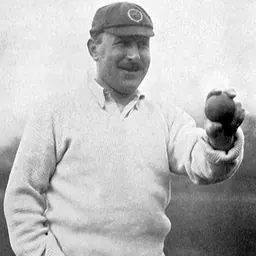
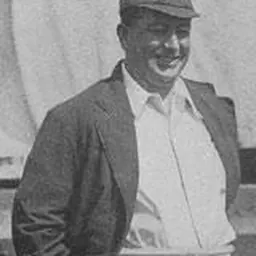


Related people
Same field, nearest in time



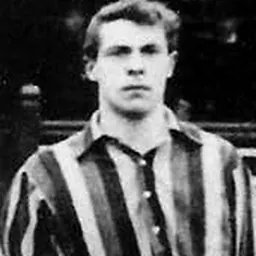
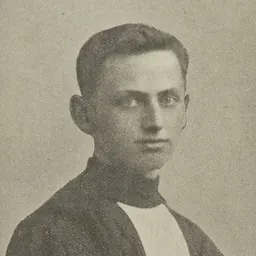
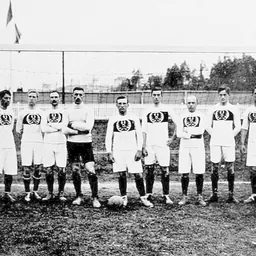
Contemporaries
People whose lives overlapped Johnny Douglas's

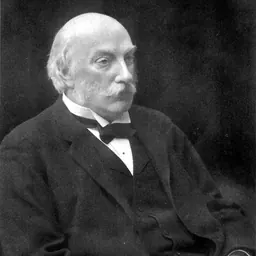
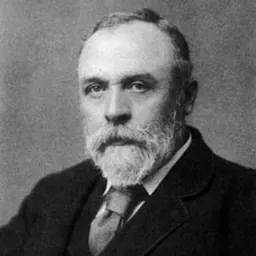

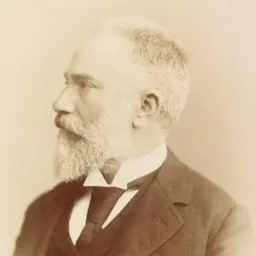
Frequently asked questions
Who was Johnny Douglas?
Cricket player of England (1882-1930)
When was Johnny Douglas born?
Johnny Douglas was born on 3 September 1882 in Stoke Newington.
When did Johnny Douglas die?
Johnny Douglas died on 19 December 1930 in Læsø.
What was Johnny Douglas's occupation?
Johnny Douglas was an association football player, cricketer and boxer.
What nationality was Johnny Douglas?
Johnny Douglas was British.
Sources & further reading
Cite this page
APA: Biography.guide. (2026). Johnny Douglas. https://biography.guide/johnny-douglas/
MLA: "Johnny Douglas." Biography.guide, https://biography.guide/johnny-douglas/.
Chicago: "Johnny Douglas." Biography.guide. https://biography.guide/johnny-douglas/.
Data last updated: 2026-09-20 · Spot an error? Report a correction.
Page generated 2026-09-27 05:19 UTC