
About John Wood
Lived 1793 – 1871 (aged 77–78). John Wood was a British industrialist.
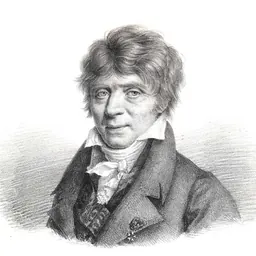
John Wood (1793–1871) was an English manufacturer in Bradford, a leading spinner of worsted. He is now remembered as a factory reformer associated with Richard Oastler, who campaigned for employment standards.
Early life The son of John Wood senior (died 1832), a manufacturer in Bradford's Ivegate, he was apprenticed at age 15 to Richard Smith, a local worsted spinner. His father extended his premises, in which tortoiseshell was worked, with a steam-powered mill, where in 1815 John Wood junior went into business for himself as a spinner. Wood's outstanding concern was with issues raised by child labour. He had in 1825 asked employers to shorten the working day, without success. Naturally shy, he canvassed and attended rallies as well as financing Michael Thomas Sadler, a radical Tory Member of Parliament who backed a Ten Hours Bill.
In 1831 Wood recruited to the cause George Stringer Bull, a curate at Bierley Chapel (in what is now the City of Bradford) who went on to lobby Lord Ashley, a key figure in factory act legislation put to the House of Commons. At Bowling, then a township just outside Bradford, Wood set up a factory school, with teacher Matthew Balme. Balme was a protégé of Bull, who taught at Bowling for 14 years, and like Bull was a stalwart of the Ten Hours agitation. He later was an associate in the factory reform movement of "Squire" Auty and William Edward Forster.
Wood was uncomfortable with the provocations employed tactically by Oastler and Sadler. He did participate fully when Sadler made a northern tour in 1832. St James's Church at Bowling was built with the school there, at Wood's expense. He appointed Bull to it, but later clashed over his choice with William Scoresby, vicar of Bradford from 1838. In the end he closed the church.
Later life Two years of agitation for industrial reform, with Oastler and Sadler, left Wood discouraged. His father died in 1832, leaving him a fortune of £500,000, and he married again in 1833.
In 1835 Wood brought in William Walker as a business partner, and began to withdraw from the worsted trade. With the purchase of property near Alton, Hampshire he retained philanthropic interests, but exchanged activism for the life of a gentleman, settling at Thedden Grange. He died there on 28 February 1871, and was buried in the church at Shalden.
In 1833, Wood married again, to Annis Elisabeth Hardy, daughter of John Hardy. They had three sons and three daughters, the eldest son being John Gathorne Wood (born 1839). His brothers were Charles Frederic Wood, married 1877 Edith L. W. Tayler, and Arthur Hardy Wood, married 1871 Annis Matilda Hardy.
Don’t just read it —
keep it.
Full-length biographies made to live with: read them, listen on the way to work, watch them tonight.
- E-book
- Audio
- Video
Instant download · yours to keep · every purchase keeps this site free
Important facts
People in John Wood's life
Named in this biography and alive at the same time


Related people
Same field, nearest in time
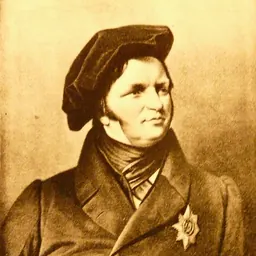
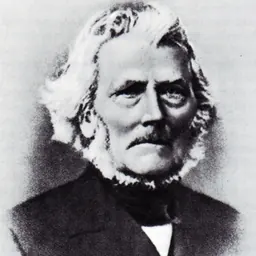

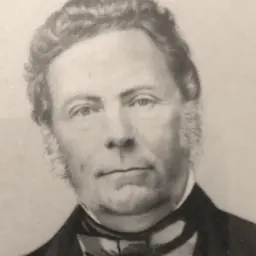
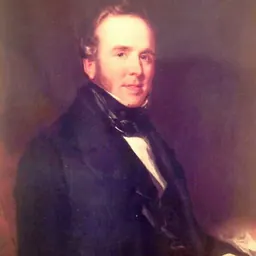

Contemporaries
People whose lives overlapped John Wood's





Frequently asked questions
Who was John Wood?
English worsted manufacturer and factory reformer
When was John Wood born?
John Wood was born in 1793.
When did John Wood die?
John Wood died in 1871.
What was John Wood's occupation?
John Wood was an industrialist.
What nationality was John Wood?
John Wood was British.
Sources & further reading
· DBpedia: John Wood (Bradford manufacturer)
Cite this page
APA: Biography.guide. (2026). John Wood. https://biography.guide/john-wood-industrialist/
MLA: "John Wood." Biography.guide, https://biography.guide/john-wood-industrialist/.
Chicago: "John Wood." Biography.guide. https://biography.guide/john-wood-industrialist/.
Data last updated: 2026-09-20 · Spot an error? Report a correction.
Page generated 2026-09-27 05:08 UTC