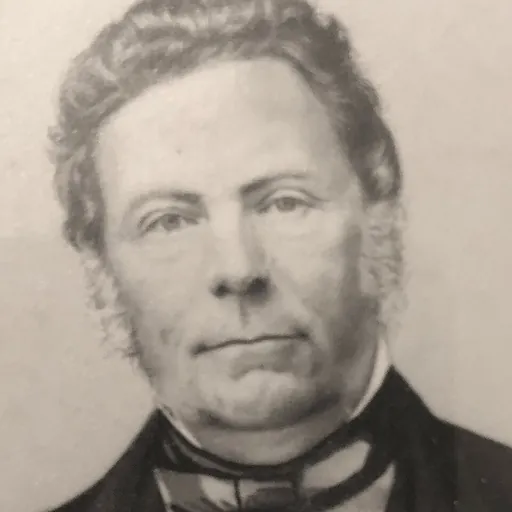
About Benjamin Wegner
Lived 1795 – 1864 (aged 69). Benjamin Wegner was a German and Norwegian industrialist, merchant and timber merchant, known for Industrialist.
Jacob Benjamin Wegner (21 February 1795 – 9 June 1864) was a Norwegian business magnate. He was one of the country's leading mining magnates as the director-general and co-owner of Blaafarveværket, and also had significant interests in other mining and timber companies.
Born in Königsberg, East Prussia, he moved to London in 1819 and to Berlin in 1820, where he established an independent business as an agent in the British timber and grain trade, as a close associate of the London firm Isaac Solly and Sons. In 1820 and 1821, he also facilitated one of history's largest art sales on behalf of his close associate Edward Solly. In 1822, he settled in Norway, after he had bought Blaafarveværket (The Blue-Colour Works) on behalf of a consortium led by the Berlin banker Wilhelm Christian Benecke. From 1822 to 1849, he was Director General and one of two owners of Blaafarveværket. Under his leadership the company became Norway's largest mining company and largest and most successful industrial enterprise in the first half of the 19th century overall, and by far the world's largest producer of cobalt blue. He was also the owner of Frogner Manor, the largest co-owner of the Hafslund estate, a co-owner of the Hassel Iron Works and a co-owner of the timber firm Juel, Wegner & Co. Most of his business activities, both in the timber, grain and cobalt segments, focused heavily on export to England, where he spent much time throughout his life.
He served as consul general to Norway of the sovereign city-republics of Hamburg, Lübeck and Bremen, and as vice consul of the Kingdom of Portugal. He was married to the philanthropist Henriette Seyler (1805–75), a member of the Berenberg banking dynasty of Hamburg and briefly a co-owner of Berenberg Bank; she was the youngest daughter of Berenberg Bank's long-time head and co-owner L.E. Seyler, and a granddaughter of the Swiss-born banker and theatre principal Abel Seyler and of the Hamburg bankers Johann Hinrich Gossler and Elisabeth Berenberg.
Early life His wife Henriette Seyler (1805–75), daughter of Berenberg Bank co-owner L.E. Seyler, drawn by her sister Molly in 1827
Jacob Benjamin Wegner, who went by the name of Benjamin, was born in Königsberg, an important port city on the coast of the Baltic Sea. He was the son of Police Commissioner in Königsberg Johann Jacob Wegner (ca. 1757–1797) and Regina Dorothea Harder (1770–1813). His father had previously been married to Regina Dorothea's sister Anna Christina Harder (1765–1791). His father died on 12 January 1797, and his mother remarried to shipbuilder Philipp Gutzeit in 1798. He had a brother, Friedrich Salomon Wegner (born 1793), and several half-siblings from his parents' two other marriages. Philipp Gutzeit was a younger brother of ship's captain and shipbuilder Benjamin Gutzeit, who was the father of the industrialist Wilhelm Gutzeit, the founder of one of Stora Enso's two principal predecessor companies.
Benjamin Wegner received a solid commercial education and joined a leading Königsberg firm as an apprentice.
British timber and grain trade
Around 1820, he moved to Berlin where he established an independent business as an agent in the British timber trade and grain trade, i.e. in large-scale export of timber and grain from the Baltic region to England. He was an agent and close associate of the London firm Isaac Solly and Sons and of the Berlin firm Gebrüder Benecke and its head Wilhelm Christian Benecke, and spent much time in London.
Solly's art sale On behalf of his friend and close business associate Edward Solly, he also negotiated the agreement to sell Solly's unprecedented art collection of around 3,000 paintings—mainly Italian Trecento and Quattrocento paintings and Early Netherlandish paintings—to the Prussian king Frederick William III in 1821, of which 677 paintings formed the core of the collection of the new Gemäldegalerie. The negotiations were conducted by Wegner and Benecke on Solly's behalf, partly with Prince Hardenberg and partly with King Frederick William III personally.
As a consequence of the economic crisis following the revolutions of 1848 and also of the invention of the synthetic ultramarine colour, Modums Blaafarveværk went bankrupt in 1849.
Other enterprises and activities
Together with Benecke, Wegner owned the Hassel Iron Works from 1835 to 1854, each with half of the shares. He was also a co-owner, eventually the largest co-owner, of the major estate Hafslund with large forests in eastern Norway and the country's largest sawmill, from 1835 to 1864. His co-owners included Benecke and Herman Wedel Jarlsberg, and subsequently Thorvald Meyer and Westye Egeberg. In 1856, he co-founded the timber firm Juel, Wegner & Co. with Iver Albert Juel.
In 1836, he bought Frogner Manor, where he lived with his family until 1849. The family then sold Frogner Manor and moved to Christiania (now the inner city). Wegner however retained a part of the Frogner property, Frognerseteren with a part of the Nordmarka forests, until his death. Frogner Manor is today best known as the site of Frogner Park.
Consular roles
Wegner was appointed as Vice-Consul in Christiania for the Kingdom of Portugal in 1836, as Portugal's most senior representative in Norway. He became Consul in Christiania for the sovereign city-state of Hamburg – where his wife's family served in the government – in 1842 and was promoted to Hamburg's Consul-General for the Kingdom of Norway in 1844. He became Consul in Christiania for the city-state of Lübeck in 1843 and was promoted to Consul-General of Lübeck in 1861. He became Consul-General for Norway of the city-state of Bremen in 1859. He held these four consular offices until his death.
Death He died at his country home, Dronninghavn, at Ladegaardsøen (Bygdøy), on 9 June 1864.
Family
On 15 May 1824, Benjamin Wegner married Henriette Seyler (1805–1875) in St. Nicholas' Church, Hamburg.
Benjamin and Henriette Wegner had four sons and two daughters, all of whom were born in Norway, where they have many notable descendants. Their oldest son Johann Ludwig Wegner (1830–1893) was a judge and married Blanca Bretteville, a daughter of Prime Minister Christian Zetlitz Bretteville; their second son Heinrich Benjamin Wegner (1833–1911) was a timber merchant and married Henriette Vibe, a daughter of the classical philologist Ludvig Vibe; their oldest daughter Sophie Wegner (1838–1906) married colonel and aide-de-camp to king Charles Hans Jacob Nørregaard; their youngest daughter Anna Henriette Wegner (1841–1918) married the theologian Bernhard Pauss; their youngest son George Wegner (1847–1881) was a supreme court barrister.
Benjamin Wegner was the grandfather of the lawyer, county governor and chief of police Benjamin Wegner (1868–1949), of the humanitarian and women's rights leader Olga Wegner (the wife of the Chief Justice of the Supreme Court Karenus Kristofer Thinn), of the internationally noted war correspondent Benjamin Wegner Nørregaard, of the noted lawyer, President of the Norwegian Bar Association and founder of the law firm Hjort Harald Nørregaard, of the wine merchant and consul in Tarragona Ludvig Nørregaard, of the surgeon and President of the Norwegian Red Cross Nikolai Nissen Paus, of the lawyer and Director at the Norwegian Employers' Confederation George Wegner Paus and of the engineer and industrial leader Augustin Paus.
Don’t just read it —
keep it.
Full-length biographies made to live with: read them, listen on the way to work, watch them tonight.
- E-book
- Audio
- Video
Instant download · yours to keep · every purchase keeps this site free
Important facts
Family & relationships
People in Benjamin Wegner's life
Named in this biography and alive at the same time





Related people
Same field, nearest in time
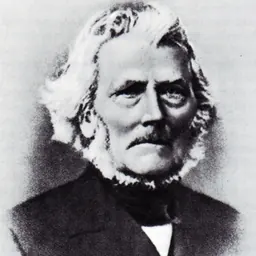
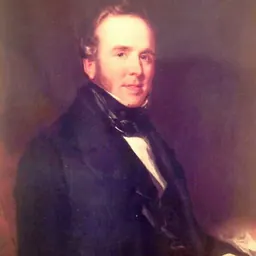

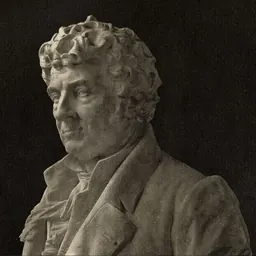
Contemporaries
People whose lives overlapped Benjamin Wegner's
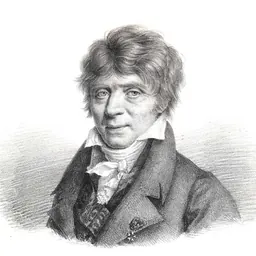





Frequently asked questions
Who was Benjamin Wegner?
Norwegian businessman (1795–1864)
When was Benjamin Wegner born?
Benjamin Wegner was born on 21 February 1795 in Königsberg.
When did Benjamin Wegner die?
Benjamin Wegner died on 9 June 1864 in Aker, Norway, Bygdøy.
What was Benjamin Wegner's occupation?
Benjamin Wegner was an industrialist, merchant and timber merchant.
What was Benjamin Wegner known for?
Benjamin Wegner was known for Industrialist.
What nationality was Benjamin Wegner?
Benjamin Wegner was German and Norwegian.
Sources & further reading
Cite this page
APA: Biography.guide. (2026). Benjamin Wegner. https://biography.guide/benjamin-wegner-industrialist/
MLA: "Benjamin Wegner." Biography.guide, https://biography.guide/benjamin-wegner-industrialist/.
Chicago: "Benjamin Wegner." Biography.guide. https://biography.guide/benjamin-wegner-industrialist/.
Data last updated: 2026-09-23 · Spot an error? Report a correction.
Portrait: Wikimedia Commons · author & licence
Page generated 2026-09-27 05:08 UTC