
John Williams
American lawyer, politician, judge; member of Continental Congress; signer of Articles of Confederation
About John Williams
Lived 1731 – 1799 (aged 68). John Williams was an American lawyer, politician and judge.
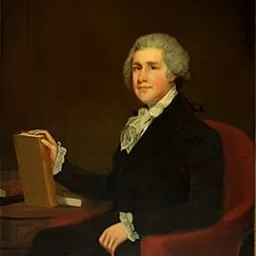
John Williams (March 14, 1731 – October 10, 1799), born in Surry County, North Carolina, was a Founding Father of the United States and signer of its Articles of Confederation. He was one of the founders of the University of North Carolina. During the American Revolutionary War, Williams was a colonel in the North Carolina militia. In 1777 and 1778, he was a member of the North Carolina House of Commons and served as speaker of the House. Williams was a member of the Continental Congress in 1778 and 1779.
Willams served as a superior court judge both during the colonial era and after the new state of North Carolina was established in 1776. Sitting alongside other superior court judges as part of a Court of Conference (forerunner to the North Carolina Supreme Court), Williams heard the landmark case, Bayard v. Singleton, which announced the principle of judicial review on the state level before Marbury v. Madison did so on the federal level.
Family and political career Williams was born on March 14, 1731, in Surry County, North Carolina, the son of John Williams Sr and Mary Keeling. He married Mary Womack. They had 6 children, John Williams III, William Williams and Mary (Williams) Farra, Charles, William, Nathaniel who married Elizabeth Keeling, half-sister to the mother of George Washington, and Agatha who married Col. Robert Burton of Granville County, North Carolina. Was also married to Agnes Bullock 12 Nov 1759 • Granville, North Carolina, USA
Revolutionary War Williams was commissioned on September 9, 1775, as a lieutenant colonel under Col. James Thackston in the Orange County Minutemen Regiment. Both men participated in the Battle of Moore's Creek Bridge on February 27, 1776. All minutemen regiments were disbanded on April 10, 1776.
Death and legacy Williams died on October 10, 1799. The town of Williamsboro, North Carolina, for which he donated the land, is named for Williams. Williams was a first cousin and law partner of Judge Richard Henderson.
Don’t just read it —
keep it.
Full-length biographies made to live with: read them, listen on the way to work, watch them tonight.
- E-book
- Audio
- Video
Instant download · yours to keep · every purchase keeps this site free
Important facts
People in John Williams's life
Named in this biography and alive at the same time

Related people
Same field, nearest in time


Contemporaries
People whose lives overlapped John Williams's






Frequently asked questions
Who was John Williams?
American lawyer, politician, judge; member of Continental Congress; signer of Articles of Confederation (1731-1799)
When was John Williams born?
John Williams was born on 14 March 1731 in Hanover County.
When did John Williams die?
John Williams died on 10 October 1799.
What was John Williams's occupation?
John Williams was a lawyer, politician and judge.
What nationality was John Williams?
John Williams was American.
Sources & further reading
· DBpedia: John Williams (Continental Congress)
Cite this page
APA: Biography.guide. (2026). John Williams. https://biography.guide/john-williams-lawyer/
MLA: "John Williams." Biography.guide, https://biography.guide/john-williams-lawyer/.
Chicago: "John Williams." Biography.guide. https://biography.guide/john-williams-lawyer/.
Data last updated: 2026-09-20 · Spot an error? Report a correction.
Page generated 2026-09-27 05:04 UTC