
John Syme
Scottish friend of Robert Burns;
About John Syme
Lived 1755 – 1831 (aged 75–76). John Syme was a British lawyer and society of Writers to Her Majesty's Signet.
John Syme (1755 – 24 November 1831) was a Scottish lawyer and one of the poet Robert Burns's closest friends during his time in Dumfries. he joined Burns on his two short tours of Galloway. became a Writer to the Signet. In 1791 he was appointed His Majestie's Distributor of Stamps and Collector of Stamp Duties for the Dumfries district, collecting taxes on land sales, registrations, etc. In addition he acted at times as a surveyor for Currie; the two men served on the committee of the Dumfries and Galloway Horticultural Society and they often went on hunting expeditions together.
Syme was one of the first to join the Royal Dumfries Volunteers in January 1795, as did Robert Burns, John Lewars and James Gracie under Captain John Finnan. This Volunteer force was set up in response to fear of a French invasion.
In the History of Dumfries, William McDowall wrote in 1867 that "Mr Syme is still well remembered in the town as a fine specimen of the old Scottish gentleman, clear-headed, warm-hearted, well-cultivated, courteous, full of anecdote and wit and, as the fashion then went, devoted to the pleasures of the table, which he never relished so much as when Burns was his cronie." The two met socially at John Bushby's home at Tinwald. Burn's is said to have fallen out with Bushby over a prank where he pretended that a pudding was cold, however when Burns heartily 'tucked in' he bady scalded his mouth on the piping hot food.
"PERISH their names, however great or brave, Who in the DESPOT's cursed errands bleed! But who for FREEDOM fills a hero's grave, Fame with a Seraph-pen, record the glorious deed!"
The 'despot' is an unwise reference to the prime minister William Pitt.
Syme was an enthusiastic collector of Burns's epigrams, many of which, although humorous, were somewhat unwise in that they lampooned, criticised, etc. the very people who could have assisted Burns's in his career, etc. It is clear however that Syme had not expected them all to be published. Syme, annoyed at having his set of crystal goblets defaced, threw the goblet under the fire grate: it was taken however taken by his clerk, and preserved as a valued artefact. "There's death in the cup sae beware! Nay, more there is danger in touching; But wha can avoid the fell snare? The man and his wine's sae bewitching!"
The text was adapted by Burns from the Bible, the Second Book of Kings, iv, 40.
Burns had received an official reprimand from the Excise for becoming involved in politics. and in January 1793 Syme suggested at Ryedale during a convivial evening's drinking, that Burns should further tone down his political stance and instead turn his talents to less controversial topics. This advice infuriated Burns and as Syme tells it, with his eyes flaming red like coals he made to draw his Excise sword on his friend, but when his reckless actions dawned on him he sank to his knees in apologetic remorse. Sir Walter Scott's version was that Burns actually drew the sword from its scabbard.
The Galloway Tours The ruins of Kenmure Castle, once the home of Viscount Kenmure. On 27 July 1793 A Mr Carson told an anecdote regarding this expedition: "... only the venerable pastor of Kells and the bard on board. The former, being too feeble to jump, as we had done, to land, expressed a desire to remain in the vessel till Mr Gordon and I returned; upon hearing which, the generous bard instantly slipt into the water, which was, however, so deep as to wet him to the knees. After a short entreaty, he succeeded in getting the clergyman on his shoulders; on observing which, Mr Syme raised his hands, laughed immoderately and exclaimed: 'Well Burns, of all the men on earth, you are the last that I could have expected to see priest-ridden!' We laughed also, but Burns did not seem to enjoy the joke. He made no reply, but carried his load silently through the reeds to land." Burns's expensive new boots may have been on his mind and indeed after becoming distorted during drying, Burns tore them whilst trying to put them on and they eventually had to be thrown away.
Burns is said to have recited a version of the 'Galloway or Covenanter's Grace' at St Mary's Isle, home of the Earl of Selkirk and this has become known as the 'Selkirk Grace.'
According to Syme, Burns presented him with a copy of 'Scots Wha Hae' on 1 August 1703. It is likely that Burns continued working on it until he eventually sent the finished version to George Thomson. Burns had recently visited the Battle of Bannockburn and various other influences on their journey may well have added to his creation of this epic work.
Between 26 and 28 June 1794 Syme accompanied Burns on a second short tour of Galloway, one that he did not mention to James Currie. A few letters do survive that give some details, however no journal was kept. They are known to have visited Symes's friend Patrick Heron of Heron at his Kerroughtree Estate. Syme had written to Heron regarding Burns, who was hoping that Heron would use his political influence to aid his promotion prospects in the Excise.
The Death of Robert Burns
Syme, as well as visiting Burns at the Brow Well on 15 July 1796, also went to see his friend a few days later at his home in Dumfries. His last words are said to have been: "Maxwell! Macmurdo! Syme! will none of you relieve me?"
Syme left some revealing, if emotional, reminiscences of Burns such as: "The poet's expression varied perpetually, according to the idea that predominated in his mind: and it was beautiful to mark how well the play of his lips indicated the sentiment he was about to utter. His eyes and lips, the first remarkable for fire, and the second for flexibility, formed at all times as index to the mind, and as sunshine or shade predominated, you might have told, a priori, whether the company was to be favoured with a scintillation of wit, or a sentiment of benevolent, or a burst of fiery indignation. I cordially concur with what Sir Walter Scott says of the poet's eyes. In his animated moments, and particularly when his anger was aroused by instances of tergiversation, meanness, or tyranny, they were actually like coals of a living fire."
Syme, Gilbert Burns, James Currie and Burns's Biography Syme was one of those who persuaded a very reluctant Dr James Currie to write Burns's biography. He spent three weeks at Currie's Liverpool home assisting his friend and accompanied by Gilbert Burns. Syme wrote to James Currie asking him to publicise the subscription for Jean and her children in the Midlands and Merseyside and as a result Currie raised the handsome sum of £73 10s amongst his wealthy friends in Liverpool.
The First Commonplace book Burns's Commonplace Book of 1783–1785 was the first of three commonplace books that were produced by the poet. The contents cover drafts of songs and poems, observations, ideas, epitaphs, etc.
Throughout the manuscripts are to be found comments and / or alterations, some by Robert Burns himself, the others by John Syme, James Currie, W. Scott Douglas and a 'W.R.'. These annotations are identifiable from their handwriting, appearance of the ink used, content, etc. As stated, Syme visited James Currie at Liverpool with Gilbert Burns. James Currie had possession of the manuscript from January 1797. William Scott Douglas (1878) apparently contributed at least one annotation, the "..ignorant critic" comment on page 13.
Correspondence with Alexander Cunningham
As stated, only one letter from Burns to Syme is known, however an extensive correspondence between Syme and Alexander Cunningham survives.
Some ninety letters passed between Syme and Cunningham between 1786 and 1811 and after 120 years they were uncovered in the Cunningham family archives and gave many interesting insights into the life of the poet.
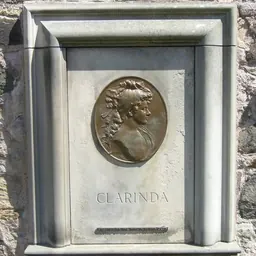
In 1797 Syme and Cunningham appealed for the loan of Burns's letters for a posthumous publication, only to receive a letter from Agnes Maclehose requiring the return of her letters and a visit from Robert Ainslie to force home the demand. The trustees did return them eventually, following her pledge to release his letters with hers remaining unpublished. James Currie censored much and did not even mention the relationship of Sylvander and Clarinda in his biography of the poet.
Syme, William Grierson, Alexander Cunningham and James Currie, through his biography, were central in raising the funds needed to build a suitable mausoleum Cunningham also had a role in securing James Currie's services as Burns's biographer.
Syme received a letter from Alexander Cunningham expressing his sorrow and grave disappointment at the number of Burns's supposed friends and admirers who would not donate to the fund and instead gave him "cold civility and humiliating advice."
Don’t just read it —
keep it.
Full-length biographies made to live with: read them, listen on the way to work, watch them tonight.
- E-book
- Audio
- Video
Instant download · yours to keep · every purchase keeps this site free
Important facts
People in John Syme's life
Named in this biography and alive at the same time





Related people
Same field, nearest in time

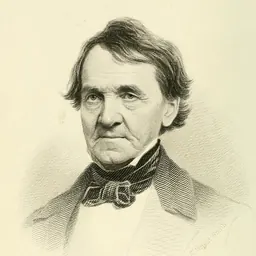

Contemporaries
People whose lives overlapped John Syme's




Frequently asked questions
Who was John Syme?
Scottish friend of Robert Burns; (1755-1831)
When was John Syme born?
John Syme was born in 1755.
When did John Syme die?
John Syme died on 24 November 1831 in Dumfries.
What was John Syme's occupation?
John Syme was a lawyer and society of Writers to Her Majesty's Signet.
What nationality was John Syme?
John Syme was British.
Sources & further reading
Cite this page
APA: Biography.guide. (2026). John Syme. https://biography.guide/john-syme/
MLA: "John Syme." Biography.guide, https://biography.guide/john-syme/.
Chicago: "John Syme." Biography.guide. https://biography.guide/john-syme/.
Data last updated: 2026-09-22 · Spot an error? Report a correction.
Page generated 2026-09-27 05:20 UTC