
Alexander Cunningham
British army engineer and amateur archaeologist
About Alexander Cunningham
Lived 1814 – 1893 (aged 79). Alexander Cunningham was a British explorer, art historian, archaeologist, numismatist, engineer and epigrapher.
Military life Leh Palace, Ladakh. Illustration from Ladak: Physical, Statistical, and Historical In 1841 Cunningham was made executive engineer to the king of Oudh. In 1842 he was called to serve the army in thwarting an uprising in Bundelkhand by the ruler of Jaipur. He was then posted at Nowgong in central India before he saw action at the Battle of Punniar in December 1843. He became engineer at Gwalior and was responsible for constructing an arched stone bridge over the Morar River in 1844–45. In 1845–46 he was called to serve in Punjab and helped construct two bridges of boats across the Beas River prior to the Battle of Sobraon.
In 1846, he was made commissioner along with P. A. Vans Agnew to demarcate boundaries. Letters were written to the Chinese and Tibetan officials by Lord Hardinge, but no officials joined. A second commission was set up in 1847 which was led by Cunningham to establish the Ladakh-Tibet boundary, which also included Henry Strachey and Thomas Thomson. Henry and his brother Richard Strachey had trespassed into Lake Mansarovar and Rakas Tal in 1846 and his brother Richard revisited in 1848 with botanist J. E. Winterbottom. The commission was set up to delimit the northern boundaries of the Empire after the First Anglo-Sikh War concluded with the Treaty of Amritsar, which ceded Kashmir as war indemnity expenses to the British. His early work Essay on the Aryan Order of Architecture (1848) arose from his visits to the temples in Kashmir and his travels in Ladakh during his tenure with the commission. He was also present at the battles of Chillianwala and Gujrat in 1848–49. In 1851, he explored the Buddhist monuments of Central India along with Lieutenant Maisey and wrote an account of these.
In 1856 he was appointed chief engineer of Burma, which had just been annexed by Britain, for two years; and from 1858 served for three years in the same post in the North-Western Provinces. In both regions, he established public works departments. He was therefore absent from India during the Rebellion of 1857. He was appointed Colonel of the Royal Engineers in 1860. He retired on 30 June 1861, having attained the rank of Major General.
In 1834 he submitted to the Journal of the Asiatic Society of Bengal, an appendix to James Prinsep's article, on the relics in the Mankiala stupa. He had conducted excavations at Sarnath in 1837 along with Frederick Charles Maisey and made careful drawings of the sculptures. In 1842 he excavated at Sankassa and at Sanchi in 1851. In 1854, he published The Bhilsa Topes, a piece of work which attempted to establish the history of Buddhism based on architectural evidence.
By 1851, he also began to communicate with William Henry Sykes and the East India Company on the value of an archaeological survey. He provided a rationale for providing the necessary funding, arguing that the venture
Cunningham's stops at each site were hurried, as he could visit up to thirty sites in each season. On arrival, he and his team of labourers would clear the jungle, and search for coins, inscriptions, and sculptures. His excavations consisted of haphazard probing, or inserting a pole vertically, and digging for objects of value.
Cunningham's surveys consisted of the documentation of locations, measurements, and inscriptions. He placed emphasis on meticulously recording and mapping the ancient sites, as opposed to simply collecting artefacts. He produced extensive reports through the Archaeological Survey of India that organised information about monuments, stupas, temples and ruins in a structured and methodical manner.
Father of Indian archaeology Cunningham provided the Archaeological Survey of India with much-needed organization and expertise after he left the Army in 1861. In his capacity as the first Director General, he carried out excavations in significant ancient towns, issued thirty volumes of archaeological papers, and assessed over 725 sites. He is regarded as the founder of archaeology in India because:
He is regarded as the father of Indian archaeology since he was the first to use archaeological data to reconstruct ancient Indian history in a methodical manner. His thorough excavations at locations like Sanchi, Sarnath, and Bharhut produced priceless artifacts and inscriptions that expanded our understanding of the dissemination of Buddhism. Many others were motivated to pursue a career in archaeology by his authoritative references found in the Reports of the ASI. The pioneer of Indian prehistoric archaeology, Cunningham established techniques for documenting, mapping, photography, and conservation that are still in use today. For the first time, Indians were involved in archaeology thanks to his training of indigenous assistants that he hired for digs. Cunningham made sure archaeology got financing and formal recognition, which helped to establish the field's legitimacy in India.
Numismatic interests Cunningham assembled a large numismatic collection, but much of this was lost when the steamship he was travelling in, the Indus, was wrecked off the coast of Ceylon in November 1884. The British Museum, however, obtained most of the gold and silver coins. He had suggested to the Museum that they should use the arch from the Sanchi Stupa to mark the entrance of a new section on Indian history. He also published numerous papers in the Journal of the Asiatic Society and the Numismatic Chronicle.
Family and personal life Two of Cunningham's brothers, Francis and Joseph, became well known for their work in British India; while another, Peter, became famous for his Handbook of London (1849). Cunningham married Alicia Maria Whish, daughter of Martin Whish, B.C.S., on 30 March 1840. The couple had two sons, Lieutenant-Colonel Allan J. C. Cunningham (1842–1928) of the Bengal and Royal Engineers, and Sir Alexander F. D. Cunningham (1852–1935) of the Indian Civil Service. Cunningham died on 28 November 1893, at his home in South Kensington and was buried at Kensal Green Cemetery, London. His wife predeceased him, in 1870. He was survived by his two sons.
Awards and memorials Portrait of Cunningham by C. W. Walton, showing him wearing the badge of a KCIE, with other decorations. Cunningham was awarded the CSI on 20 May 1870 and CIE in 1878. In 1887, he was made a Knight Commander of the Order of the Indian Empire.
Publications Books written by Cunningham include: LADĀK: Physical, Statistical, and Historical with Notices of the Surrounding Countries (1854). Bhilsa Topes (1854), a history of Buddhism The Ancient Geography of India (1871) Archaeological Survey Of India Vol. 1 (1871) Four Reports Made During the Years, 1862-63-64-65, Volume 1 (1871) Archaeological Survey Of India Vol. 2 Archaeological Survey Of India Vol. 3 (1873) Corpus Inscriptionum Indicarum. Volume 1. (1877) The Stupa of Bharhut: A Buddhist Monument Ornamented with Numerous Sculptures Illustrative of Buddhist Legend and History in the Third Century B.C. (1879) The Book of Indian Eras (1883) Coins of Ancient India (1891) Mahâbodhi, or the great Buddhist temple under the Bodhi tree at Buddha-Gaya (1892) Coins of Medieval India (1894) Report of Tour in Eastern Rajputana
Additional works: The World of India’s First Archaeologist: Letters from Alexander Cunningham to J.D.M. Beglar; Oxford University Press: Upinder Singh.
Don’t just read it —
keep it.
Full-length biographies made to live with: read them, listen on the way to work, watch them tonight.
- E-book
- Audio
- Video
Instant download · yours to keep · every purchase keeps this site free
Important facts
People in Alexander Cunningham's life
Named in this biography and alive at the same time

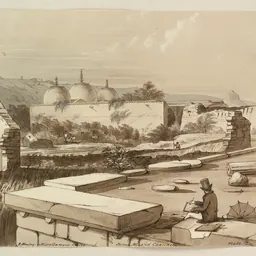

Related people
Same field, nearest in time

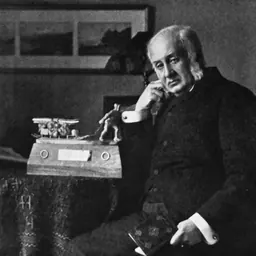
Contemporaries
People whose lives overlapped Alexander Cunningham's

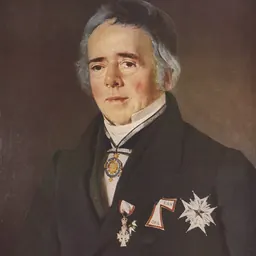

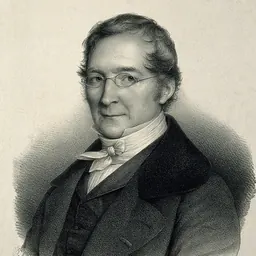


Frequently asked questions
Who was Alexander Cunningham?
British army engineer and amateur archaeologist (1814-1893)
When was Alexander Cunningham born?
Alexander Cunningham was born on 23 January 1814 in London.
When did Alexander Cunningham die?
Alexander Cunningham died on 28 November 1893 in London.
What was Alexander Cunningham's occupation?
Alexander Cunningham was an explorer, art historian, archaeologist, numismatist, engineer and epigrapher.
What nationality was Alexander Cunningham?
Alexander Cunningham was British.
Sources & further reading
· Wikipedia: Alexander Cunningham
· DBpedia: Alexander Cunningham
Cite this page
APA: Biography.guide. (2026). Alexander Cunningham. https://biography.guide/alexander-cunningham-explorer/
MLA: "Alexander Cunningham." Biography.guide, https://biography.guide/alexander-cunningham-explorer/.
Chicago: "Alexander Cunningham." Biography.guide. https://biography.guide/alexander-cunningham-explorer/.
Data last updated: 2026-09-20 · Spot an error? Report a correction.
Page generated 2026-09-27 05:22 UTC