
About Henry Strachey
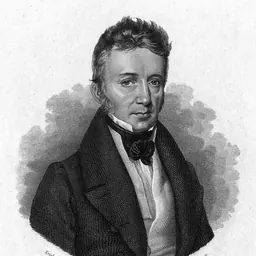
Lived 1816 – 1912 (aged 95–96). Henry Strachey was a British explorer.
Lieutenant-Colonel Sir Henry Strachey (1816–1912) was a British officer of the Bengal Army. Despite a longstanding prohibition by the Tibetan authorities on the entry of Europeans into Tibet, Strachey surveyed parts of western Tibet during the late 1840s.
He was the second son of Edward Strachey, second son of Sir Henry Strachey, 1st Baronet. His brothers included Sir Richard Strachey, Sir John Strachey and Sir Edward Strachey, 3rd Baronet.
Strachey recorded that at the confluence above Tala-Kawa the western branch, the Kuthi Yankti, was about a third larger than the eastern branch in both channel width and volume of water, and nearly four times as long from source to confluence, yet it was the smaller eastern branch that gave its name to the united river. He attributed the name to the Kalapani springs, which he described as unimportant tributaries rather than the true source. He nonetheless reported that the eastern stream was then the boundary between British and Nepalese territory and that, according to local Bhotias, it had always been so; on this basis he considered contemporary maps mistaken in applying the name Kali to the western river and drawing the boundary line along it.
He found a channel between the lakes, suggesting that Manasarovar, and not Rakshastal, was the source of the Sutlej River. Strachey's brother Richard, with J. E. Winterbottom, continued the exploration of the lakes in 1848.
In 1847 Strachey was appointed to a boundary commission of Jammu and Kashmir led by Alexander Cunningham. The third member was Thomas Thomson. The commission was set up to fix the boundary between Tibet and Ladakh. Raja Gulab Singh's forces had previously annexed Ladakh and invaded Tibet in 1841. The British deemed it important to formalise the boundary so as to prevent any future conflicts. The commission based itself at Leh, Ladakh. It eventually drafted a description of the boundary and retired.
In 1849, Henry Strachey and his brother Richard Strachey briefly entered Tibet by following the Niti Pass out of Garhwal.
Family On 6 September 1859, by this time a captain of the 66th Goorkha Regiment of Bengal Native Infantry, he married Joanna Catherine, daughter of Rudolphe Cloete, of Newlands, Cape Town, South Africa. The wedding was in Claremont, Cape Town. Their only child was Julia Charlotte, who in 1884 married barrister William Chance (2 July 1853 – 9 April 1935), son of James Timmins Chance of the glassmaking company Chance Brothers. Julia was an amateur sculptor, and a supporter of the Arts and Crafts movement. The couple's house, Orchards in Surrey, was designed by architect Edwin Lutyens. In 1902, Sir William Chance succeeded his father to the Chance baronetcy.
Writings
"Physical Geography of Western Tibet", Journal of the Royal Geographical Society 23, 1853.
Don’t just read it —
keep it.
Full-length biographies made to live with: read them, listen on the way to work, watch them tonight.
- E-book
- Audio
- Video
Instant download · yours to keep · every purchase keeps this site free
Important facts
People in Henry Strachey's life
Named in this biography and alive at the same time




Related people
Same field, nearest in time


Contemporaries
People whose lives overlapped Henry Strachey's




Frequently asked questions
Who was Henry Strachey?
British explorer (1816–1912)
When was Henry Strachey born?
Henry Strachey was born in 1816.
When did Henry Strachey die?
Henry Strachey died in 1912.
What was Henry Strachey's occupation?
Henry Strachey was an explorer.
What nationality was Henry Strachey?
Henry Strachey was British.
Sources & further reading
· DBpedia: Henry Strachey (explorer)
Cite this page
APA: Biography.guide. (2026). Henry Strachey. https://biography.guide/henry-strachey/
MLA: "Henry Strachey." Biography.guide, https://biography.guide/henry-strachey/.
Chicago: "Henry Strachey." Biography.guide. https://biography.guide/henry-strachey/.
Data last updated: 2026-09-20 · Spot an error? Report a correction.
Page generated 2026-09-27 05:26 UTC