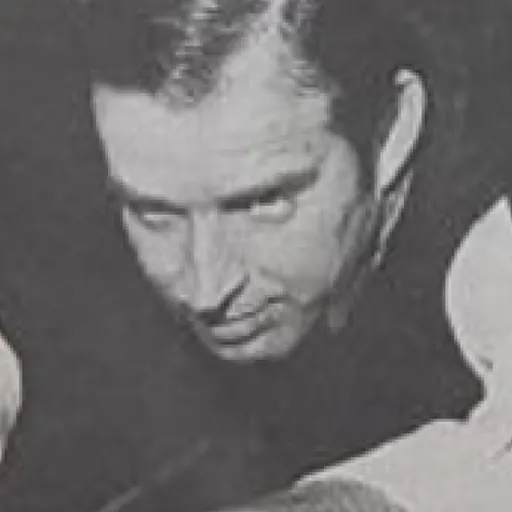
About John Spencer
Lived 1935 – 2006 (aged 70). John Spencer was a British snooker player, sports journalist and functionary.
Professional snooker career 1967–1971: First two world titles Spencer took on professional status in February1967, becoming the first UK player to do so since Rex Williams in 1951. Spencer was encouraged to turn professional because of the income he could expect to earn from performing regular exhibition matches for the National Spastics Society at £14 a time , and at Pontins holiday camps during the summer season for a weekly fee of £20, to be increased to £50 a week the following year.
In 1957, the professional world snooker title had passed to John Pulman, and he had retained it through a series of challenge matches from 1964 to 1968. After touring snooker clubs in promotion of the tobacco brand John Player, Pulman had secured sponsorship from the company for his world title challenge against Eddie Charlton in March1968. The good attendances for this match led to John Player's decision to sponsor the 1969 World Championship as a knockout format tournament. Four of the eight entrants—Spencer, Reardon, Gary Owen and Bernard Bennett—were World Championship debutants; the other four—Pulman, Williams, Fred Davis and Jackie Rea—had played professionally since at least the 1950s. For the entry fee, Spencer took out a bank loan of £100 . He was drawn against Pulman, the defending champion, whom he had recently defeated 17–14 in a non-title challenge match. In November1968, Spencer eliminated Pulman 25–18 in the opening match of the tournament, before defeating Williams 37–12 in the semi-finals. (After completing the , the final score was 55–18.)
The best-of-73- final between Spencer and Owen was held at Victoria Halls in London, from 17 to 22 March 1969. Spencer developed a 6–2 lead in the first , but Owen took the next four frames to level the match at 6–6. The correspondent for the Birmingham Daily Post praised the players for bringing a "refreshing new look to the game, with bold attacking play, wonderful potting and a sprinkling of good-sized breaks". Both players missed easy at the start of the second day, sharing the first two frames for 7–7; Spencer won the next four to lead 11–7 by the interval, and added four of the subsequent six frames to extend his lead to 15–9. Maintaining his six-frame advantage, he ended the third day's play 21–15 ahead. Owen closed slightly to 19–23 on the fourth day, but Spencer then won four of the six frames in the evening session to end the day six frames ahead again, at 27–21. Spencer took the opening frame on the final day to claim the world title with a winning margin of 37–24. (After completing the dead frames, the final score was 46–27.) His prize money was £1,780 . The week-long final was closely balanced until Higgins won the Thursday evening session 6–0, creating a gap in the scores that Spencer seemed unlikely to overcome. Higgins proceeded to take the match 37–31.
Spencer made no excuses for his defeat, even though he was feeling exhausted and ill after a major tour of Canada, had been trapped in a lift ahead of one of the sessions, and involved in a minor car crash on the way to another. In his 2005 memoir, he pointed out that he thought Higgins had produced the better snooker in the 1972 world final and had won the match "fair and square". He was also willing to accept that Higgins's win had attracted more sponsorship and promotions, and a greater degree of media interest than if he himself had won the championship. Later the same year, Spencer relinquished another of his titles to Higgins, losing 3–6 in the final of the Stratford Professional tournament. He was runner-up in the two inaugural Pontins events, which both took place in 1974. A further sign of snooker's growing popularity came when sports betting company Ladbrokes held a gala evening at London's Café Royal towards the end of 1973, to celebrate the firm's £8,000 investment into the sport in the 1973–74 season. Spencer took the £150 first prize with a 3–2 win over Ray Edmonds. In late 1974, he won the Jackpot Automatics tournament (a minor eight-player invitational) with a 5–0 of Higgins in the final.
Spencer's good form during this period was not translated into a third world title. At the 1973 World Championship, after showing decisive form in defeating David Taylor 16–5 and Williams 16–7, he lost by a single frame to Reardon in the semi-finals, 22–23; in 1974, after suffering from a dose of influenza, he lost his opening match 13–15 to Mans (whom he next met at the World Championship in 1978 with the same outcome). Spencer won the 1974 'plate' competition—for those knocked out in the first and second rounds of the main tournament—and recorded six centuries in the process of defeating David Greaves 5–1, Dennis Taylor 9–4, Jim Meadowcroft 9–3, and Pulman 15–5 in the final.
In January 1975, Spencer won the inaugural Masters event, held at the West Centre Hotel in Fulham, West London. He eliminated Pulman 5–3 and Charlton 5–2, before defeating Reardon 9–8 in the final. After trailing 6–8, Spencer levelled at 8–8 and took the deciding frame on a . Early the same year, he won the invitational Ashton Court Country Club event, defeating Higgins 5–1 in front of a sellout crowd in the final, as well as taking the highest break prize. He lost 2–5 to Higgins in the final of the Castle Open pro-am, held at Bernard Bennett's Castle Club in Southampton at the end of the year.
There was a degree of controversy over Spencer's elimination from the 1975 World Championship. With the tournament staged in Australia and organised by Charlton, Spencer found himself in the same half of the draw as both Reardon and Higgins, meaning that all of the previous World Champions since 1969 were in one half of the draw and Charlton was in the other. Additionally, Spencer was placed eighth in the organisational seedings, which resulted in his meeting Reardon in the quarter-finals. At the time, both players considered it to be the best match they had yet played against one another, but despite recording two centuries in the first four frames and leading 17–16, Spencer lost the match 17–19. The following year, Spencer experienced an even narrower defeat at the same stage in the 1976 World Championship. After eliminating David Taylor 15–5, and making the highest break of the tournament, 138, in the process, he lost to Higgins in the quarter-finals 14–15. He won the Canadian Open later the same year, defeating John Virgo 9–4 in the semi-finals and Higgins 17–9 in the final to claim the $5,000 prize.
1977–1980: Third world title and first unofficial 147 break Spencer won his third world title in 1977, the first year that the World Snooker Championship was held at the Crucible Theatre in Sheffield. Seeded eighth, he defeated Virgo 13–9 (having trailed 1–4 earlier in the match), Reardon 13–6, Pulman 18–16, and Thorburn 25–21 (recovering from an 11–15 deficit) in the final, to claim the winner's prize of £6,000. This was the last time he would seriously challenge for the world title, and he never again progressed beyond the last-16 stage of the tournament. He followed his World Championship victory by winning the Pontins Professional title, defeating Pulman 7–5 in the final. In September, he again faced Higgins in the final of the Canadian Open, but lost his title 14–17. The tournament was played inside a "big top" circus tent, alongside a traditional circus setup. The conditions were so hot and humid that an accumulation of moisture inside Spencer's breast pocket caused his chalk to snap in half when he tried to use it.
In the spring of 1978, he won the inaugural Irish Masters at Goffs Sales Room in County Kildare, beating Mountjoy 5–3 in the final. He was undefeated in the group stages of the Pontins Professional tournament, winning all five of his matches, before losing 2–7 to Reardon in the final. Spencer warmed up for the 1978 World Championship by winning the Castle Club Professional event, with a 5–3 victory over Higgins in the final. However, he lost his opening World Championship match to Mans, 8–13, despite earlier compiling a 118 break to develop a 3–1 lead. After beginning the final session with a break of 138—which later proved to be the highest of the championship—he then failed to win another frame. The high break prize doubled Spencer's total earnings from the tournament to £1,000.
In January1979, at the Holsten Lager International, Spencer completed the first ever 147 maximum break in tournament play. Having already taken the first three frames of his quarter-final match against Cliff Thorburn, he compiled a maximum in the fourth. Thames Television were resting their TV crew after filming the previous match between Alex Higgins and David Taylor, so the historic moment was not captured by the TV cameras. Although documented as the first maximum break at a tournament, Spencer's 147 remains unofficial because it could not be verified; the tables at the event had that were not checked against specification using official templates. Spencer won the tournament, defeating Rex Williams 6–2 in the semi-finals and Graham Miles 11–7 in the final. As well as his £3,500 first prize, the sponsors awarded Spencer an additional £500 for the unofficial maximum.
In February1979, Spencer won the Garware Paints Invitational event in Bombay, which at the time was the biggest tournament yet staged in India. He defeated India's Arvind Savur 6–1, Patsy Fagan 6–4, Miles 6–5, and Thorburn 6–3 in the final, to take the £2,000 first prize and another £200 for the highest break (108), also claiming the 'Man of the Series' award. He reached the semi-finals of the Irish Masters in early 1979, losing 2–3 to Reardon, after making the highest break of the tournament (121) at the group stage. He was runner-up in the 1979 Forward Chemicals Tournament, an extended event that used the old Park Drive 2000 format; Spencer lost to Reardon in the final 6–9. In January1980, at the first of two Wilson's Classic invitational events, Spencer won £3,000—which at the time was a record for a two-day event. Broadcast by Granada TV, the final included a incident declared by the referee, Jim Thorpe, against Spencer's opponent Higgins, who was fined £200 for his reaction to the controversial decision. Spencer also won the 1980 Winfield Australian Masters, beating Dennis Taylor on aggregate in the final.
1981–1986: Later years and declining health Spencer's 10–9 first-round victory over Edmonds at the 1981 World Championship was his first success at the tournament since claiming the title in 1977. He lost to Reardon in the second round, 11–13, after leading 3–0 and 7–5. This was the last time the two players faced each other in a World Championship match. In 1981, Spencer was part of the first English team to win the World Cup. Crucially, he defeated Terry Griffiths in the final with the aid of a 103 break, the Welsh player having not lost any of his matches prior to that stage in the competition. Steve Davis then secured victory against Reardon in the tie-break to win the title and the £12,000 prize money. Spencer paired up with Reardon for the first two World Doubles Championships. In 1982, they lost 2–6 to Jimmy White and Tony Knowles in the quarter-finals; and in 1983, they lost 0–5 to Thorburn and Virgo, also in the quarter-finals. The partnership ended when Spencer believed he would be unable to play in the 1984 event due to problems with his vision, and advised Reardon to seek another playing partner. However, a few days later Spencer felt that his medication had improved his symptoms sufficiently that he could play, and he partnered with Knowles, whose own former team-mate White had decided to ally with Higgins.
In April1982, in the semi-finals of the Highland Masters in Inverness, Spencer achieved a 6–0 whitewash against Higgins (who lifted the world title just four weeks later), before losing 4–11 to Reardon in the final. Spencer took the highest break prize with an effort of 119. That year's World Championship produced a number of upsets and the loss of the top three seeds in round one. Despite a strong performance in defeating John Dunning 10–4 in the first round, Spencer was unable to profit from the more open draw. After keeping pace with Willie Thorne 3–3 in round two, his form deteriorated and he lost the match 5–13. At the end of 1982, Spencer finally won a match in the UK Championship, having lost in the first round every year since the inaugural tournament in 1977. He defeated Eddie Sinclair 9–8 and eliminated Knowles 9–6, before losing to Higgins 5–9 in the quarter-finals.
In 1983, Spencer defeated Reardon 5–3 and David Taylor 5–2 in the first two rounds of the Lada Classic, securing a cheque for £6,000 (equal to the amount he had received for winning the 1977 World Championship). In the semi-finals, he led Steve Davis 3–1, then 4–2, and gained a 45–29 advantage in the deciding frame, but Davis clinched the match. At the 1983 World Championship, Spencer eliminated Mike Hallett 10–7 in the first round before facing Charlton in the second. After taking a 4–0 lead, his intensity waned and, despite a break of 106, he allowed Charlton to pull ahead 12–7. Spencer fought back to win four consecutive frames but, on the verge of levelling at 12–12, he went and subsequently lost the match 11–13.
Spencer's later career was blighted by the ocular version of myasthenia gravis, with symptoms including double vision. He first noticed a problem when he felt unwell at the Pontin's Professional tournament in 1984. and published an update in September 1984. The Miles match was Spencer's last victory at the Crucible. He won only one ranking match during the 1984–85 season, when he whitewashed Frank Jonik 6–0 in the Dulux British Open. He narrowly lost in the 1984 Pot Black final to Griffiths. Spencer's condition made him susceptible to eye strain under bright TV lighting; when he competed in the 1985 Pontins Professional event under ordinary shaded lighting, he once again reached the final, but lost 7–9 to Griffiths. This would prove to be his last notable tournament final.
Ahead of the 1986 World Championship, Spencer journeyed to Scotland for some concentrated practice which helped him to qualify for the main stage of the tournament, where he met Higgins in the first round. Higgins led 8–2 and eventually won by a reduced margin at 10–7. This was the last time Spencer appeared at the Crucible as a participant in the World Snooker Championship. Sports writer Gordon Burn relates that part of Spencer's time practising in Scotland included playing a young Stephen Hendry. After two money-match defeats, Spencer had proposed that they wear casual clothes for the next match, to which Hendry agreed, and Spencer subsequently won their third encounter 6–4. Hendry told his father afterwards that he thought he had been set up, saying knew that if I was dressed casually, I'd play casually."
1987–1997: Retirement and final years After falling to a career-low 34th in the world rankings for the 1986–87 season, Spencer made a break of 129 in defeating Terry Whitthread 5–2 at the British Open in February 1987. In the final stages of this event, he defeated then-World Champion Joe Johnson 5–3 to reach the quarter-finals. He compiled a century in his last-eight match against White, and captured the sixth frame after requiring six snookers. Despite losing the match 3–5, Spencer enjoyed his highest ever snooker payday with a cheque for £9,000 . He achieved a 5–0 victory over Fred Davis in the 1988 British Open, followed by a 5–0 win over Dennis Taylor, but lost 4–5 in the fifth round to Rex Williams.
Spencer used steroids to reduce the symptoms of his illness, but their effectiveness was inconsistent. before proving a tough test in the fourth round for rising star James Wattana, who sealed a 10–8 victory by winning the penultimate frame on the final black and the last frame on the pink. At the 1991 World Championship, he lost 4–10 to Ray Edmonds in his first qualifying match, giving Edmonds a long-awaited victory over Spencer in a rivalry that stretched back to the 1965 English Amateur Championship. Spencer was too ill to compete in the first six events after a worsening of his condition in June 1991. He kept his playing hopes alive by joining the management group of Six Colours Promotions in February 1992, hoping that this might provide him with a much-needed 'morale boost'. Also involved was then-World Champion John Parrott, whom Spencer had advised ahead of his successful 1991 World Championship campaign. Although well enough to play in the remaining four ranking events of the season, he was only able to win a single frame (against Euan Henderson in the British Open). In his last appearance at the World Championship in 1992, he scored just 207 points against Bjorn L'Orange in the second round of qualifying, losing the match 0–10.
Spencer retired from professional competition in 1992,
In 2018, the WPBSA announced that the World Seniors Masters trophy was being named the John Spencer Trophy in his memory.
Non-playing career and personal life In 1973, Cassell published Spencer's instructional book, Spencer on Snooker, in which he also gave his opinions on the strengths and weaknesses of other leading professional snooker players. A revised version, edited by Everton, was published in 1986 as Snooker in the Teach Yourself book series.
Following his defeat by Mans in the 1978 World Championship, Spencer was invited by producer and Question of Sport creator Nick Hunter to try his hand at snooker commentary for the BBC, a task that he enjoyed for the next 19 years. He featured in a televised pro-am golf show in 1980, and guested on the quiz show Pot the Question on BBC1 in 1984. He opened a snooker club in Bolton called "Spencer's" in 1985, and another in the same town the following year. In 1987, he and his wife Margot agreed to separate after 18 years of marriage.
Spencer appeared in three episodes of the snooker-themed show Big Break—in 1991, 1992, and 1997. Despite his poor health, he chaired the WPBSA for seven years; he resigned in November1996, completing a 25-year tenure on the governing board. Poor health also led to his departure from the role of commentator in 1998. In his memoirs, he recalled struggling through the role before retiring back to his hotel room, and he related that he was deeply moved by the kindness of fellow commentators Ted Lowe and Ray Edmonds.
Diagnosed with stomach cancer in early 2003, Spencer refused to undergo chemotherapy, choosing to enjoy the rest of his life without its side effects. He attended the Crucible in May2005 for the Parade of Champions, which took place before the final session of the 2005 World Championship final. Despite his ill health, he took part in a sponsored parachute jump in 2005 to raise funds for the Myasthenia Gravis Association. The same year, his autobiography Out of the Blue – Into the Black was published.
Performance and rankings timelines +Performance and ranking timeline for John Spencer 1968/69 1969/70 1970/71 1971/72 1972/73 1973/74 1974/75 1975/76 1976/77 1977/78 1978/79 1979/80 1980/81 1981/82 1982/83 1983/84 1984/85 1985/86 1986/87 1987/88 1988/89 1989/90 1990/91 1991/92 1992/93 1993/94 RankingNo ranking system8244151412161320342827395685155296
+Performance Table Legend for resultsLQ lost in the qualifying draw#R lost in the early rounds of the tournament (WR = Wildcard round, RR = Round robin)QF lost in the quarter-finalsSF lost in the semi-finalsF lost in the finalW won the tournament?? no reliable source availableA did not participate in the tournamentWD withdrew from the tournament
+Performance Table Legend abbreviations for tournament statusNH / Not Held means an event was not held.NR / Non-Ranking Event means an event is/was no longer a ranking event.R / Ranking Event means an event is/was a ranking event.
Career finals Ranking finals: 1 (1 title)
+Ranking event final contested by John SpencerOutcomeYearChampionshipOpponent in the finalScoreWinner 1977 World Snooker Championship (3) 25–21
Non-ranking finals: 51 (31 titles)
+Non-ranking finals contested by John SpencerOutcomeNumberYearChampionshipOpponent in the finalScoreWinner 1. 1969 World Snooker Championship 46–27 Runner-up 1. 1969 Pot Black 0–1 Winner 2. 1970 Pot Black 1–0Winner 3. 1971 World Snooker Championship (2) 37–29 Winner 4. 1971 Pot Black (2) 1–0Winner 5. 1971 Park Drive 2000 – Spring 4–1Runner-up 2. 1971 Park Drive 600 0–4Winner 6. 1971 Stratford Professional 5–2 Runner-up 6. 1972 World Snooker Championship 31–37 Winner 10. 1973 Norwich Union Open 8–7 Winner 11. 1973 Coventry Invitation 5–0 Winner 12. 1973 Castle Professional – Event 1 Round–Robin Winner 13. 1974 Ladbrokes Gala Event 3–2 Winner 18. 1975 The Masters 9–8 Winner 19. 1975 Benson & Hedges Ireland Tournament 9–7 Runner-up 11. 1975 Pontins Professional (2) 4–10 Winner 20. 1975 Ashton Court Country Club Event 5–1 Winner 22. 1976 5–0 Winner 23. 1976 Pot Black (3) 1–0 Winner 24. 1976 Canadian Open 17–9 Runner-up 2. 1975 Castle Open 2–5 Winner 1. 1978 Warners Open 7–4
Team finals: 3 (1 title)
+Team finals contested by John SpencerOutcomeNo.YearChampionshipTeam/partnerOpponent in the finalScoreRunner-up 1. 1975 Ladbroke International Cumulative score Runner-up 2. 1979 World Challenge CupThe England team was Spencer, Fred Davis and Graham Miles Winner 1. 1981 World Team ClassicThe England team was Steve Davis, Spencer and David Taylor
Amateur finals: 4 (1 title)
+Amateur finals contested by John SpencerOutcomeNo.YearChampionshipOpponent in the finalScoreRunner-up 1. 1964 English Amateur Championship 8–11 Runner-up 2. 1965 English Amateur Championship (2) 3–11 Winner 1. 1966 English Amateur Championship 11–5 Runner-up 3. 1966 World Amateur Championship Round-robin
Explanatory notes
Don’t just read it —
keep it.
Full-length biographies made to live with: read them, listen on the way to work, watch them tonight.
- E-book
- Audio
- Video
Instant download · yours to keep · every purchase keeps this site free
Important facts
People in John Spencer's life
Named in this biography and alive at the same time





Related people
Same field, nearest in time


Contemporaries
People whose lives overlapped John Spencer's



Frequently asked questions
Who was John Spencer?
English snooker player (1935–2006)
When was John Spencer born?
John Spencer was born on 18 September 1935 in Radcliffe.
When did John Spencer die?
John Spencer died on 11 July 2006 in Bolton, Bury.
What was John Spencer's occupation?
John Spencer was a snooker player, sports journalist and functionary.
What nationality was John Spencer?
John Spencer was British.
Sources & further reading
· DBpedia: John Spencer (snooker player)
Cite this page
APA: Biography.guide. (2026). John Spencer. https://biography.guide/john-spencer-snooker-player/
MLA: "John Spencer." Biography.guide, https://biography.guide/john-spencer-snooker-player/.
Chicago: "John Spencer." Biography.guide. https://biography.guide/john-spencer-snooker-player/.
Data last updated: 2026-09-20 · Spot an error? Report a correction.
Portrait: Wikimedia Commons · author & licence
Page generated 2026-09-27 04:58 UTC